
Insider Spotlight
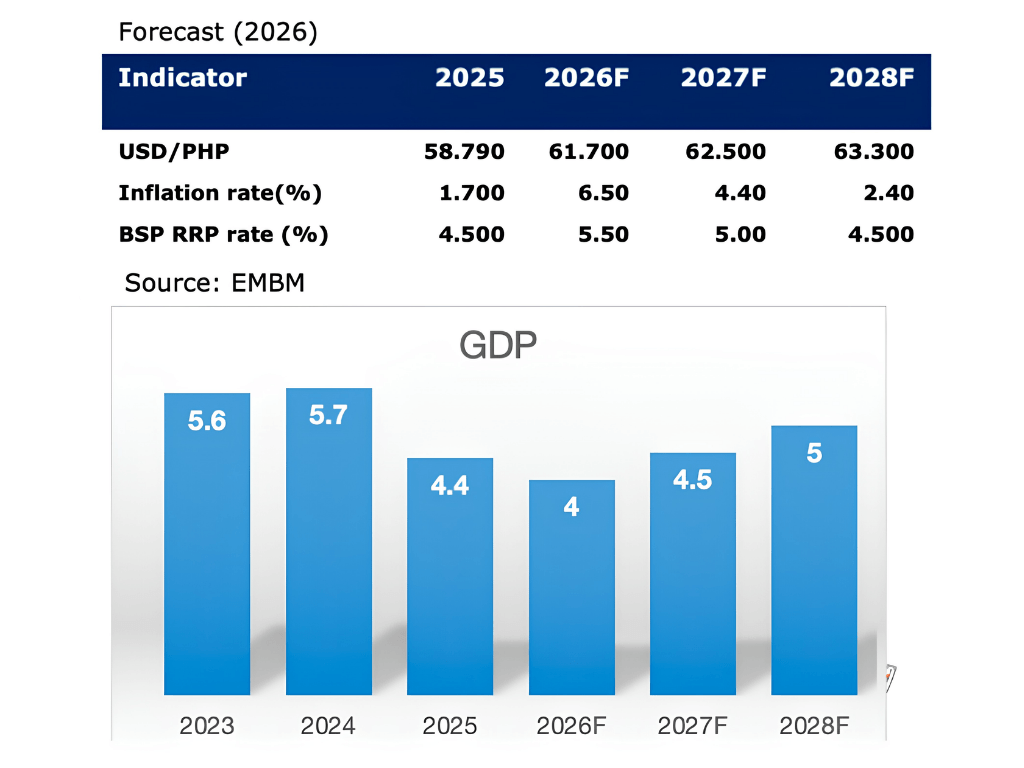
The advisory firm’s latest assessment — authored by the audit and advisory firm’s managing partner Caesar Parlade and senior adviser Jonathan Ravelas — said elevated energy prices, inflation, supply chain uncertainty and geopolitical risks continue to weigh on economic activity, although the impact has varied across industries.Rather than showing broad economic weakness, recent data and corporate disclosures point to an economy where some sectors remain resilient while others are beginning to show signs of strain.
Why it matters
The report argues that distinguishing between temporary cost absorption, demand reallocation and outright demand destruction provides a clearer picture of business conditions than headline macroeconomic indicators alone.
Headline inflation stood at 6.4 percent in June, above the Bangko Sentral ng Pilipinas’ 4.0 percent upper target, while gross international reserves declined to $104.0 billion in May from a record $112.72 billion in February. Although global energy markets have stabilized from the height of the Gulf conflict, volatility in fuel prices, freight and logistics continues to raise operating costs for Philippine businesses.
The big picture
RT&Co. said the economy appears to be in the “reallocation” phase rather than experiencing widespread demand destruction.
Under its framework, economies typically move from an external shock to cost absorption, followed by spending reallocation before any sustained decline in consumption, investment and hiring occurs. The firm said current evidence indicates households are changing how they spend instead of significantly reducing overall spending.
Sector performance reflects that uneven adjustment. Power companies with diversified generation portfolios have generally remained resilient, while investment in renewable energy, battery storage and energy-efficiency projects has accelerated. Consumer staples, supermarkets and some quick-service restaurant operators have continued to post resilient sales despite higher costs, supported by disciplined pricing and product mix adjustments.
Between the lines
Property has become more divided, with malls, office leasing and hospitality showing resilience while residential sales have softened as households grow more cautious about large financial commitments.
Transportation and tourism remain among the most exposed sectors, facing higher fuel costs, route rationalization and weaker travel demand. Manufacturing, meanwhile, continues to rely on procurement management, inventory control and selective pricing to absorb higher costs rather than responding to broad demand weakness.
Looking ahead, RT&Co. said businesses and investors should monitor sustained declines in unit sales, increased down-trading, weaker residential property reservations, slower Gulf remittances, deteriorating export manufacturing activity and continued pressure on foreign exchange reserves as potential signs that the economy is shifting from adaptation toward broader demand destruction.
The firm concluded that current evidence still points to adaptation, with productivity improvements, energy resilience and operational efficiency remaining the dominant corporate response.
— Edited by Daxim L. Lucas