Even large businesses have already seen the potential of agribusiness and have begun investing billions of pesos in vast tracts of land for high-value crops, as well as dairy, palm oil, bamboo, and coconut water production, according to economist Bernardo Villegas.
Investments from large businesses could fundamentally transform Philippine agriculture by providing the massive capital needed to achieve economies of scale, which is required to dramatically boost the sector’s output and hopefully help it match neighbors like Vietnam, which enjoys annual exports of $60 billion in high-value crops.
Operating on a large scale allows the industry to integrate capital-intensive technologies such as artificial intelligence and drones, which can unlock 10 percent to 20 percent growth in specific operations.

Investments
Among these investors is the group of tycoon Manuel V. Pangilinan, which has been acquiring large numbers of cattle as part of a multi-billion-peso expansion into the Philippine agriculture and dairy sectors.
The group has also acquired land for corn farming to produce high-energy feed for its livestock.
The Consunji family, through conglomerate DMCI Holdings, has likewise acquired a vast tract of land in Candoni, Negros Occidental, for a palm oil plantation.
Meanwhile, in June last year, the provincial government of Northern Samar signed a memorandum of understanding with private firm Island Fun for the establishment of a Coconut Industrial Park, a landmark project aimed at modernizing and strengthening the province's coconut industry.
The 3.5-hectare industrial park, which will be built in Barangay San Isidro in the town of Bobon, is designed to process up to 300,000 coconuts daily.
The facility will integrate key stages of production, including extraction, manufacturing, and packaging, enabling the production of a wide range of high-value coconut-based products for export markets.
Former Agriculture Secretary Luis Lorenzo Jr., in partnership with Rizome, a U.S.-based high-tech manufacturing firm, is spearheading a multi-billion-peso expansion project to cultivate tens of thousands of hectares of bamboo for use as sustainable construction materials.
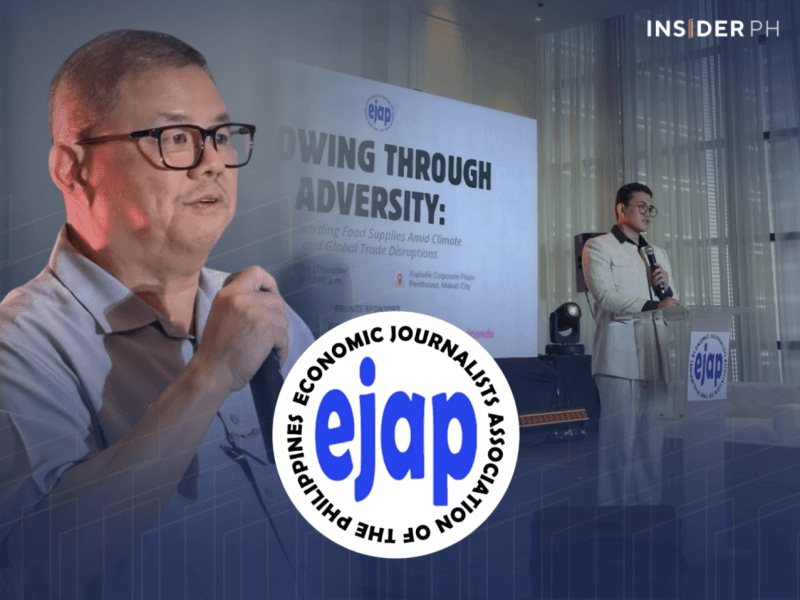
“So, we're beginning to see many of these large investors finally recognizing agribusiness as a profitable sector,” said Bernardo Villegas, founder of the University of Asia and the Pacific (UA&P), during a recent economic forum with members of the local media.
‘Criminally neglected’
Agriculture has long been “criminally” neglected by Philippine economic planners, unlike in many of the country's Asian neighbors, according to Villegas.
He pointed out that 15 years ago, Vietnam was still considered a developing economy and had yet to experience the rapid urban transformation seen today.
Villegas recalled that when he and a group of Filipino businessmen visited Ho Chi Minh City, Vietnam's commercial center, they found it less developed than Philippine financial districts such as Makati City, with relatively few high-rise buildings at the time.
However, when they traveled outside the city, they were surprised to find highly developed infrastructure, including wide, six-lane concrete roads and modern transport networks.
Today, Vietnam exports high-value agricultural products such as coffee, cacao, and durian worth about $60 billion annually, compared with the Philippines, which exports roughly $8 billion worth of agricultural and agribusiness products each year.
Villegas noted that Vietnam has even surpassed Colombia to become the world's second-largest coffee exporter.
“When I visited Vietnam 15 years ago, coffee was hardly part of the conversation. Today, Vietnam ranks second only to Brazil in coffee exports. How did it happen? The government played a very effective role in helping small farmers consolidate into cooperatives and adopt more productive farming practices, resulting in significantly higher yields,” he said.
Doing it right
Villegas said Vietnam got its priorities right. Before building modern financial hubs comparable to Makati City and Bonifacio Global City in Taguig, the Vietnamese government focused on developing robust infrastructure in rural areas and regions outside the capital, while investing heavily in modern agriculture.
The average farm size in Vietnam was even less than a hectare, he noted, but the government was highly effective in consolidating farms and helping develop cooperatives.
Villegas said there are now signs that the Philippine government has learned from past shortcomings by taking primary responsibility for providing the basic infrastructure that rural communities lacked for decades.
There is now a concerted effort to build farm-to-market roads, irrigation systems, and post-harvest facilities to help lift millions of small-scale farmers above the poverty line.
The shift can be seen in improvements to rural road networks, particularly in Mindanao and Palawan.
Impact not immediate
While the government has already begun laying the groundwork, Villegas said the agriculture sector's target growth rate of 3 percent may not be achieved until the next administration.
The 3-percent target is significant because it mirrors the average annual agricultural growth rate recorded over the past two decades by leading agribusiness economies in Asia, including Thailand, Vietnam, and Malaysia.
“It will not happen overnight. But agriculture and agribusiness will eventually become the country's lead growth sector,” Villegas said.
He said agribusiness can achieve economies of scale through large investments from major corporations, enabling the production of high-value crops and agricultural products for both the domestic market and exports. —Ed: Corrie S. Narisma

Contributor