
Insider Spotlight
Couchbase is positioning its latest offering around that need, arguing that production-grade AI agents require consistent, real-time access to enterprise data rather than better models alone.
Why it matters
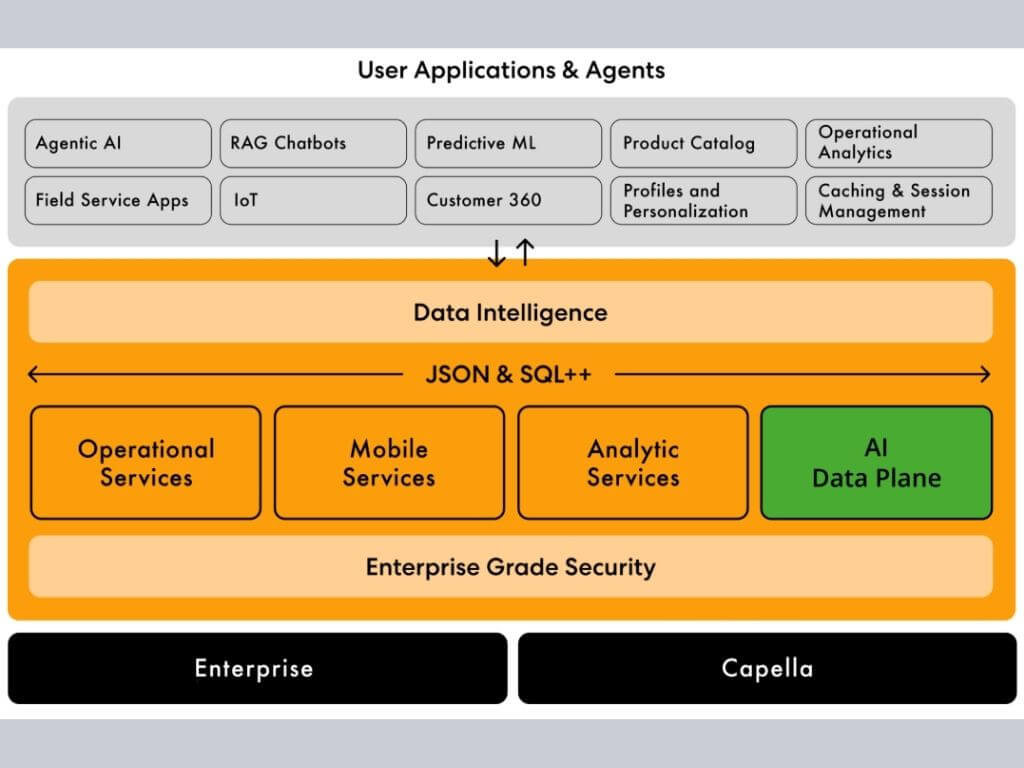
Couchbase said its AI Data Plane is now generally available, combining agent memory, an Agent Catalog, a self-managed Model Context Protocol server, and an LLM cache into a single governed data layer spanning cloud, edge, and lakehouse environments.
The company said the architecture is designed to reduce integration complexity as enterprises deploy autonomous AI agents at scale.
By the numbers
IDC estimates 80 percent of agentic AI use cases will require real-time, contextual, and broadly accessible data.
"Most enterprises quickly discover that moving from chat-style pilots to production-grade agentic systems is really a data problem, not just a model problem," IDC research director for AI, automation, data and analytics Devin Pratt said in a press statement.
The big picture
Couchbase said the platform addresses a growing need for persistent agent memory, context retrieval, and state management across cloud and edge deployments.
The company said its framework-agnostic design supports LangGraph, CrewAI, and LlamaIndex while enabling developers to avoid rebuilding memory infrastructure when switching orchestration frameworks.
"What matters most for enterprise-grade conversational AI agents is that data retrieval is very fast, very consistent, and seamless. When you're running human-to-AI agent interactions, everything behind the scenes needs to be predictable and consistent to provide natural interaction," Agora senior vice president of product Patrick Ferriter said.
What's next
Couchbase also introduced Enterprise Analytics 2.2, adding Apache Iceberg lakehouse federation and a Trino adapter to enable SQL access across operational and analytical data without duplicating datasets.
The release further expands Capella iQ model options and introduces updates across its mobile, edge, and synchronization products to support distributed AI applications. —Vanessa Hidalgo | Ed: Corrie S. Narisma