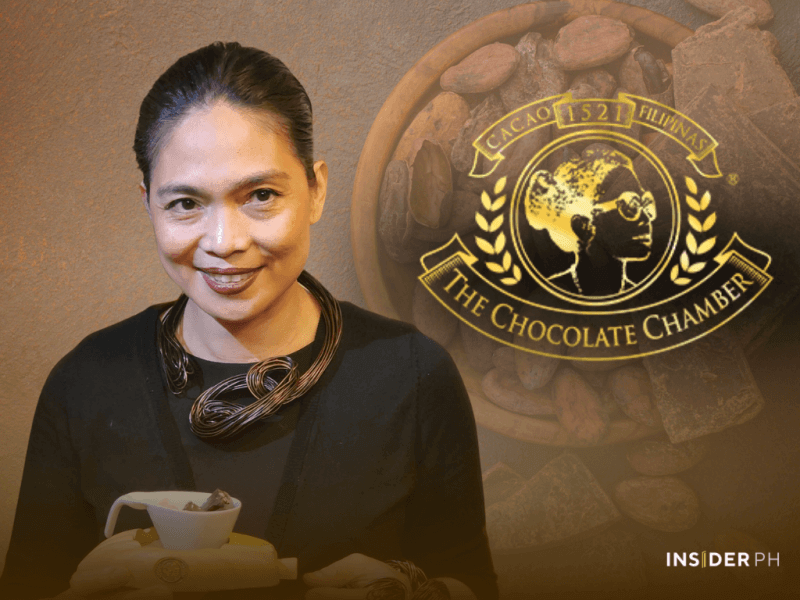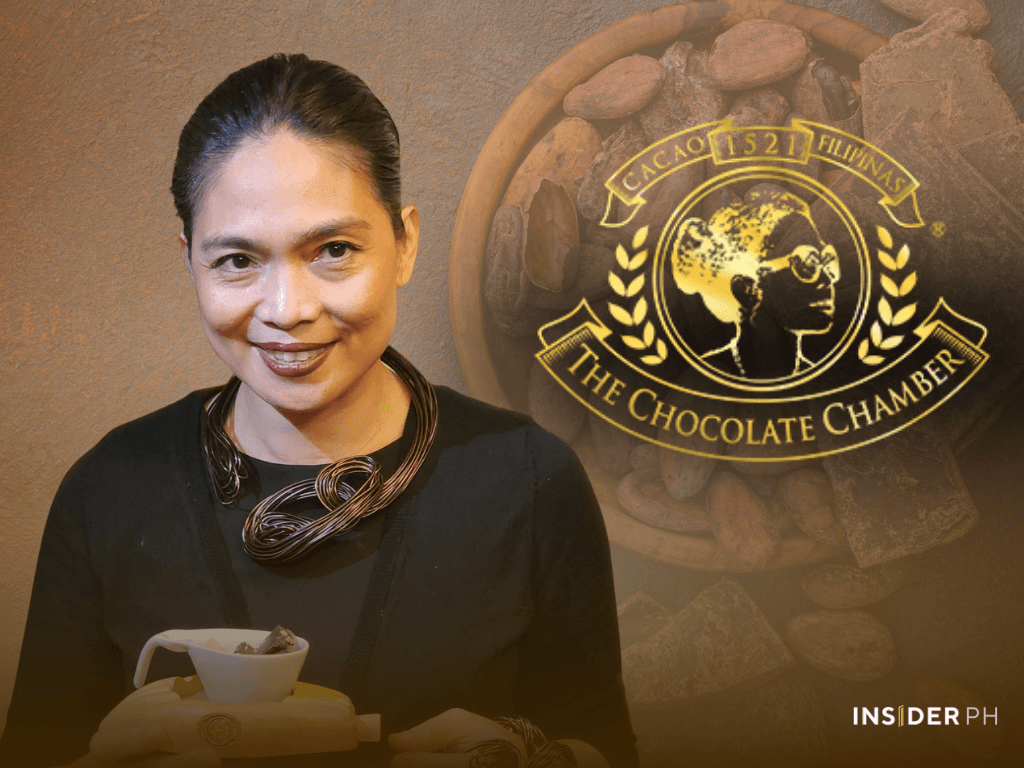
But Raquel Toquero-Choa does more than make and sell artisanal tableya and its variants. She also shares her passion for the traditional preparation of sikwate—from roasting cacao beans to transforming them into a rich, luscious chocolate drink.
“I want to tell the whole world that we exist in the chocolate world,” she declared.
With her youngest daughter, Angelie, Raquel has been holding events and collaborations in the United States, doing exactly what she loves—sharing the Filipino tradition of preparing and drinking sikwate.
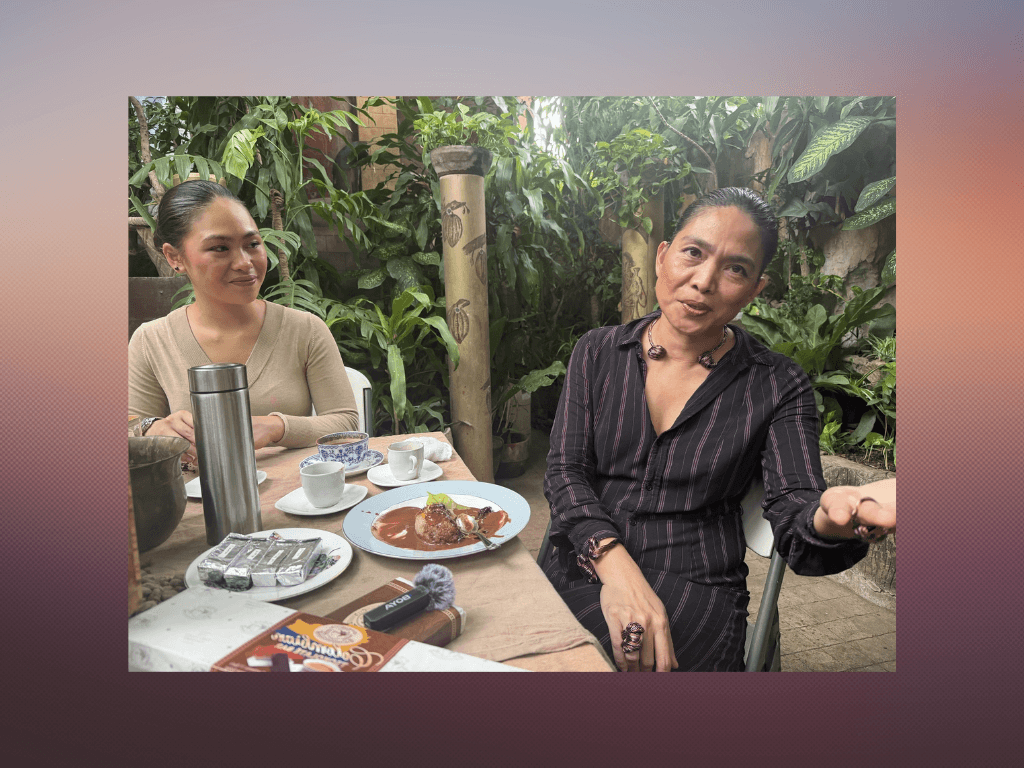
They registered their company, The Chocolate Chamber LLC, in Los Angeles in June 2025. Since then, they have held about 20 events in the US, mostly for diplomats, organizations and retirees.
The reaction is almost always the same: They are fascinated by the traditional Filipino ritual of preparing and drinking sikwate. Some, particularly those of Hispanic and Latino descent, say it reminds them of how their grandmothers made hot chocolate. After taking a sip, many share a similar verdict: It is one of the best cups of hot chocolate they have ever tasted.
Aside from the US, Raquel has also brought the centuries-old tradition to different countries in Asia, South America, and Europe – a big leap for a probinsiyana who used to have a fear of flying.
“Sometimes, I’m amazed by how far I have reached – from the mountains of Balamban to the world,” she said.
Humble beginnings
The passion began when she was seven while growing up in Balamban, about 49 km west of Cebu City, where she was sent after her parents separated.
Her grandmother, Nila, nourished her with sikwate—a simple blend of pure tableya and water—to give her the strength to cross seven rivers on her way to and from school.
She grew up hearing stories about Maria Cacao, a diwata who tended a vast cacao plantation. Legend has it that the river would rise to allow her golden ship, laden with cacao, to pass.
While her grandmother made tableya from cacao grown on her own trees, none was sold. The discs of roasted and ground cacao beans were considered precious to the family.
Her lola made sure they always had pieces of tableya on hand for women about to give birth and for those who were sick or nearing death. Tableya was also offered to departed loved ones during All Saints’ Day and All Souls’ Day.
Raquel later learned that there could be a scientific basis for some practices she had once regarded as superstitious beliefs after having her tableya tested for its nutritional content.
She said the tests showed that cacao contained iron and fiber, nutrients important during pregnancy and childbirth. It also contained magnesium, which she said could promote relaxation and ease discomfort.
Struggles
Life, however, was not easy for Raquel.
She moved to Manila in her early teens when her parents got back together. To survive, she took odd jobs in the Big City from being a laundry woman to garbage collector. She never stopped working even when she returned to Cebu City.
She married early at 16 and later became a mother of eight children — Michael Ray, Michelle Honey, Anthony, Jonathan, Hannah Mae, Alfredo Jr. (AJ), Rose Angelie, and John Paul. Thirty years later, she became a widow.
Although she did not earn a college degree, she enrolled in a vocational course offered by the Technical Education and Skills Development Authority. She later ventured into designing and making dresses before shifting to event organizing. One thing was constant though - her love for sikwate.
Start of the journey
Her eureka moment, however, came in 2010 when her friend from Argentina, Norma, asked her about a possible business venture: “What do you have in the Philippines that we can export to Argentina?”
After thinking long and hard, Raquel went back to her roots—and to what her lola had taught her.
When she served sikwate to Norma and her husband, they were amazed.
The partnership eventually fell through when the couple had to return to Argentina. But something had awakened in Raquel—a fire in her gut.
She began experimenting with dishes infused with tableya, from humba (pork braised in vinegar, soy sauce and sugar) to pancit (noodles), which she served buffet-style in the garage of her home in Casals Village, Barangay Mabolo.
People started lining up to savor the dishes.
Her big break came in 2012 when then Agriculture Secretary Proceso Alcala asked his staff to look for something different but uniquely Filipino to give as Christmas gifts.
One of his staff members learned from Cocoa Foundation Philippines about a woman in Cebu with a passion for cacao. After a long search, the team eventually found its way to the doorstep of Raquel’s home in Casals Village.
Alcala ordered P500,000 worth of gift bags containing her tableya products. The bags were distributed to members of the national media, government officials, ambassadors and other prominent recipients, expanding her market and bringing her wider recognition.
The rest is history.
Products
Raquel heads Ralfe Gourmet Inc. an artisanal chocolate company behind The Chocolate Chamber, its flagship brand offering tableya, sikwate and other cacao-based products.
These include traditional tableya and cacao de bola, her version of queso de bola – large, ball-shaped mass of pure cacao paste that can be shaven into small portions to make sikwate or to put it in some dishes.
She also has developed five variants of her chocolate powder—dark chocolate, milk chocolate, mint, hibiscus and salted caramel, cacao nibs as well as cacao-based beauty and skin products.
The product line also includes chocolate bars inspired by other chocolate-producing countries developed by Angela.
Raquel also operates a café -- The Chocolate Chamber (TCC) – at Robinson Galleria Cebu, which serves sikwate and artisanal chocolates, tableya, pastries and other cacao-based food and drinks.
She also developed Batirol, a chocolate stall and mobile café concept centered on the traditional Filipino custom of drinking sikwate. It is named after that wooden whisk rolled between the palms when making sikwate to give the drink its familiar frothy texture.
Raquel has transformed her home, Casa de Cacao, into an immersive cultural and culinary tour called The Chocolate Journey, which shows how a simple cacao bean can carry generations of knowledge and honors the farmers who grow it, the hands that patiently turn it into tableya and the families that continue to serve sikwate at their tables.
Curated journey
Each journey is curated according to its audience. There is the Cacao Discovery Walk intended for school children which is also being handled by Raquel’s children.
The Chocolate Tour takes visitors through the transformation of cacao to the rich, dark drink long served in Cebuano homes.
Visitors see, learn and experience the art of making sikwate –from the roasting of the cacao beans down, making it into tableya before being transformed into an addictive concoction.
Their most recent visitors were the governors and tourism officials from the recent 19th East Asia Inter-Regional Tourism Federation (EATOF) General Assembly who were introduced to the centuries-old tradition of cacao production and the craft of transforming cacao beans into chocolate.
By the end of the tour, visitors leave with more than the lingering taste of chocolate. They took with them a deeper appreciation of Filipino culture and tradition.
And that is what Raquel hopes to achieve. —Ed: Corrie S. Narisma
Contributor