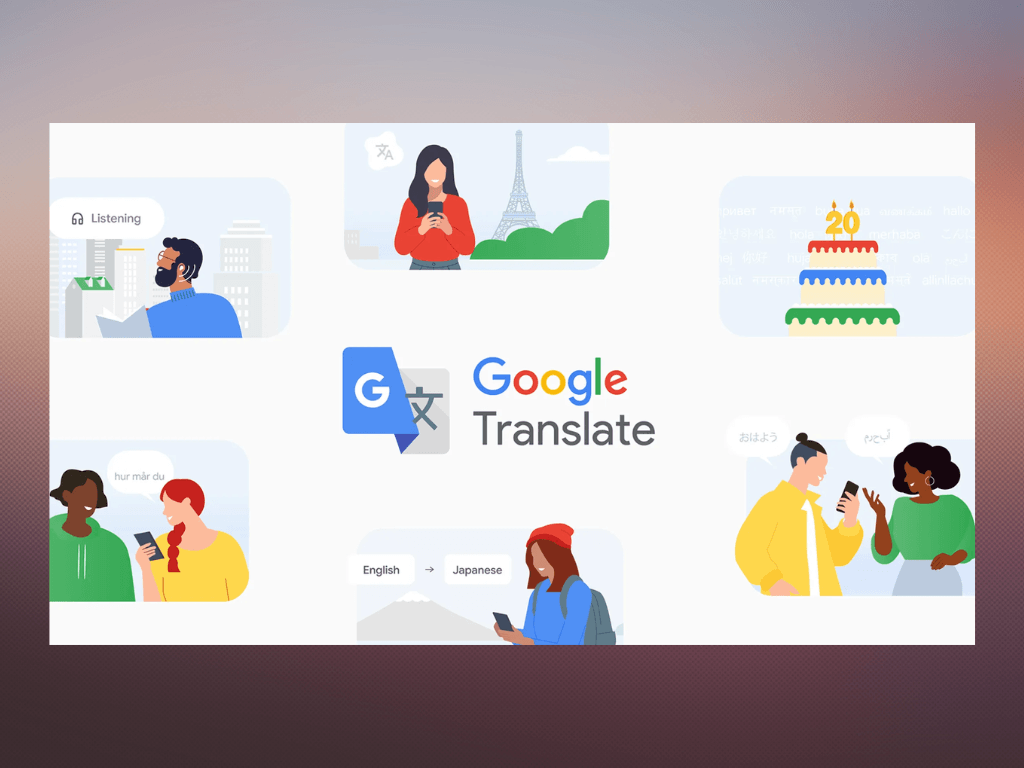
What began as an experimental tool has grown into a widely used platform serving over a billion users each month, transforming how individuals communicate across cultures and borders, Google Philippines said in a statement.
Global reach
Today, Google Translate supports nearly 250 languages, covering about 95 percent of the world’s population. Its expansion now includes indigenous and endangered languages, helping preserve linguistic diversity while improving accessibility.
The platform translates an estimated one trillion words every month—highlighting its scale as a global communication tool.
AI evolution
From its early days using statistical models, Translate has evolved into an AI-powered system trained on vast amounts of data. It now uses advanced models, including Google’s Gemini, to better understand context, tone, and nuance.
New features such as audio-to-audio translation allow more natural, real-time conversations, enabling users to speak and listen seamlessly across languages.
Real-time tools
Among its latest innovations is “Live Translate,” which delivers real-time audio translations while preserving a speaker’s tone. Google said many sessions last longer than five minutes, suggesting deeper conversations and cultural exchanges.
Another feature, “pronunciation practice,” uses AI to give instant feedback, helping users improve how they speak in different languages.
Everyday use
Google Translate has also become a practical tool for everyday situations, especially for travelers and learners.
Through Google Lens, users can instantly translate text on menus, street signs, and documents using their phone cameras. Offline translation options also allow access without internet connectivity, with English, Spanish, and French among the most downloaded languages.
Translation is also among the top uses of Android’s “Circle to Search” feature, where users can highlight on-screen text for instant interpretation.
Learning tool
Beyond translation, the platform is increasingly used for language learning. Google said about one-third of mobile users rely on Translate as a study aid, while many use interactive speaking features to build confidence in real-world conversations.
AI-powered tools also help users track their progress and practice conversational scenarios.
Cultural impact
As global communication evolves, Translate is also adapting to modern language trends.
Its AI models can interpret slang, idioms, and regional expressions—often considered difficult to translate. Users are also exploring creative uses, such as converting text into emojis or decoding internet slang used by younger generations.
Interest in sign language translation has also grown significantly, reflecting broader demand for more inclusive communication tools.
Looking ahead
Google said the mission of Translate remains unchanged: to make information accessible and help people understand one another, regardless of language.
After 20 years, the most commonly translated phrase is still simple but universal—“Thank you.” — Ed: Corrie S. Narisma