Insider Spotlight
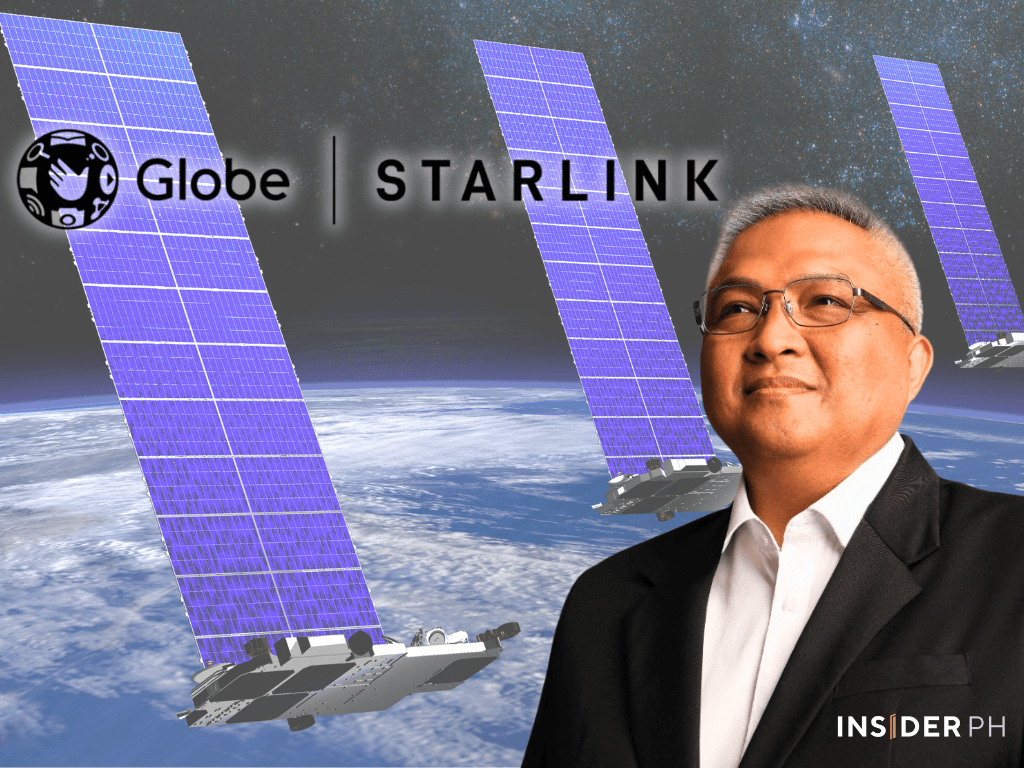
The Ayala-led telecommunications giant said its upcoming satellite-to-mobile service with Elon Musk’s Starlink will depend heavily on the scale and maturity of the satellite constellation supporting the network. Globe said Starlink’s more than 10,000 low Earth orbit satellites provide an advantage in delivering reliable connectivity beyond conventional coverage areas.
Why it matters
The Philippines’ archipelagic geography has long made network rollout expensive and uneven, leaving many isolated communities with weak or no mobile coverage. Satellite-to-mobile technology could help bridge those gaps without requiring costly tower expansion.
“We are focused on what satellite technology can deliver today and how it can benefit Filipinos who are currently unserved and underserved,” said Globe president and CEO Carl Cruz. “This is precisely why we chose to partner with Starlink, a globally proven platform with over 10,000 low Earth orbit satellites in space being used by major operators around the world to expand connectivity beyond traditional network coverage.”
Globe also pushed back against concerns that satellite connectivity is too slow for practical use.
The company said field tests in remote locations showed SMS delivery was “almost instantaneous,” while users could access app-based calls, navigation services, eGov PH, GlobeOne and GCash even outside traditional mobile coverage zones.
Between the lines
Globe said larger satellite constellations can deliver stronger service continuity, faster responsiveness and improved user experience in geographically isolated areas.
The company added that operators in the United States, Japan, Canada, Australia and other markets are also partnering with Starlink, reflecting growing confidence in low Earth orbit satellite infrastructure as a complement to terrestrial mobile networks.
The bottom line
For Globe, satellite technology could become both a competitive differentiator and a practical tool for narrowing the Philippines’ long-standing digital divide.
— Edited by Daxim L. Lucas