With power supply remaining tight, officials said the priority is to ensure that Cebu does not plunge into a massive blackout, which would be more crippling for the province, considered a leading business and economic hub outside Metro Manila.
Department of Energy Visayas Field Office Director Renante Sevilla sought understanding, saying the simultaneous forced outages of several power plants were unexpected and beyond their control.
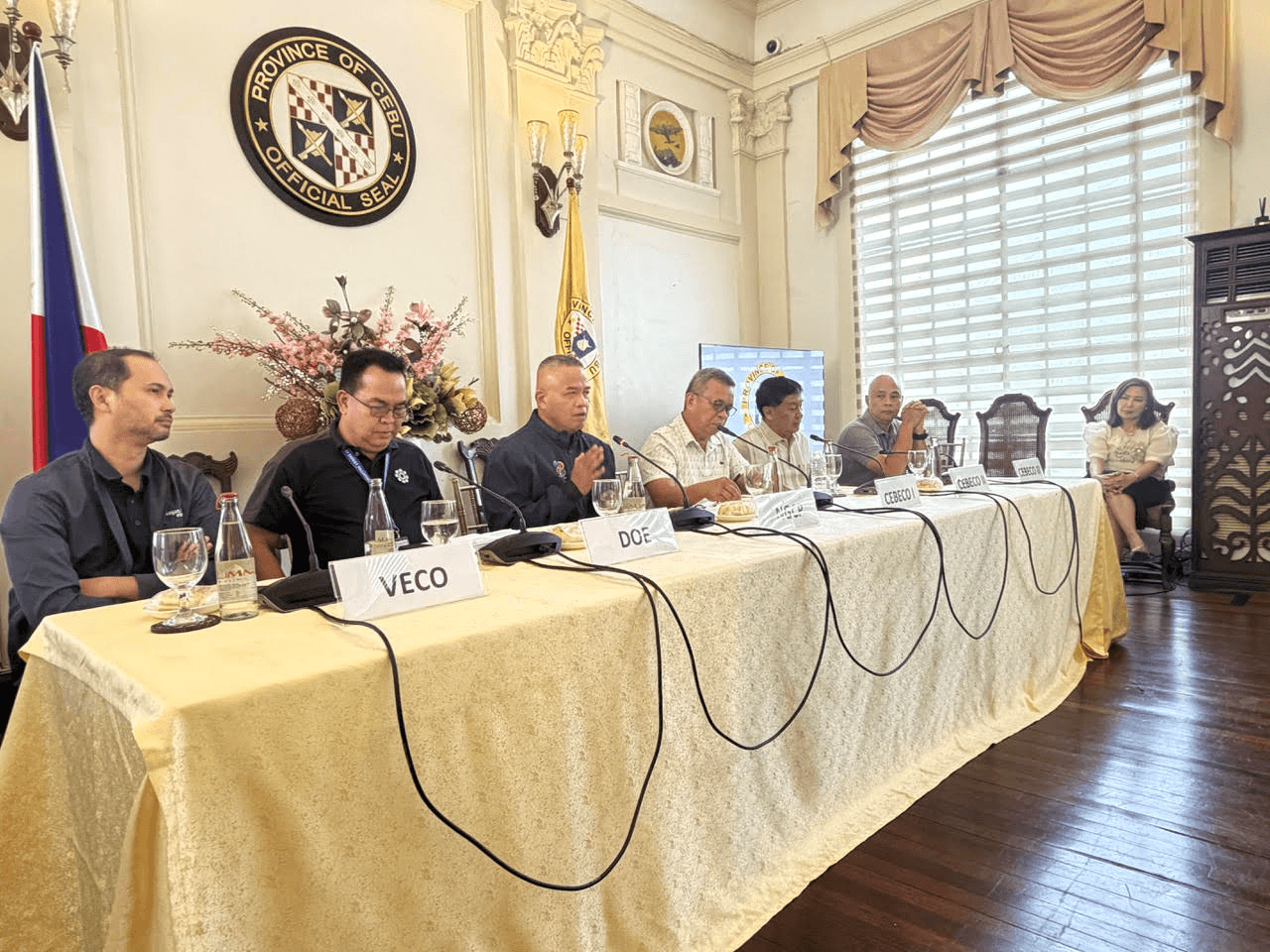
He credited National Grid Corporation of the Philippines (NGCP) for effectively managing the limited power supply in the Visayas grid and distributing it among power distributors in the province while averting a widespread blackout.
NGCP assistant vice president and system operations–Visayas head Engr. Neil Modena cited an incident last week when the grid operator was forced to cut power to parts of northern Cebu served by the Cebu Electric Cooperative (Cebeco) to prevent the system from overloading after the Visayas grid recorded a 509-megawatt (MW) deficit.
“We estimated that within two minutes, we would have a blackout due to overloading of the system. We are thankful to Cebeco for making the sacrifice,” he said in Cebuano.
Limited supply
Modena said the problem stemmed from insufficient supply from private power generators, as several power plants were either on forced or planned outage while others were operating at derated capacity.
Derated capacity refers to a reduction in the maximum amount of electricity a power plant can generate due to equipment problems, maintenance, fuel limitations or other operating constraints.
Based on NGCP’s alert status on Sept. 5, the Visayas grid had a power deficit of 177 MW, with available capacity at 2,255 MW against demand of 2,432 MW.
Because of the supply shortfall, a red alert was raised from 5 p.m. to 8 p.m., indicating that rotational brownouts could be imposed in parts of Cebu.
NGCP said at least 797.8 MW was unavailable to the grid because several power plants were on forced outage while others were operating at derated capacity.
Major power plants, including Therma Visayas Inc. Unit 1 and Panay Energy Development Corp. Unit 3, remained offline.
Worsening the situation was the limited or unavailable power supply from the Mindanao grid, which was also experiencing a supply shortfall.
Under normal circumstances, the Visayas grid gets 250 MW from Luzon and 450 MW from Mindanao. However, Mindanao could provide only limited power—or none at all—to the Visayas because its grid was also grappling with tight supply due to outages at several power plants.
Ancillary services
With limited supply coming in, Sevilla said the DOE has negotiated for two power barges as part of the ancillary services being tapped as a stopgap measure. One will be sent to Iloilo, while the other will be deployed to Cebu within the month.
Sevilla also cited ongoing negotiations for a battery energy storage system (BESS) to be connected to the transmission grid, which could provide about 250 MW of additional capacity.
He said TVI Unit 2, with a capacity of 169 MW, is also scheduled to go online on Sept. 15, while PEDC Unit 3 is set to resume operation in October.
Still, the available supply would not be enough to meet the Visayas grid’s demand of about 2,600 MW—nearly half of which comes from Cebu—without power imports from the Mindanao grid.
With demand at about 1,300 MW, Cebu’s power plants could generate only about 900 MW, leaving the province dependent on at least 300 MW of electricity imported daily from Mindanao and neighboring provinces.
The supply shortfall has forced distribution utilities, on NGCP’s instructions, to implement rotational brownouts to prevent a system-wide blackout that could take days to resolve and severely disrupt economic activity.
Need for power investors
Sevilla maintained that Cebu needs to attract investors to put in the needed additional capacity of about 300 megawatts to achieve power stability.
“We really need additional capacity. At the minimum, we need 300 megawatts. We really need to attract investors,” he told InsiderPH after a news conference at the provincial Capitol on Sept. 4.
So far, there are several renewable energy projects lined up in Cebu, including the 150- MW solar facility in Daan Bantayan town being developed in partnership with Spain-based ACCIONA Energía in northern Cebu and the provincial government.
The project will include a battery system to store energy generated by the plant, allowing electricity to be released during peak demand periods and helping to stabilize the power grid.
Another project is the Alegria Wind Power Project, an 80-MW wind farm in Alegria, Cebu, being developed by MC Power Solutions Inc. (MCPSI) in collaboration with Alternergy. The project will feature 10 wind turbines.
Sevilla said the Daanbantayan Solar Power Plant is expected to become operational by 2027, or by the first quarter of 2028 at the latest, while the Alegria Wind Power Project is expected to come online by 2028.
He pointed out that the DOE had a lot of committed projects which they wanted to be online at the earliest possible time. But some project developers complained that completion was hampered by problems of right-of-way acquisition, among others. —Ed: Corrie S. Narisma

Contributor