The proposals are among the major issues being discussed at the three-day 53rd National Convention of the Chamber of Real Estate and Builders’ Associations Inc. (CREBA), which opened on Oct. 21 under the theme "Beyond Shelter: Creating Communities, Transforming Lives."
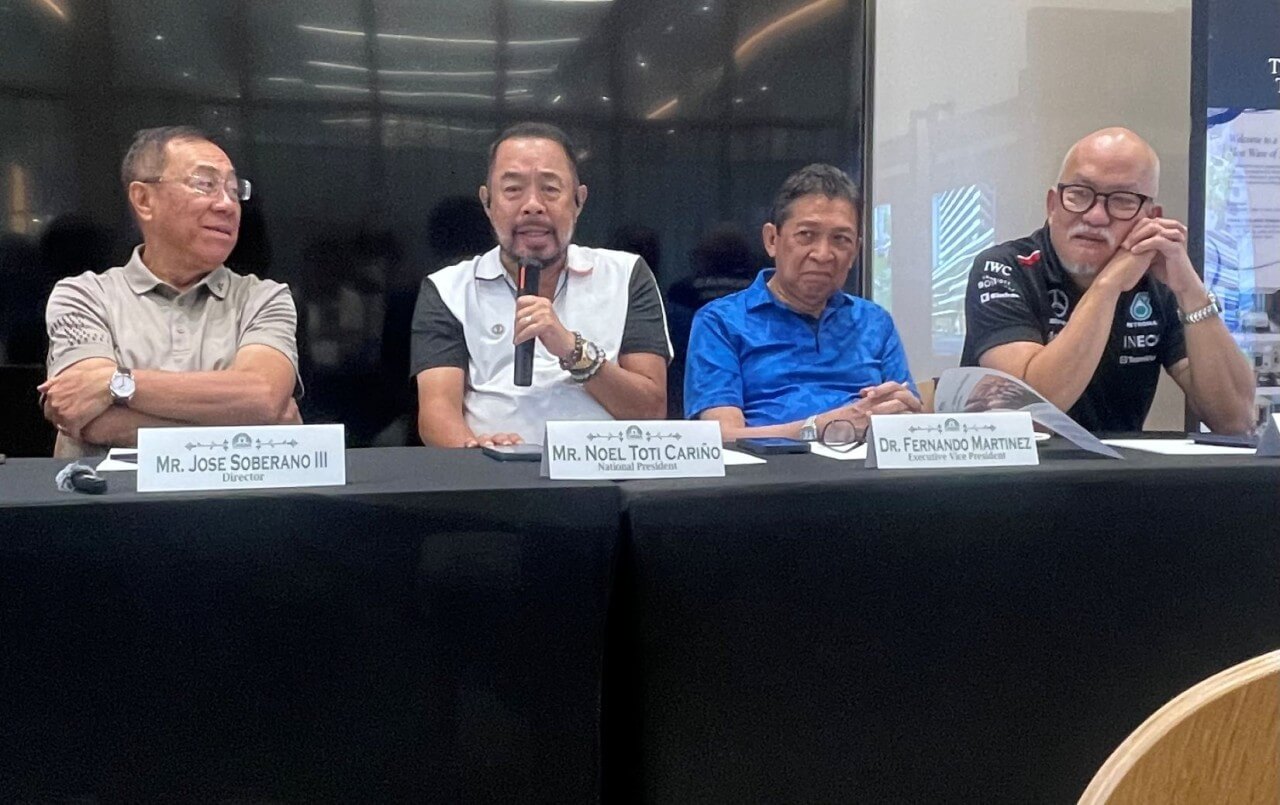
CREBA national president Noel Toti Cariño said the convention provides an opportunity for developers nationwide to discuss industry concerns and formulate recommendations to help address the country's housing backlog, estimated at six million units.
"We would like to listen to all the developers that are part [of the convention] and maybe, you know, listen to their suggestions, so now we can attack this problem as well," Cariño said during a press conference on Wednesday, Oct. 21.
Housing affordability
One of CREBA's major proposals calls for a review of existing balanced housing requirements, particularly the obligation of developers to allocate the equivalent of 15 percent of their residential subdivision project costs to socialized housing.
Cariño said many developers struggle to comply with the requirement because of rising construction costs, high land prices and government-imposed price ceilings on socialized housing units.
He also questioned the effectiveness of requiring developers to build socialized housing projects in areas with limited demand, resulting in some completed units remaining unoccupied.
CREBA is proposing an alternative compliance mechanism that would allow developers to contribute funds to the Home Development Mutual Fund, or Pag-IBIG Fund, instead of directly constructing socialized housing units.
Under the proposal, Pag-IBIG would administer the contributions as interest subsidies for qualified homebuyers, reducing their monthly housing loan payments.
Cariño said the proposed subsidy could lower a beneficiary's monthly amortization from about P4,800 to P2,800, making homeownership more affordable for low-income families.
He explained that the proposal seeks to address not only the shortage of housing units but also the limited financial capacity of many Filipinos to purchase homes.
The contributions would be nonrecoverable and would serve as an alternative means of complying with developers' socialized housing obligations.
CREBA has submitted the proposal to the Department of Human Settlements and Urban Development (DHSUD), Pag-IBIG Fund and the Office of the President.
Licensing reforms
CREBA is also seeking improvements in the processing and issuance of licenses to sell (LTS), including a review of conditions under DHSUD's new guidelines allowing developers to secure temporary licenses.
Cariño welcomed the initiative, which is intended to allow developers to market their projects while completing the requirements for a regular license.
However, he questioned the requirement that payments collected from buyers under a temporary LTS be deposited in an escrow account.
He said the condition could defeat the purpose of the temporary license because developers would be unable to immediately use sales proceeds to finance construction and accelerate project completion.
"How can it help speed up the project?" Cariño asked.
He pointed out that developers had already invested substantial amounts in acquiring land, preparing development plans and securing permits before applying for an LTS.
CREBA has formally submitted its objections to DHSUD and is awaiting the department's response.
Cariño also questioned DHSUD's explanation that delays in issuing licenses were due to deficiencies in developers' applications.
He said the agency should balance its regulatory responsibilities with its mandate to support housing development, rather than focusing solely on enforcement.
He urged DHSUD to adopt policies that encourage private sector investment and accelerate housing construction.
Private sector role
Convention chair Jose Soberano III said the government should create an environment that encourages greater private sector participation in affordable housing development.
He emphasized the need to distinguish between families capable of purchasing homes through financing and those who cannot afford housing even with subsidies.
Soberano said government housing agencies and local government units should take a more active role in providing homes for the poorest families, including through rental and rent-to-own housing programs.
For families with the capacity to pay, he said private developers could expand housing production if appropriate financing mechanisms and incentives were available.
He stressed that developers must be able to recover their investments to sustain housing production and undertake more projects.
Soberano also supported a broader review of socialized housing policies to ensure that requirements imposed on developers are practical and financially sustainable.
He said the convention provides an opportunity for developers, contractors, suppliers and other industry stakeholders to exchange ideas, explore partnerships and identify ways to strengthen the real estate sector.
Beyond shelter
Cariño, meanwhile, said the convention's theme reflects the industry's recognition that housing development should go beyond constructing residential units.
He said developers must also consider access to livelihoods, employment, transportation, schools, infrastructure and other essential services when planning residential communities.
The convention also features discussions on emerging real estate trends, new technologies, international partnerships and investment opportunities.
CREBA vice president for international affairs Andy Mañalac said the organization's international partnerships give Filipino developers access to global networks and emerging concepts such as wellness-oriented real estate development.
The gathering also provides a platform for industry leaders and government representatives to discuss policy recommendations aimed at making housing more accessible while encouraging greater private sector participation in addressing the country's housing needs. —Ed: Corrie S. Narisma
Contributor