Leaders of the Mandaue Cebu Chamber of Commerce and Industry (MCCI) and the Cebu Chamber of Commerce and Industry (CCCI) called for coordinated government action to address the power crisis and protect Cebu’s competitiveness.
During the Cebu Economic Forum 4.0 on Sept. 8, MCCI immediate past president Mark Anthony Ynoc said the rotational brownouts were already taking a toll on Mandaue City’s industrial sector, driving up production costs, disrupting schedules and affecting equipment.
“Anything you do with power, anything you do with fuel, affects the supply chain, increases the consumer cost. So that's what we are actually worried about,” he said.
Synergy
To address the problem, he said, the Department of Energy, the Energy Regulatory Commission and National Grid Corporation of the Philippines must work together—from planning and developing power plants to connecting them to the transmission grid and, eventually, to distribution utilities.
CCCI president Regan Rex King agreed, saying collaboration among government agencies and the private sector was necessary to address challenges across the entire energy chain.
Some businesses have already adjusted their work schedules around the rotational brownouts, while others are investing in solar power systems and even electric vehicles.
But King stressed that these were only short-term solutions.
King said efforts to attract investors, such as the economic forum organized by the Cebu provincial government, could be undermined if the province could not provide an adequate and reliable power supply.
Delegates from 11 countries attended the fourth Cebu Economic Forum on Sept. 8 and 9 at the provincial Capitol.

New capacity
During an online press conference on Sept. 7, energy officials said power supply in the Visayas grid is expected to stabilize by Sept. 21, when six power plants in the Visayas and Mindanao are expected to resume operations.
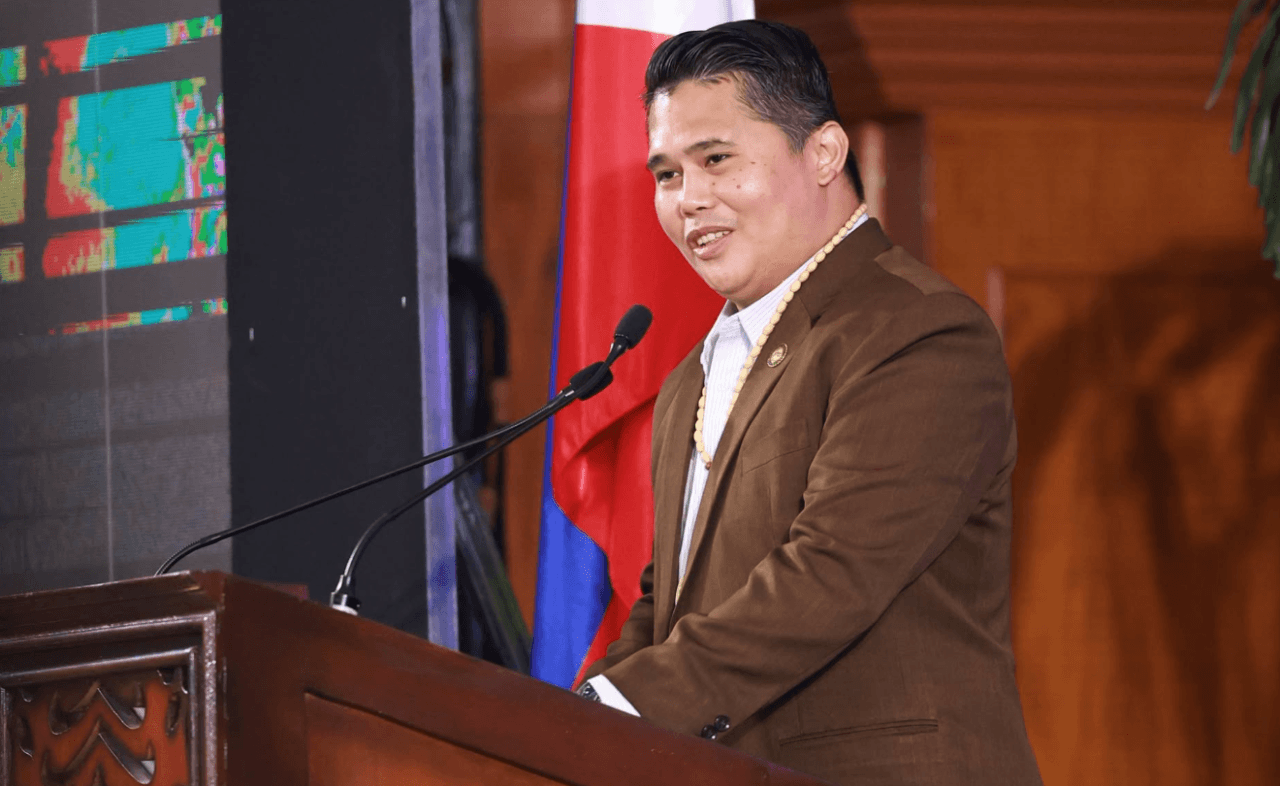
Energy Secretary Sharon Garin said the Visayas grid’s power supply problems should have been anticipated years ago, given that building a power plant takes at least three to five years.
“It is not just a power plant but also transmission (because) transmission line also takes time (to build). The forecasts, investments, and additional capacity we need today should have been planned and put in place years ago. Kaya ngayon po naghahabol tayo (So now we are trying to catch up). We cannot change what was not done then. What we can do now is act with urgency,” she said.
Garin said that starting 2028, Cebu and Bohol will have additional dependable and renewable capacity.
One of these is a new base load capacity of 150 megawatts for Cebu in 2028 and 107 MW for Bohol in 2029. This is on top of the 470 MW of additional renewable energy in 2028 and another 60 MW in 2029.
GEAP
Garin said these renewable energy projects won in the government’s Green Energy Auction Program (GEAP).
Under GEAP, the government procures renewable energy capacity from developers through competitive bidding.
The Department of Energy sets the capacity to be auctioned for technologies such as solar, wind, hydro and biomass, while qualified developers submit offers indicating how much power they can supply and at what price.
Winning bidders generally secure long-term supply contracts at their approved rates, subject to the auction rules and regulatory approval.
Garin said the new baseload capacity was part of a DOE initiative to find investors willing to build new power plants in Cebu and Bohol.
For Panay and Negros islands, in the pipeline includes 135 MW of base load in 2028, 217 MW in 2029, 150 MW in 2030, and 135 MW in 2031.
Another 100 MW of renewable energy is expected in 2028 and 270 MW in 2029. —Ed: Corrie S. Narisma

Contributor