• SpaceX’s target valuation is more than five times the entire PSE.
• Investors are betting on Elon Musk’s vision as much as the business itself.
• GCash could give the Philippine market its biggest growth story in years.
American tycoon Elon Musk’s SpaceX is aiming for a valuation so massive it would make entire stock markets look small.
Despite disclosing staggering first-quarter losses, the rocket and satellite company behind broadband provider Starlink, xAI and social media platform X is targeting a value of $1.75 trillion or about P107 trillion.
This is more than five times the market capitalization of all Philippine Stock Exchange firms, valued at about P19.5 trillion.
For many Filipino investors, the blockbuster deal is becoming a painful reminder of what the local market has struggled to produce in recent years: a story big enough to make investors dream again.
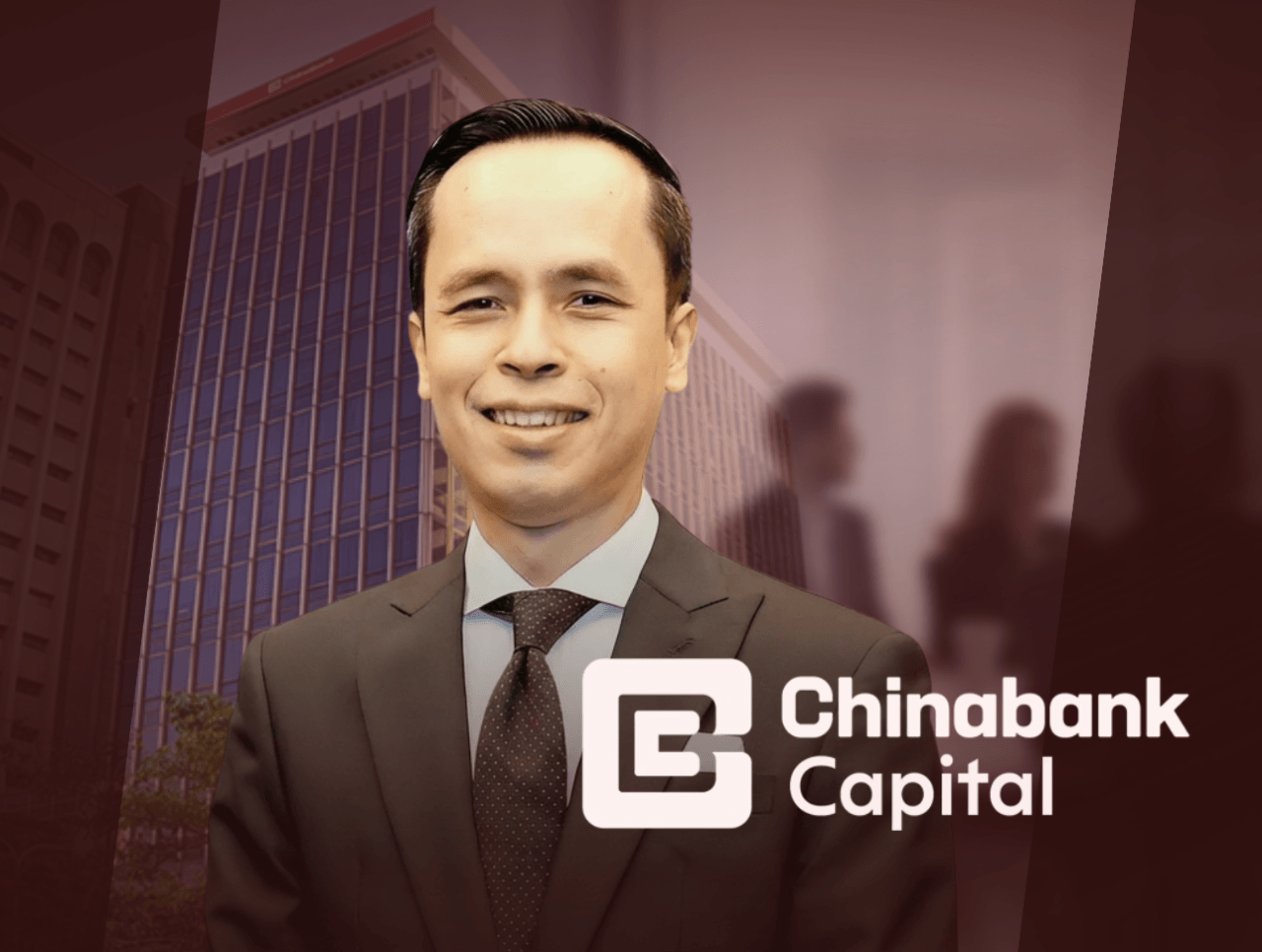
“The extraordinary valuation of SpaceX goes well beyond conventional business fundamentals. The IPO is basically a bet on Elon Musk and a leap of faith into his vision of humanity’s future,” Juan Paolo Colet, managing director at China Bank Capital, told InsiderPH.
“Notwithstanding the current geopolitical crisis dragging economies like ours, there remains a lot of money out there that appears willing to buy into an exciting story about a multitrillion-dollar opportunity in space and artificial intelligence,” he added.
A shrinking local market
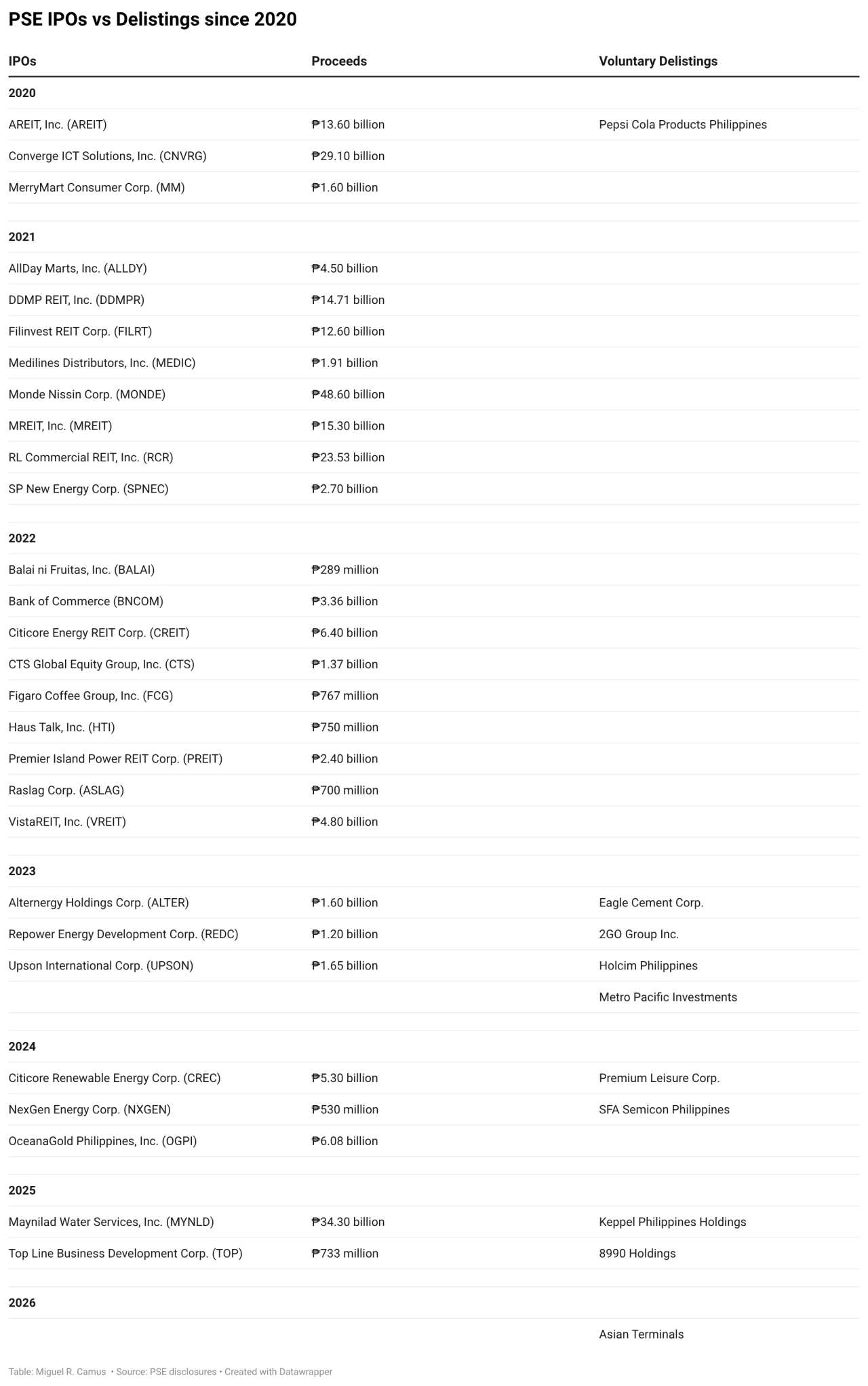
The local IPO market has dried up for now after Maynilad Water Services Inc. and Top Line Business Development went public. That same year, Keppel Philippines Holdings and 8990 Holdings voluntarily exited the bourse.
The Middle East conflict further darkened the outlook in 2026, with no IPOs completed so far while the market continued to lose major listed companies.
Asian Terminals Inc. delisted last April 3 while Robinsons Retail Holdings Inc. is starting its own process to exit the exchange. These are two of the biggest names leaving the PSE.
Reforms by the PSE and Securities and Exchange Commission to cut fees and commissions have helped cushion the decline. But the market has remained weak for much of 2026 as investors grapple with soaring prices, fears of a slowdown from the US-Iran war and the aftermath of the flood control corruption scandal in 2025.
Trading at discounts
As a result, many of the market’s biggest blue-chip companies continue to trade at deep discounts.
The exception is Enrique Razon Jr.’s International Container Terminal Services Inc., the most valuable company on the benchmark index with a market value of about P1.65 trillion.
Other firms may also be looking beyond the PSE, with tycoon Manuel V. Pangilinan recently saying Maya could eventually pursue a US listing before the Philippines.
A rare bright spot
The local IPO drought could soon end with the debut of Globe Telecom and Ayala-backed Mynt, the parent firm of GCash.
GCash, the country’s biggest financial technology platform, operating everything from mobile wallets and personal loans to crypto trading, could list at an $8 billion valuation, Reuters reported last May 14.
This is 60 percent larger than its landmark $5 billion valuation when Japan’s MUFG Bank and Mitsubishi Corp. entered in 2024.
“There’s a lot of excitement around the GCash IPO. It’s the most anticipated Philippine IPO in decades,” Colet said.
“The business fundamentals are firmly anchored on the app’s growing uses and profitability, and then you have all sorts of possibilities that can be pursued as our economy moves towards greater digitalization,” he added.
Colet also expects a realistic valuation upon listing, noting that “valuation multiples will not run far away from reality.”
The power of a story
GCash, a two-decade-old business that became a critical tool during the pandemic lockdowns, taps into a powerful growth story built around closing the Philippines’ long-standing gaps in financial access and digital payments.
It’s not in the same league as SpaceX’s mission to “build a base on the Moon and cities on other planets,” but it highlights how a strong narrative can still capture investors’ imagination.

Miguel R. Camus has been a reporter covering various domestic business topics since 2009.