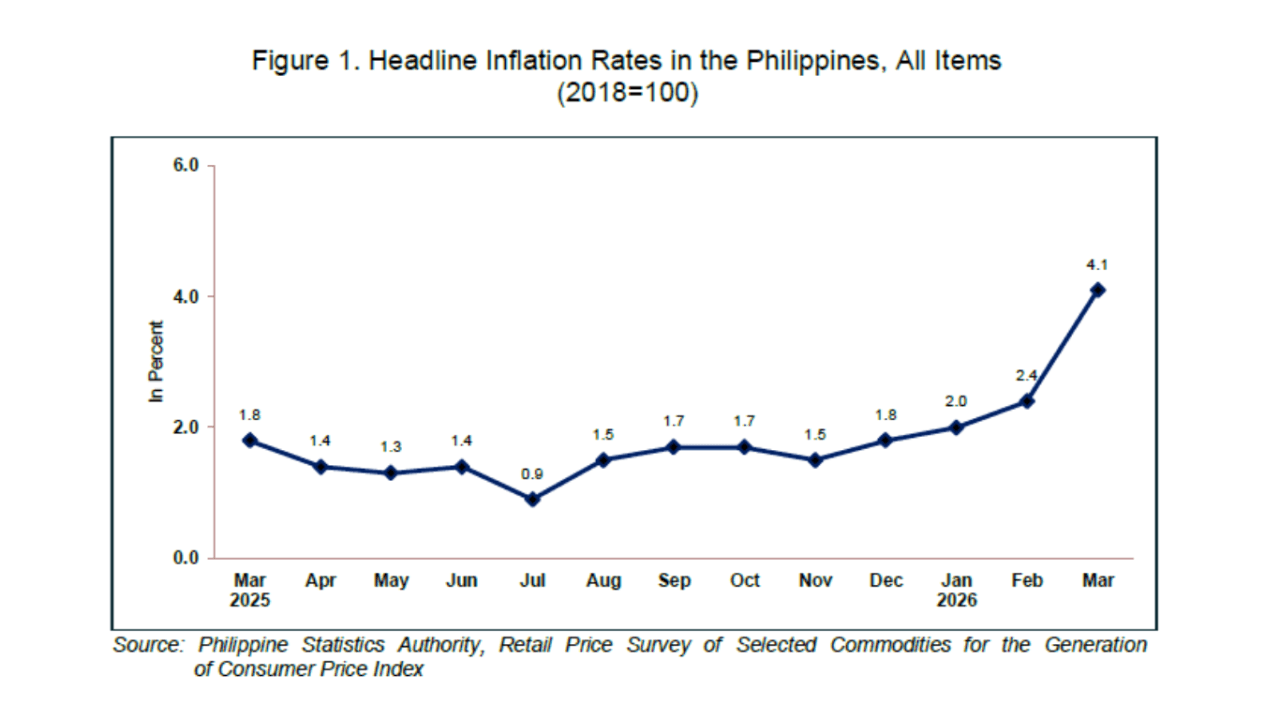
Headline inflation rose to 4.1 percent from 2.4 percent in February, pushing the first-quarter average to 2.8 percent and marking a sharp increase from 1.8 percent a year earlier.
The uptick was largely driven by a surge in transport costs, alongside faster price increases in food and utilities. Analysts say the broad-based rise across commodity groups points to mounting cost pressures that could affect both consumers and businesses in the coming months.
Food prices also picked up pace, with staples like rice reversing earlier declines, while core inflation—which strips out volatile food and energy items—continued to climb. The data suggests inflationary pressures are becoming more entrenched, even beyond traditionally volatile sectors.
Highlights
Headline inflation
4.1 percent in March 2026 (from 2.4 percent in February)
Q1 average: 2.8 percent
March 2025: 1.8 percent
Main drivers
Transport: 9.9 percent (from -0.3 percent )
Food & non-alcoholic beverages: 3.0 percent (from 1.8 percent)
Other sectors with faster increases
Housing & utilities: 4.5 percent (from 3.5 percent)
Restaurants & accommodation: 5.0 percent (from 4.4 percent)
Alcohol & tobacco: 3.7 percent (from 3.1 percent)
Top contributors to overall inflation
Food & non-alcoholic beverages: 28.2 percent share
Housing & utilities: 22.5 percent
Transport: 22.1 percent
Food inflation
2.8 percent in March (from 1.6 percent)
Key driver: rice (3.6 percent from -3.4 percent)
Food items with faster increases
Corn: 12.4 percent
Vegetables: 6.9 percent
Fruits: 5.1 percent
Core inflation
3.2% (from 2.9 percent )
March 2025: 2.2 percent
—Ed: Corrie S. Narisma