Insider Spotlight
Coming off a 39.2-percent increase in domestic business in 2025, Klook said Filipino travelers are now increasingly looking outward—but not too far.
The platform’s global survey of 11,000 respondents, including 500 Filipinos, shows a clear tilt toward short- to medium-haul destinations across Asia.
“We at Klook eagerly anticipate the results of the Travel Pulse survey every year, as it not only gives us an idea of what to expect from our users, but also insights on the why behind their travels,” shares Klook Philippines general manager, Michelle Ho.
Why it matters
This regional pivot comes as the travel sector remains sensitive to geopolitical uncertainty. Industry players like Klook are tracking how ongoing conflicts could influence route choices, travel timing, and spending behavior—potentially reinforcing demand for destinations perceived as safer, closer, and more affordable.
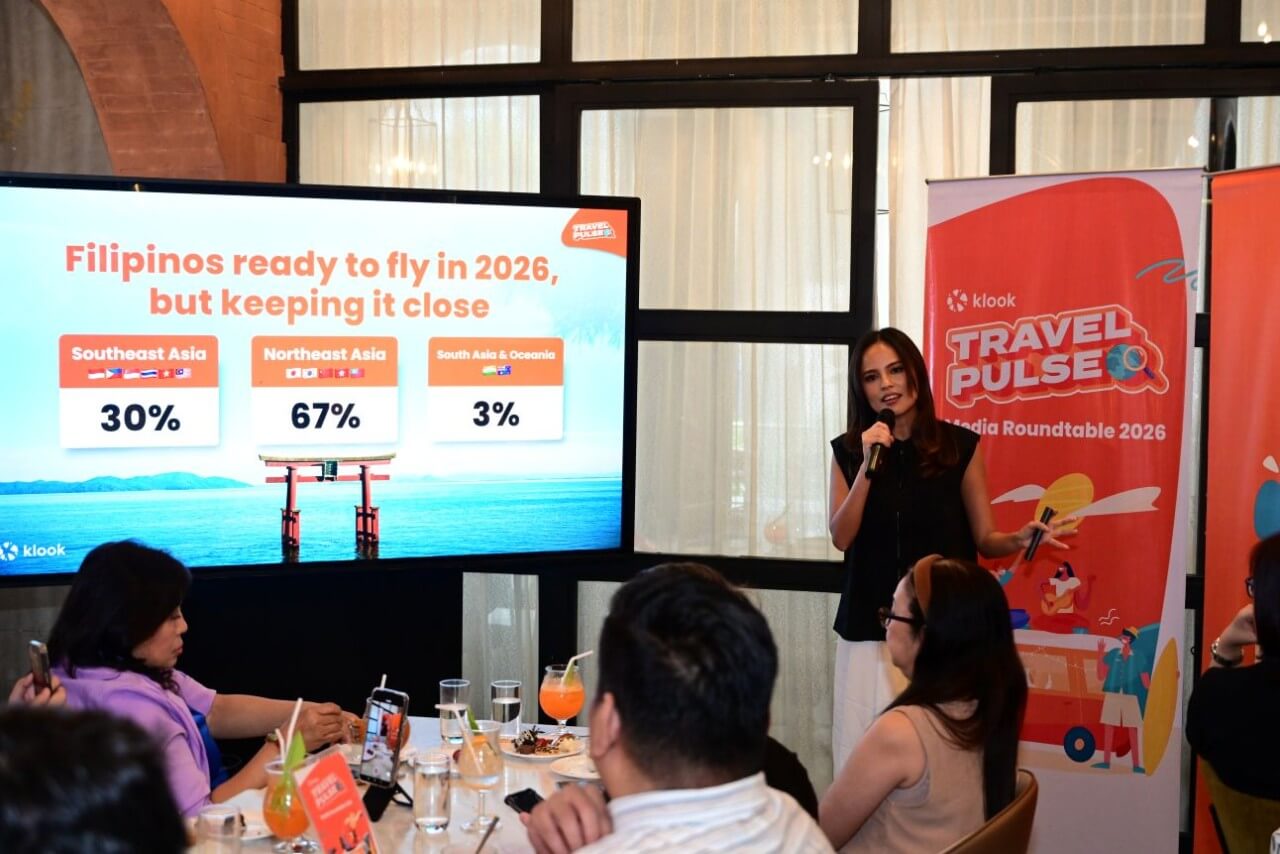
The study shows Northeast Asia accounts for 67 percent of travel intent, followed by Southeast Asia at 30 percent, underscoring a concentration of demand within relatively accessible corridors.
Between the lines
Klook data already signals this shift. Vietnam bookings surged 193 percent while Taiwan rose 124 percent in 2025 versus 2024, aligning with growing interest in nearby destinations.
At the same time, affordability remains the top priority for 42 percent of Filipino travelers, followed by building memories and seeking meaningful experiences—suggesting that external uncertainties may be reinforcing value-driven decisions.
What’s changing
Filipinos are reallocating budgets toward food and experiences. While shopping remains a major activity, a strong interest in cultural activities, local tours, and family-oriented travel is also seen.
Social media continues to shape discovery, while AI—especially among Millennials—is increasingly used to optimize travel planning and costs.
The bottom line
While destination preferences remain broadly stable, Klook sees traveler intent evolving toward more deliberate, experience-driven, and risk-aware decisions—trends that could accelerate if geopolitical tensions persist.
“With these findings, we are working towards further improving our offerings, and curating even more experiences that align with the interests of next-generation Filipino travelers”, Ho said.---Ramon C. Nocon | Ed: Corrie S. Narisma