Regan Rex King, president of the Cebu Chamber of Commerce and Industry (CCCI), urged businesses to be proactive in making their operations more digitally adaptive, including embracing AI and electronic payment systems such as Apple Pay.

Speaking at 2GO’s recent “Connected for Growth” business forum, King said technology and digitalization can make a significant difference for businesses, even through simple solutions such as allowing customers to book shipments online.
“If you want to ship your truck or your goods, it should be possible to do everything online without having to send somebody to the port to get a bill of lading. If that’s done digitally, more people will use the service, because if people find something easy, they use it more,” he added.
Doing that
2GO has been doing exactly that—integrating AI into its processes.
Faye Alonzo, 2GO Forwarding business unit head, who joined King in the panel discussion, said the company has already eliminated handwritten waybills and manual encoding through its Intelligent Document Processing (IDP) system, improving accuracy and preventing issues caused by illegible handwriting.
Documents are scanned and converted into digital records, reducing the manpower needed to manually re-encode data.
“We process thousands of shipments every day—including e-commerce parcels—so this creates significant efficiency gains,” she added.
Aside from this, Alonzo said 2GO has also been working to automate critical information flows, such as passport release notifications and delivery status updates, which are pushed directly to customers through their mobile phones.
Cautious
Francis John Chua, 2GO Travel senior assistant vice president and business unit head, said they were also exploring the use of AI to improve operations but had to be cautious because the unit handles a significant amount of personal data.
“We have to tread carefully in the context of cybersecurity and data privacy,” he said during the panel discussion.
Alonzo said 2GO also relies on AI-driven data analytics in its freight operations, particularly for dynamic routing to improve delivery efficiency.
She said freight operations involve daily decisions on how many trucks to deploy, whether there is enough time to complete deliveries, and when routes should be consolidated and deliveries clustered to maximize efficiency.
Alonzo said 2GO uses data and AI to plan routes, maximize capacity and make better deployment decisions.
“If we don’t use data analytics and we keep moving trucks whether full or not, we’ll bleed,” she said. “We’re also encouraging customers to adopt the digital processes so they can fully benefit from these efficiencies.
Market needs
Sharon Musngi-Ngo, 2GO Sea Solutions vice president and business head, said one of the challenges in digital transformation is market readiness, as customers in domestic shipping, which largely involves business-to-business transactions, still prefer personal interaction.
She, however, said 2GO plans to launch online booking and information portals where customers can input information themselves, improving accuracy while reducing the risk of human error.
“It’s a gradual shift—from high‑touch to high‑tech—and we need to convince customers that it’s more efficient for them,” she added.
Logistic hub
Ngo stressed that 2GO considers Cebu a strategic logistics hub, enabling cargo to be consolidated, redistributed and efficiently transported to destinations across Luzon, the Visayas and Mindanao.
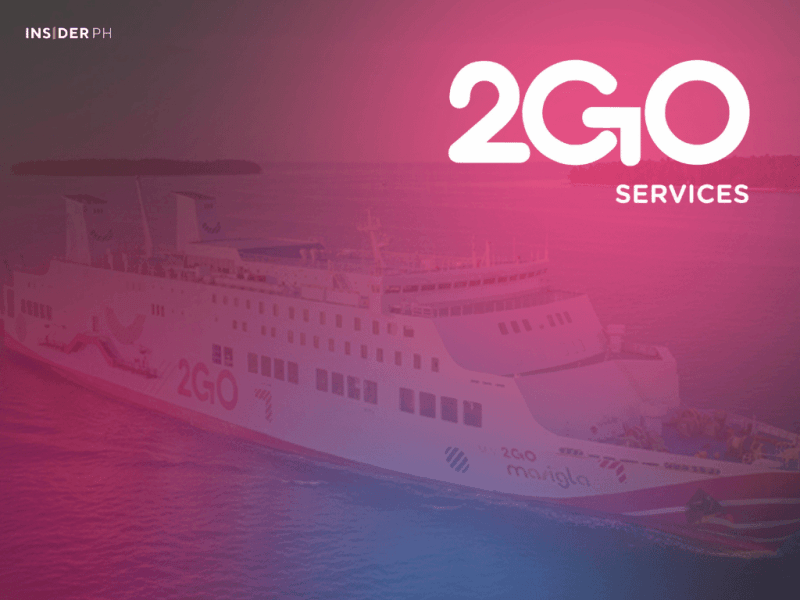
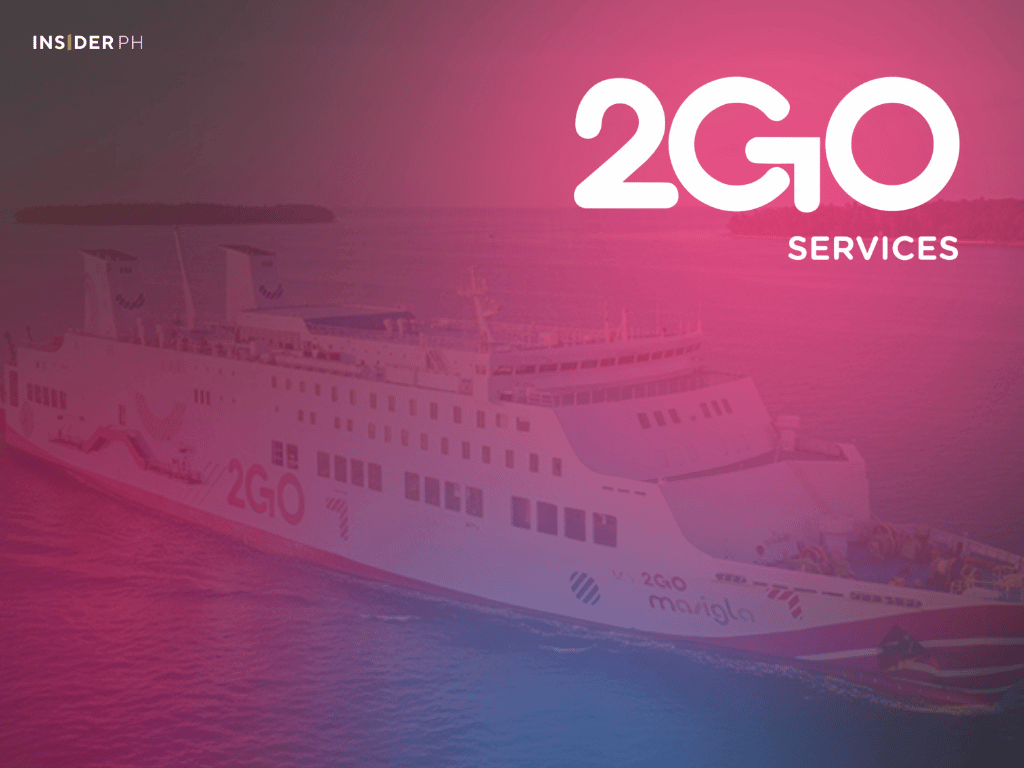
As proof of the company’s commitment to Cebu, 2GO has deployed several vessels connecting Cebu to destinations across the Philippines.
At present, Ngo said 2GO has five roll-on/roll-off (ro-ro) vessels plying the Cebu-Manila route and vice versa on fixed schedules, offering some of the fastest transit times.
The company also operates direct routes from Cebu to Tagbilaran City in Bohol and Cagayan de Oro City. By 2027, 2GO is looking to revive routes to Dumaguete City in Negros Oriental and San Carlos City in Negros Occidental.
“From 2GO’s standpoint, Cebu is a growing region and a gateway to multiple areas. We’ll continue to closely monitor in-and-out productivity to and from Cebu, and we will deploy additional capacity if necessary,” Ngo said.
“From 2GO’s standpoint, Cebu is a growing region and a gateway to multiple areas. We’ll continue to closely monitor in‑and‑out productivity to and from Cebu, and we will deploy additional capacity if necessary,” said Ngo. —Ed: Corrie S. Narisma
Contributor