Insider Spotlight
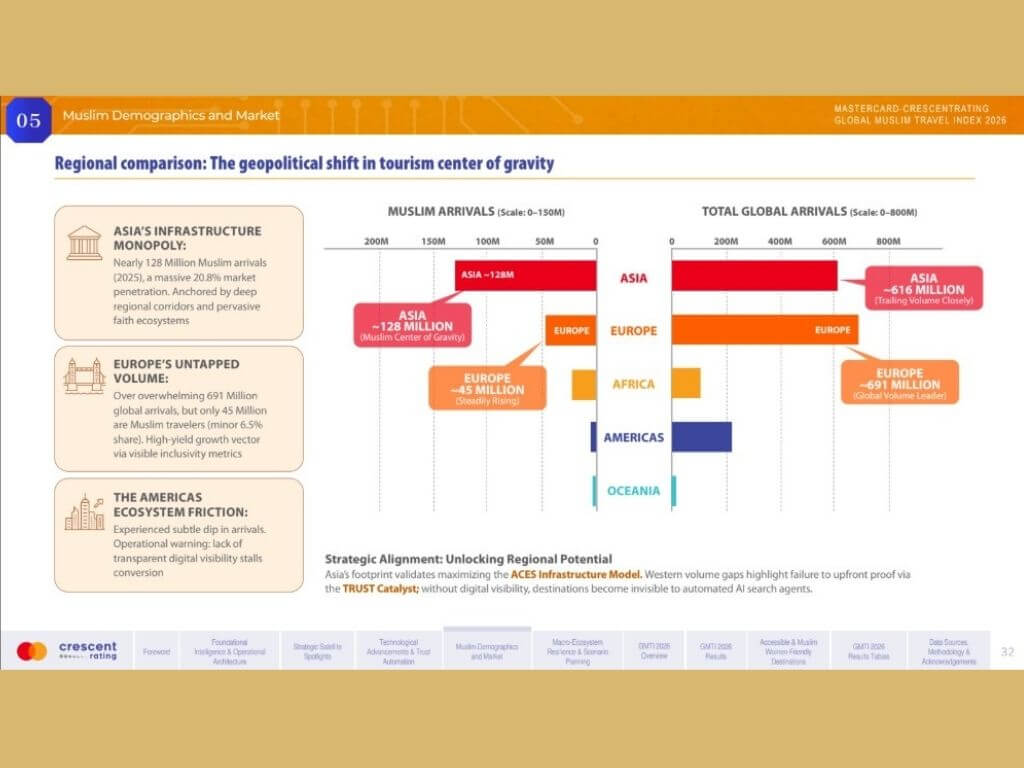
According to the latest Global Muslim Travel Index 2026 (GMTI 2026) released by Mastercard and CrescentRating, 80 percent of travelers now use AI-powered tools for travel-related decisions, marking a shift from traditional search-based planning to AI-assisted recommendations.
The report evaluates 150 destinations that account for more than 98 percent of global Muslim visitor arrivals.
The findings suggest that destinations with Muslim-friendly services such as Halal dining, prayer facilities and faith-based amenities may lose visibility if those offerings are not digitally structured and accessible to AI platforms.
Why it matters
As AI increasingly influences travel decisions, tourism boards and businesses face growing pressure to ensure their services are discoverable through digital channels rather than relying solely on physical infrastructure.
“Muslim travel is being reshaped by digital trust, seamless access and the need for greater certainty across the journey,” Mastercard Southeast Asia Customer Solutions Center senior vice president Aisha Islam said in a press statement.
“As AI becomes more embedded in travel planning, destinations and businesses need to make trusted information, secure payments and Muslim-friendly services easier to discover and act on. For Southeast Asia, this presents a strong opportunity to strengthen its position as a connected, inclusive and digitally enabled travel corridor,” Islam said.
The report also highlighted changing travel behavior amid rising fuel costs, geopolitical tensions and security concerns. Rather than canceling trips, many Muslim travelers are opting for destinations closer to home, creating what GMTI described as a “home-continent” mobility trend.
The regional picture
Southeast Asia has emerged as a key beneficiary of this shift due to strong air connectivity, established Halal tourism ecosystems and proximity to major Muslim travel markets.
Malaysia retained its position as the world's top Muslim-friendly destination for the 11th straight year with a score of 82. Indonesia climbed to joint second place alongside Türkiye and Saudi Arabia, each scoring 79. Singapore remained the highest-ranked non-OIC destination, while Hong Kong moved into second place among non-OIC markets.
The Philippines also gained recognition through Mindanao, which was named the Most Promising Muslim-friendly Region among non-OIC destinations, underscoring growing efforts to attract Muslim travelers beyond traditional tourism hubs.
Looking ahead, CrescentRating said destinations will need to move beyond basic readiness and focus on making services digitally visible, trusted and easily accessible as AI becomes a primary gateway for travel discovery and bookings. —Vanessa Hidalgo| Ed: Corrie S. Narisma