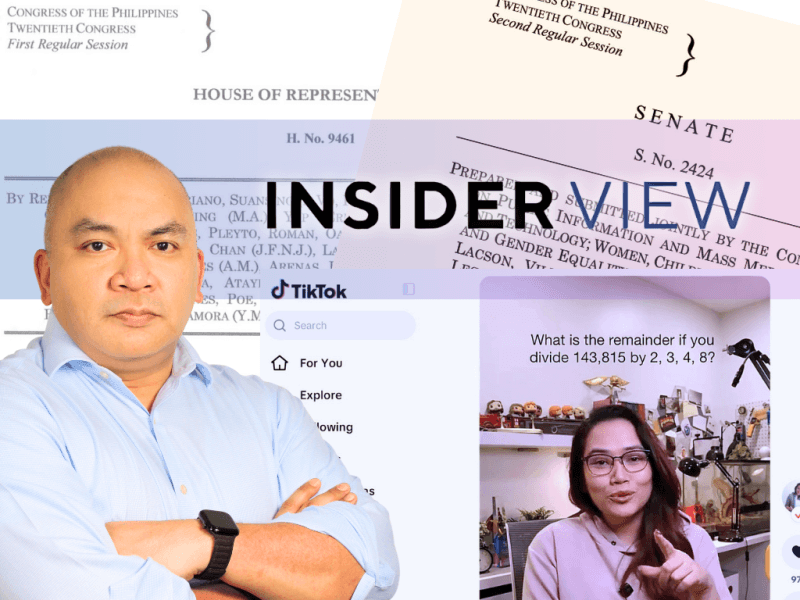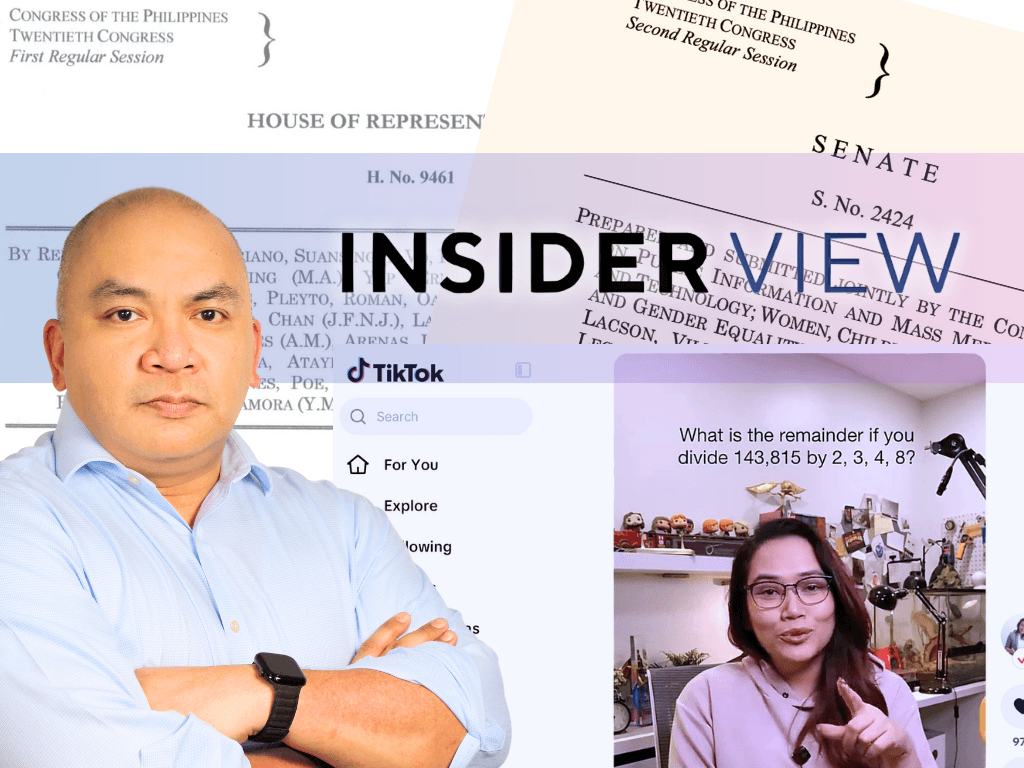
There, educator Lyqa Maravilla, better known as Teacher Lyqa, makes mathematics less intimidating through short, engaging videos explaining concepts that often leave students confused.
A licensed professional teacher and registered psychometrician who topped the 2013 Civil Service Examination, Maravilla has built a substantial following by offering free lessons on mathematics, English, logical reasoning, and entrance examination preparation.
Her 60-to-90-second tutorials turn complicated subjects into manageable exercises, reaching learners who may lack access to private tutors or expensive review centers.
Yet the proposed SAFE Kids Act and SMART KIDS Act could significantly affect how young Filipinos access such educational content.
Under sweeping age restrictions, teenagers who currently encounter her lessons through social media feeds could lose that access, depending on how lawmakers define covered platforms and educational exemptions.
The implications extend well beyond one educator.
A blunt policy instrument
The Senate's SMART KIDS Act — or Senate Bill No. 2424 whose principal sponsor is Sen. Robinhood Padilla — proposes prohibiting everyone below 18 from accessing covered social media and high-risk digital services.
This approach treats a 17-year-old preparing for university much like a much younger child.
It leaves little room for differences in maturity, digital literacy, educational needs, and parental supervision.
Law firm Gorriceta Africa Cauton & Saavedra has identified this concern in its analysis of the proposed legislation, emphasizing the need for risk-based restrictions that recognize children's evolving capacities and fundamental rights.
The firm also highlights the country's obligations under the United Nations Convention on the Rights of the Child, which recognizes children's rights to information, expression, privacy, education, and play.
Meanwhile, the House's SAFE Kids Act — or House Bill No. 11566 whose principal sponsor is Pasig City Rep. Roman Romulo — adopts a tiered approach, restricting children below 13 while permitting conditional access for those aged 13 to 17.
But even this framework requires scrutiny.
Parental consent alone cannot guarantee safety. Families have varying levels of digital literacy, available time, and technological resources.
The Senate proposal contemplates exemptions for educational and news services. Yet educational content frequently appears on general-purpose platforms such as TikTok, Facebook, and YouTube.
Teacher Lyqa illustrates the problem. Her mathematics tutorials are embedded in the same digital environment as entertainment, advertising, and potentially harmful material.
A poorly defined exemption could leave valuable educational content inaccessible to young learners.
Thus, a risk-based framework combining age-appropriate safeguards with stronger controls on harmful platform features deserves serious consideration.
Compliance as a barrier to competition
The bills also create potentially substantial costs for technology companies.
The House measure extends compliance responsibilities beyond social media platforms to app stores and operating system providers.
Both proposals contemplate age assurance, monitoring, and regulatory oversight.
These obligations could require expensive system modifications, legal expertise, technical audits, and additional personnel.
For sure, global technology companies possess considerable resources to absorb these expenses. But Filipino startups and smaller digital businesses operate under tighter financial constraints.
Without proportionate requirements, regulation could unintentionally strengthen dominant platforms by raising barriers to entry.
This could also affect the ecosystem supporting independent educational creators, including smaller learning platforms and locally developed educational applications.
Congress should examine differentiated requirements based on platform size, risk exposure, and actual functionality.
Shared technical standards, phased implementation, and regulatory guidance could make compliance more manageable without weakening essential protections.
Age verification: another vulnerability
The Senate proposal prioritizes government-issued identification, including PhilSys credentials, for age assurance.
Requiring identity checks across numerous services could expose users to additional data processing, cybersecurity risks, and potential exclusion.
Children without readily available identification and families sharing devices may encounter particular difficulties.
The House allows greater flexibility through platform-developed verification systems, although this raises questions about consistency and accountability.
Gorriceta has flagged age verification as a major privacy concern, emphasizing compliance with the Data Privacy Act and its principles of proportionality and data minimization.
Privacy-preserving verification, restrictions on data retention, independent technical assessments, and effective remedies for erroneous account restrictions deserve consideration.
Protecting children should never require unnecessarily exposing their personal information.
Regulate harmful design and conduct
A major weakness in relying heavily on age restrictions is that harmful platform practices can persist even when underage accounts are prohibited.
Predatory contact, manipulative recommendation systems, exploitative advertising, and compulsive-use features require direct regulatory attention.
Both bills contain provisions addressing these concerns, but their effectiveness will depend on precise definitions and consistent enforcement.
Overly broad classifications could inadvertently capture educational, communication, gaming, and other legitimate digital services.
Congress should consider targeted controls on harmful features, stronger default privacy settings, transparent reporting mechanisms, and independently assessed safety outcomes.
These measures would allow regulators to evaluate reductions in actual harm rather than simply counting blocked accounts.
Enforcement needs practical limits
The proposals also raise concerns about regulatory capacity and due process.
The House envisions a SAFE Kids Office with monitoring and assessment powers. The Senate places implementation primarily under the Department of Information and Communications Technology.
Uncertain definitions, overlapping responsibilities, and disproportionate penalties could increase compliance costs and discourage legitimate digital services from operating locally.
Congress should establish clear regulatory jurisdiction, transparent enforcement procedures, appeal mechanisms, and measurable safety standards.
Parents and schools must also play meaningful roles through digital literacy programs, practical supervision, and accessible reporting channels.
Getting the framework right
The bicameral process scheduled for Monday, Nov. 9, 2026, offers an opportunity to examine these consequences before imposing nationwide obligations.
The central tests should be straightforward: Do restrictions reduce identifiable risks? Can platforms comply? Are children's privacy and rights protected? Can smaller businesses continue competing?
And perhaps most importantly, can young Filipinos continue accessing educational opportunities that digital platforms have made widely available?
Consider Teacher Lyqa again.
Every short mathematics tutorial she publishes represents an opportunity for a student to understand fractions, master percentages, or prepare for an entrance examination without paying for additional instruction.
Her ability to produce these lessons may remain intact under the proposed laws. Their accessibility to younger audiences, however, could change dramatically.
If the resulting restrictions prevent thousands of students from discovering and consuming her content, the legislation could inadvertently undermine an important form of educational inclusion.
The Philippines needs an online safety framework that addresses genuine threats while preserving opportunities to learn.
Congress must ensure that protecting children online does not come at the expense of their education, creativity, and participation in the digital economy.
Getting that balance wrong could prove costly for an entire generation.
— Edited by Daxim L. Lucas