
Every year brought a tradition I held close to my heart.
Our home in Manila would open its doors to relatives arriving from the provinces, instantly filling with warmth, bustling energy and quiet prayers. I remember the tender anticipation of those days: helping pack luggage, sharing meals and being part of the send-offs as loved ones prepared to fly to Saudi Arabia.
Weeks later, we would gather again, overflowing with joy to welcome them home as hajji and hajja — honorific titles given to males and females, respectively, who have completed the Hajj pilgrimage to the holy city of Mecca.
And, of course, I was also the child waiting for my pasalubong.
But what stayed with me most was seeing their faces when they came home. There was a peace about them.
Watching that as a child instilled a lifelong conviction in me: performing Hajj and Umrah alongside my parents and loved ones is one of the greatest honors a believer can pursue.
A mission beyond banking
That personal memory is precisely why my work at Al-Amanah Islamic Investment Bank feels less like a corporate career and more like a calling.
When our Muslim brothers and sisters walk through our doors to ask about pilgrimage options, we don’t just see account numbers or financial products.
We see the same hopes that once filled my childhood living room. We see years of quiet sacrifice, early morning dua (a personal prayer) and a lifelong dream waiting to take flight.
For all of us at Al-Amanah, helping our Muslim brothers and sisters prepare for that journey is far more than a banking service. It is a privilege we carry with humility.
Making the Holy Journey accessible
The Hajj is the fifth pillar of Islam, a religious duty for adult Muslims who are physically and financially able to undertake the pilgrimage at least once in their lifetime. It follows in the footsteps of the Prophets Ibrahim, Ismail and Muhammad and preserves a sacred tradition carried across generations.
But faith does not remove the practical realities of getting there.
A pilgrimage asks a lot of the heart yet it also asks us to plan for the very real cost of getting there.
That is where our Pilgrimage Savings Plan (PSP) comes in.
The idea is straightforward. If Hajj or Umrah is something you hope to do one day, why wait for “extra money” to appear? Set the goal. Give yourself time. Save for it little by little.
Structure and faith-based principles
The PSP lets customers choose a savings period of one, five, 10 or 15 years, depending on what they can comfortably set aside.
A P100,000 goal, for example, works out to about P1,666 a month over five years. Stretch it to 10 years and it becomes about P833 a month. Over 15 years, it is roughly P556.
Those figures are savings targets, not the actual cost of a pilgrimage. They simply show how starting early can make a big goal easier to manage.
And life happens. Miss a monthly contribution and there is no penalty. This is savings, not debt. The goal is to help people keep going, even when some months are harder than others.
The PSP follows the Islamic principle of wadiah yad dhamanah or “guaranteed safe custody”. Put simply, the bank keeps the customer’s money safe and guarantees that it will be returned. The bank may also give a hibah or “voluntary gift”, but it is never promised as a fixed return.
That may sound like a technical difference but, to me, it goes to the heart of Islamic banking. Money has rules. But it also has purpose.
Fulfilling the obligation of zakat
We save because we have plans for our families and for ourselves. And our faith also teaches us that having wealth comes with responsibilities.
That brings me to zakat, another of the Five Pillars of Islam.
Zakat requires Muslims who meet the prescribed conditions to give a portion of their qualifying wealth to those entitled to receive it. For many forms of wealth, the commonly applied rate is 2.5 percent, once the nisab, or minimum wealth threshold, and the required holding period are met.
I have always found the idea behind zakat powerful.
You may have worked hard for what you have. You may have saved carefully. But Islam reminds us that part of prosperity is knowing when to give.
The beneficiaries can include people living in poverty, people struggling with debt and others identified under Islamic teaching.
Modernizing services for Filipino Muslims
For a bank like Al-Amanah, that raises an important question: Can we make that part of a Muslim’s financial life easier too?
Other Islamic banks have already begun doing this in practical ways. Some allow customers to calculate and pay zakat digitally. Others have used zakat funds to support people who are trying to build small businesses and improve their livelihoods.
I would like us to explore what makes sense for Filipino Muslims.
A customer should be able to understand what may be due, know how to fulfill that obligation properly and have confidence in where the money goes.
That is the kind of banking I want Al-Amanah to keep building: banking that understands why people are saving in the first place.
The Pilgrimage Savings Plan is one example. It takes a dream that can feel distant and gives someone a way to begin preparing for it today.
And there is much more we can do.
We can build services around the actual lives of Muslim families in the Philippines. We can make Islamic banking easier to understand. We can show that faith-based finance can be modern without losing the values that give it meaning.
That, for me, is where Al-Amanah can make a real contribution to Philippine banking.
A personal commitment
Whenever I think about Hajj, I still go back to our home in Manila.
I remember relatives getting ready to leave. I remember the prayers and the excitement. And yes, I remember waiting for the pasalubong when they came home.
But more than anything, I remember their faces. They returned as changed people. There was a peace in them that even a child could see.
Years later, I now lead a bank that can help another family prepare for that same journey.
I do not take that lightly. For me, this work is personal.
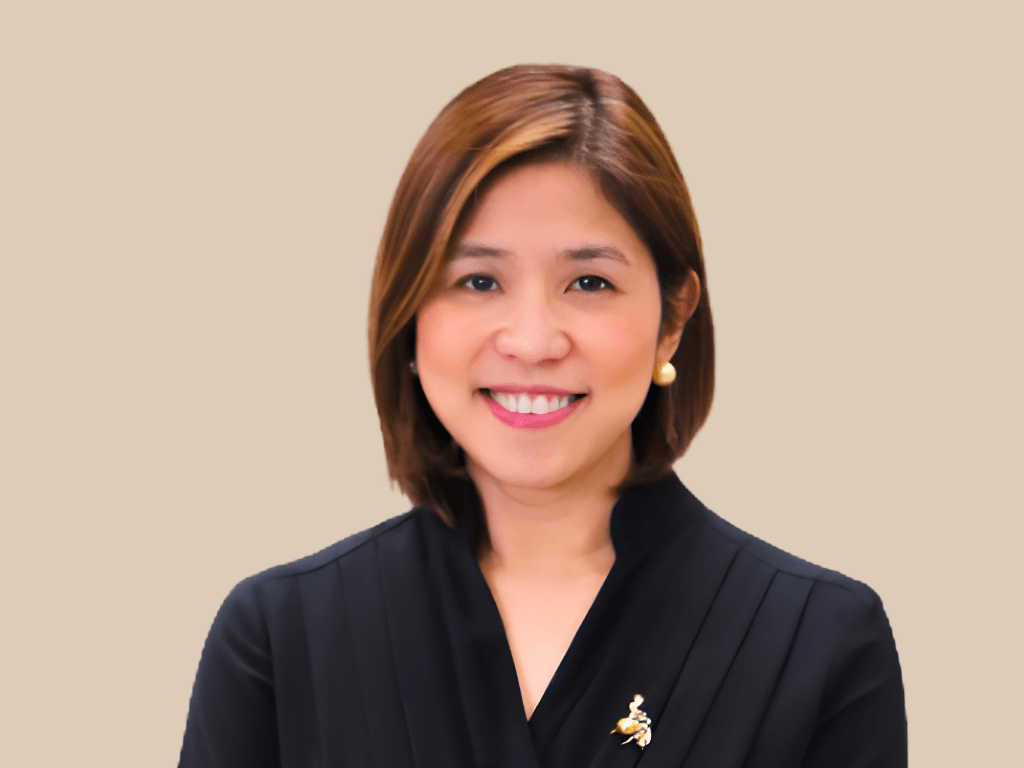
Amenah “Mina” F. Pangandaman is the chair and CEO of Al Amanah Islamic Investment Bank of the Philippines. An economist and public servant, she has spent more than two decades in the Executive and Legislative branches and the Bangko Sentral ng Pilipinas. She made history as the first Muslim woman to serve as Secretary of the Department of Budget and Management. A proud Maranao and Mindanaoan, she has championed open government, public finance reform, and peacebuilding, earning the Gawad Kapayapaan Award. She also leads civic initiatives, including the Dugtong Buhay Movement, and serves as an Auxiliary Vice Admiral in the Philippine Coast Guard Auxiliary.
— Edited by Daxim L. Lucas