Insider Spotlight
Hesitant buyers are hardly alone. In fact, history suggests that feeling is part of a familiar pattern.
Just ask Robinsons Land. With nearly 50 years in the business, the property developer has weathered crisis after crisis, including the 2008 US housing meltdown and the COVID-19 pandemic.
“During uncertain periods, many buyers adopt a wait-and-see approach. But when confidence improves, many return because their underlying need has not disappeared,” Rommel Rodrigo, the company’s head of investor relations, said in an email to InsiderPH.
“Families still need homes. Businesses still need workplaces. Investors still look for assets that preserve long-term value,” he added.
In other words, buyers may postpone their decision, but the need to own a home does not disappear.
“What changes is timing, not the fundamental demand,” Rodrigo said.

The cost of waiting
Rodrigo said waiting comes with its own trade-offs, as confidence often returns alongside higher prices and tighter supply.
“The challenge for delayed buyers is that when confidence returns, prices and available inventory may already be different,” he said.
“Having said this, waiting is a decision too, and every decision has an opportunity cost,” Rodrigo added.
Rodrigo said buyers who eventually return tend to do so for familiar reasons: housing remains a long-term need as families continue to grow and relocate, land in prime locations remains limited, and many discover property values have appreciated faster than expected.
Buying early
He said buyers entering early in a development cycle often benefit from lower entry prices because they assume development risk, while prices generally rise as projects are completed, infrastructure improves and market acceptance strengthens.
“The difference between buying early and buying later is that early buyers purchase future potential, while later buyers purchase proven value,” Rodrigo said.
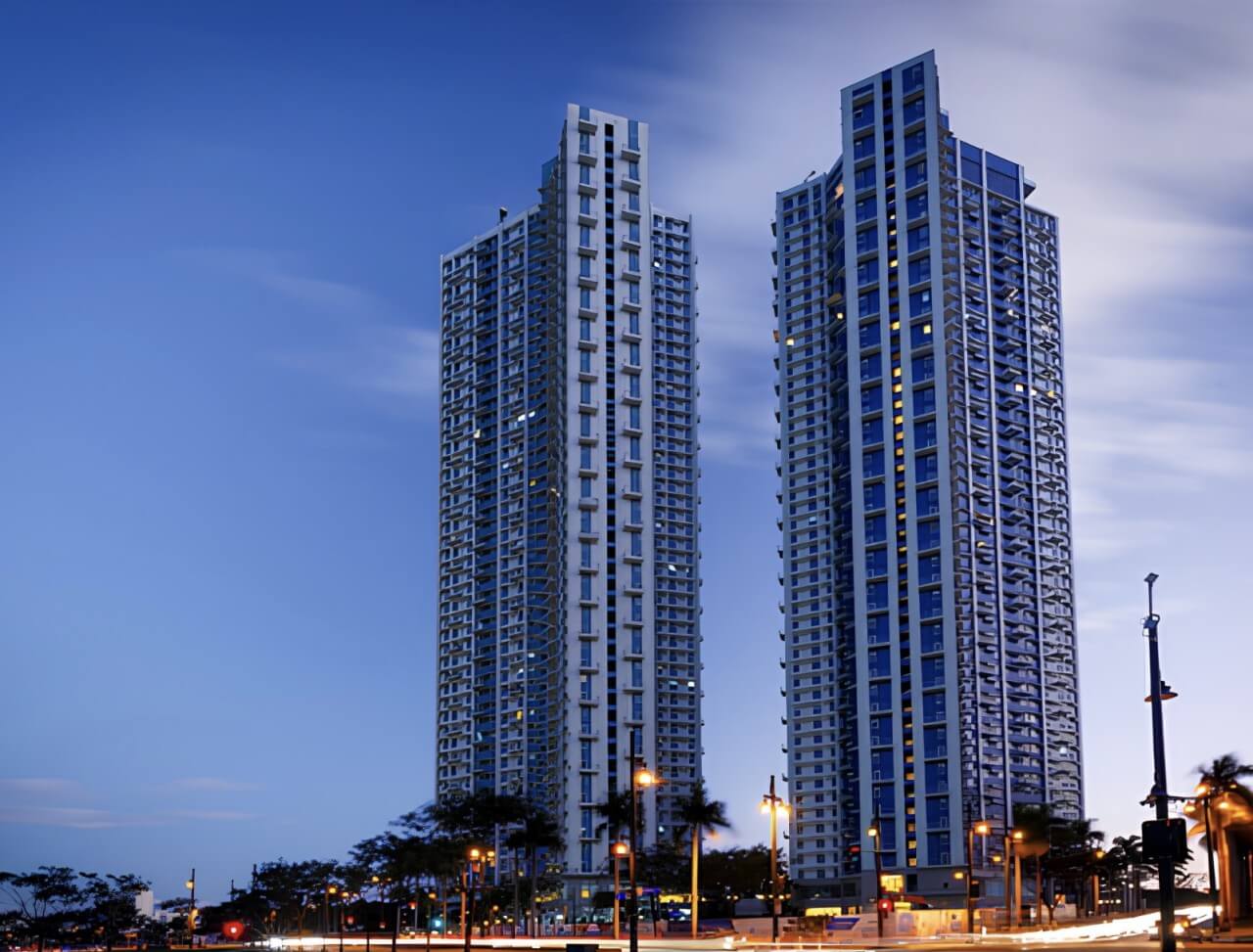
Rodrigo said that difference has typically ranged from 20 percent to 40 percent in projects such as The Radiance Manila Bay, Sapphire Bloc and The Trion Towers, with some developments having more than doubled in value since launch.
Still, he said buying early should never come at the expense of financial stability.
“The objective is not to predict the lowest price because nobody consistently gets the bottom, but to identify long-term value,” Rodrigo said.
“The market rewards discipline more than prediction. Successful buyers are not necessarily those who predict the lowest price. They are those who understand their financial capacity and make decisions based on long-term value,” he added.
Looking beyond today’s uncertainty
Rodrigo acknowledged that buyers today continue to wrestle with higher interest rates, affordability concerns, geopolitical uncertainty and weaker consumer confidence, but said these factors have made buyers more selective rather than eliminating demand altogether.
“The challenge today is not the absence of demand. It is matching the right product with the right buyer at the right price point,” Rodrigo said.
For Rodrigo, uncertainty itself is not the question because every property cycle presents a different reason for buyers to hesitate.
“The important question is not, ‘Is there uncertainty?’ Because there will always be uncertainty. The question buyers should ask is, ‘Is this the right property, in the right location, from the right developer, and can I comfortably afford it?’” he said.
Looking beyond the current cycle, he argued the Philippine market is better positioned than in previous downturns because of stronger domestic consumption, a more diversified economy, a larger services sector, more mature property developers and improved risk management.
“Markets recover when confidence returns, but confidence usually returns first to assets with strong fundamentals,” Rodrigo said.
—Edited by Miguel R. Camus