
Insider Spotlight
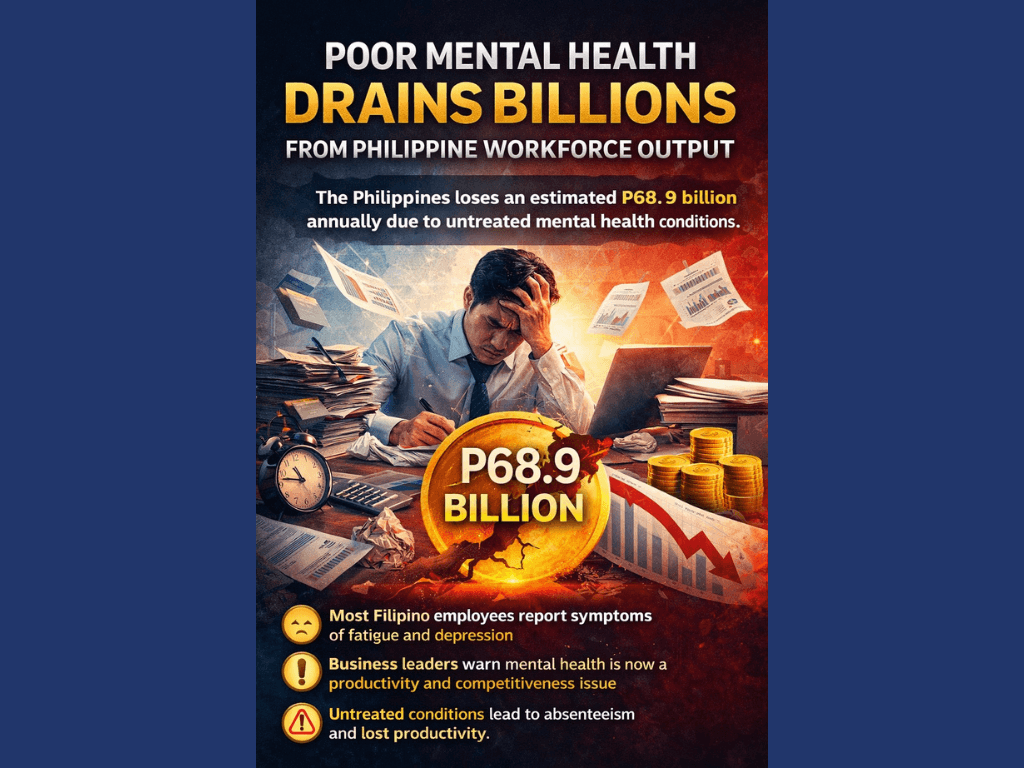
The figure reflects losses from absenteeism, presenteeism, and reduced performance, echoing long-standing warnings from the World Health Organization that poor mental health carries heavy economic costs for employers and governments across ASEAN, Mind You said in a statement on Monday, Dec. 15, 2025.
Why it matters
Behind the number are millions of Filipino workers grappling with exhaustion, anxiety, and depression, conditions that limit their ability to perform and innovate. The data challenge the narrative of resilience, pointing instead to a workforce stretched beyond sustainable limits.
A workforce under strain
Data shared at the National Mental Health Summit 2025 show that 77 percent of Filipino employees screened reported symptoms of depression. Nearly half, or 49.7 percent, were found to have moderate to severe symptoms that may require professional intervention.
More than 4 percent were classified as high risk, exhibiting signs of severe depression or suicidal ideation. This translates to over 6,000 individuals within surveyed workplaces silently struggling with serious mental health conditions.
Fatigue also emerged as a dominant theme. About 77.5 percent of respondents said they feel tired often or always, reinforcing concerns that chronic stress has become normalized across many organizations.
The hidden cost
“Mental health is the silent profit leak,” said Dr. Fabi Cariño, a speaker at the summit.
Beyond missed workdays, untreated mental health issues contribute to lower creativity, weaker innovation, and declining morale. Human resources leaders describe a growing pattern of disengagement, where employees remain on payroll but are emotionally checked out, or eventually leave after prolonged burnout.
One case study presented at the summit described a marketing professional who resigned after sustained burnout, costing her employer not just a role to fill, but institutional knowledge, client relationships, and team stability.
Barriers to support
Despite rising awareness, access to mental health support remains limited. The summit identified persistent obstacles, including stigma, fears around confidentiality, lack of psychologically safe workplaces, and untrained managers unable to spot early warning signs.
Among the 15,000 employees who sought help through Mind You, the most common reason was simply the need for someone to talk to, underscoring the value of early, non-crisis support.
What’s next
Experts at the summit called for structured, data-driven approaches that treat mental well-being as workplace infrastructure. These include early screening, root-cause analysis, evidence-based interventions, and continuous monitoring aligned with global guidance from the WHO and the International Labour Organization.
The bottom line
The crisis facing the Philippine workforce is no longer just about job creation. It is about burnout, fatigue, and sustained mental strain. Addressing mental well-being, experts said, is now central to protecting productivity and building long-term economic resilience. —Daxim L. Lucas | Ed: Corrie S. Narisma