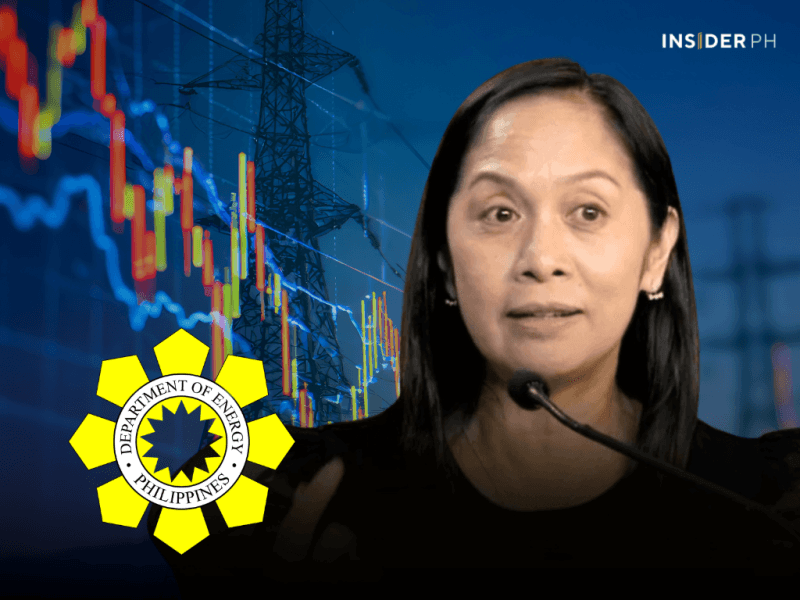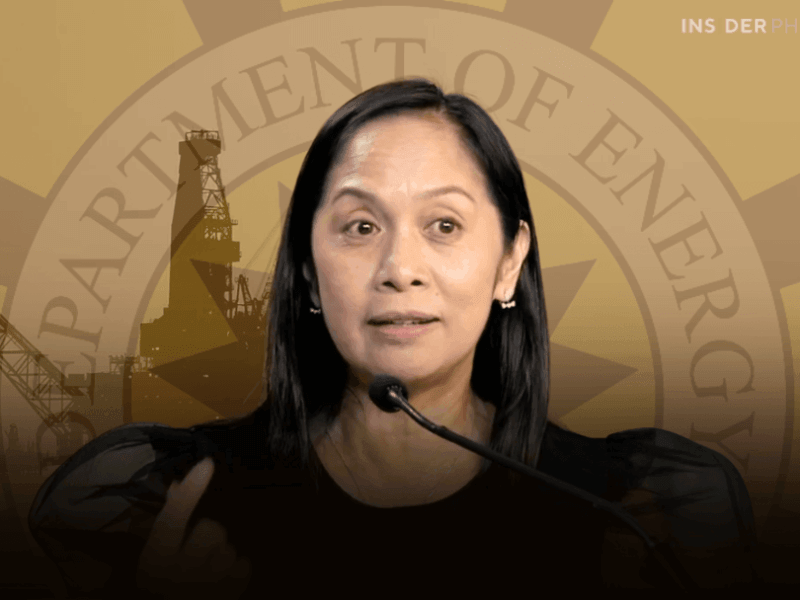
In an online news conference on May 18, Energy Secretary Sharon Garin said several projects were underway in Toledo City, Cebu, and Panay Island, although completion could take one to two years.
“These are well-designed plants that are currently under development,” Garin said. “There are additional plants in the pipeline, but building a power plant takes time — maybe three to five years for a coal-fired plant. Some projects, I think, may be completed within one to two years.”
While Garin did not provide specifics, the DOE’s list of committed power projects in the Visayas showed 37 projects lined up for the region, most of them renewable energy developments.
Mostly renewable energy
Only two coal-fired power plants were included in the list.
One is the Palm Concepcion Coal-Fired Power Plant Unit II of Palm Concepcion Power Corp. in Barangay Nipa, Concepcion, Iloilo. The project will have an installed capacity of 135 megawatts (MW) and is expected to begin commercial operations by December 2030.
The other is the expansion project of Therma Visayas Inc.’s coal-fired power plant in Sitio Looc, Barangay Bato, Toledo City, Cebu.
The expansion will add 169 MW of installed capacity and is targeted for commercial operations by August 2028, although testing and commissioning are scheduled as early as October this year.
The remaining committed projects include:
14 solar plants
9 wind power plants
4 hydropower plants
4 biomass power plants
3 diesel plants
1 geothermal power plant
Battery storage needed
During the same online briefing, Garin described the Visayas as one of the country’s “success stories” in transitioning to cleaner and renewable energy sources.
She noted, however, that the growing dependence on renewable energy requires adequate battery storage systems to address the intermittent nature of solar and wind power.
“If there is no sun, there is no solar power. If you rely on solar, batteries are needed to help balance the grid,” Garin said, adding that the DOE is strengthening policies on battery storage systems.
There are currently 15 Battery Energy Storage System (BESS) projects in the pipeline for the Visayas.
New capacity coming in
Energy Undersecretary Felix William Fuentebella said at least 1,132 MW of committed renewable energy capacity is expected to enter the Visayas grid by next year.
Of the total, 611 MW will come from solar projects, 469.5 MW from wind, 38 MW from biomass, 8.1 MW from hydropower, and 5.6 MW from geothermal facilities.
To support the expansion of renewable energy, the DOE is also looking to integrate about 110 MW of BESS capacity to improve grid stability and resilience.
Meanwhile, Undersecretary Rowena Guevara, who oversees the Renewable Energy Management Bureau and the Electric Power Industry Management Bureau, said the DOE was planning a green energy auction for the Visayas and Mindanao, particularly for solar projects, since solar facilities are the quickest to build.
She added that the department is also studying the development of mid-merit plants in both regions to help balance the growing share of renewable energy in the two grids.
The Visayas grid has been under recurring power alerts since last week as available capacity struggled to keep pace with rising electricity demand.
Yellow alert remains
As of May 19, National Grid Corp. of the Philippines (NGCP) placed the Visayas grid under yellow alert from 3 p.m. to 9 p.m.
NGCP said the grid’s power reserve fell to only 97 MW, with peak demand reaching 2,594 MW against available capacity of 2,691 MW.
According to NGCP, the yellow alert was triggered by the unavailability of several major coal-fired plants in the Visayas, including Panay Energy Development Corp. 3, Therma Visayas Inc. 1, and TVI 2, amid projected high power demand.
A yellow alert is issued when the operating margin is insufficient to meet the transmission grid’s contingency requirements. —Ed: Corrie S. Narisma

Contributor