
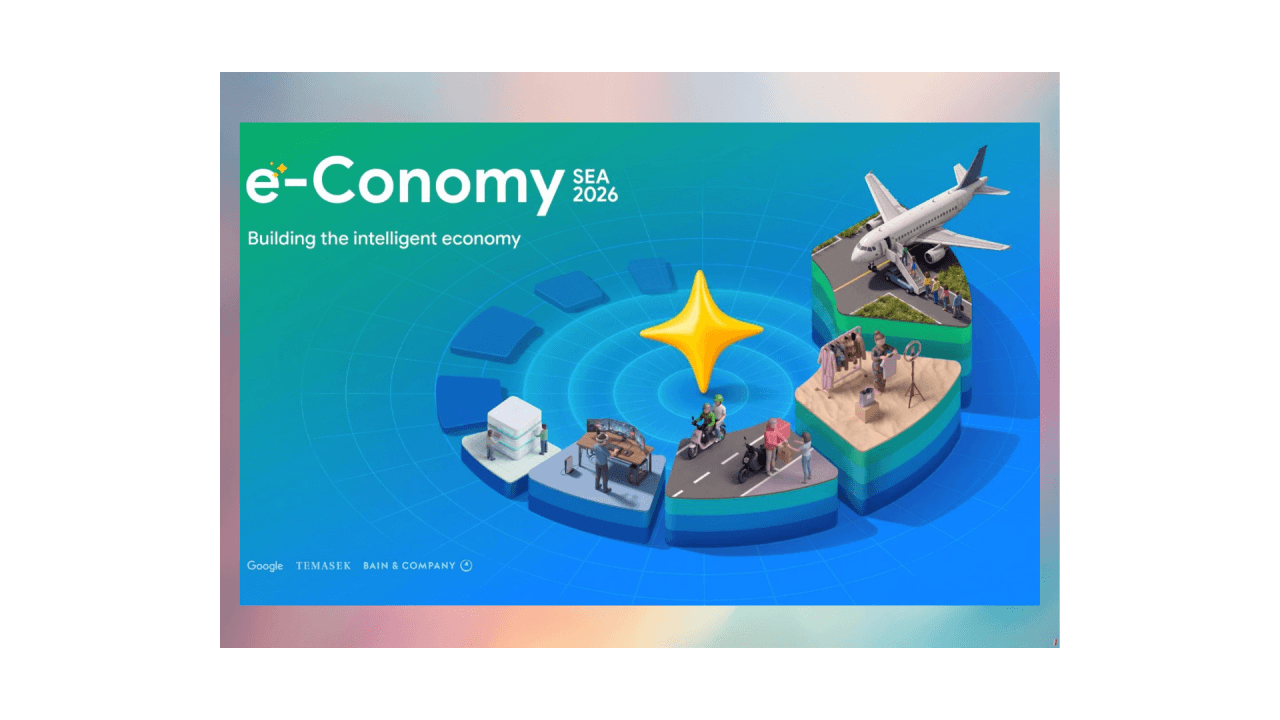
The 11th annual e-Conomy SEA report by Google, Temasek and Bain & Company forecasts 15 percent growth in Philippine digital GMV in 2026, from $36 billion last year, with the market potentially reaching $157 billion by 2035.
Titled “Building the Intelligent Economy,” the report identifies growing AI adoption, expanding online commerce and stronger digital payments as key features of the country’s digital transformation.
GMV measures the value of transactions across the digital sectors covered by the study.
AI gains ground
About 42 million Filipinos use generative AI, equivalent to 53 percent of the working population using standalone platforms. Monthly AI users reach around 65 million when AI embedded in other services is included.
Filipinos generate an estimated 55 billion AI queries annually, while one in four AI users interacts with the technology daily.
Trust is also strengthening. Half of users say they trust AI more than a year ago, while seven in 10 are willing to delegate purchase decisions to AI.
For businesses, these findings point to an expanding role for AI in how consumers discover products, compare choices and decide what to buy, Google said in a statement.
Deeper engagement
Despite broad adoption, the report sees substantial room to make AI a more regular part of daily activities and business operations.
Study, work, health, online shopping and entertainment are the five leading uses, while consumer applications account for around 80 percent of Philippine AI usage.
English remains the preferred language for conversations with AI. Local-language prompts account for 21 percent of interactions.
Filipinos also stand out in professional applications: Gemini prompts for customer support content are nearly three times the Southeast Asian average.
Bain & Company partner Bennett Aquino said the next opportunity lies in moving beyond occasional use.
“The next chapter is about depth, turning what is occasional use today into everyday workflows that will truly benefit Filipino individuals and businesses,” Aquino said.
Online spending
E-commerce remains the largest contributor to Philippine digital GMV, growing 15 percent to $28 billion in 2026.
Online media is expanding faster, with GMV rising 26 percent to $6 billion, compared with 23 percent growth a year earlier.
Online travel is projected to grow 14 percent to $3 billion, accelerating from 9 percent growth in the previous year.
Mobility and food services are growing more slowly, at 2 percent, to $4 billion. The segment is projected to reach $7 billion by 2030 and $11 billion by 2035.
The figures show continued expansion across established digital services even as the report identifies AI as an increasingly important source of future growth.

Payments surge
Digital payments are supporting the expansion of digital financial services, with gross transaction value projected to rise 23 percent to $194 billion in 2026—the fastest growth in Southeast Asia.
Payment transaction value is a separate measure from the digital economy’s GMV.
The report cites the expansion of national digital identification, InstaPay for Business and the integration of payment infrastructure as supporting developments.
Digital lending is expected to reach $7 billion in outstanding loan balances, up 17 percent from $6 billion in 2025, and could reach $31 billion by 2035.
Digital insurance is growing 16 percent to $110 million, measured through annual premium equivalent and gross written premiums. That growth rate ties the Philippines with Vietnam as Southeast Asia’s fastest-growing digital insurance markets.
Policy support
The report points to the National AI Center for Research and Innovation, National Privacy Commission frameworks and the Internet Transactions Act as supporting the country’s digital development.
Google Philippines country manager Prep Palacios said stronger confidence and wider local applications would require continued cooperation.
“As user confidence deepens and local AI use cases expand, strong policy support and collaborative ecosystem development will be key to unlocking the full potential of the Philippine digital economy,” Palacios said.
The longer-term opportunity, the report suggests, is to translate widespread access and rising trust into deeper use by consumers and enterprises, sustaining growth despite geopolitical and macroeconomic pressures. —-Ed: Corrie S. Narisma