Insider Spotlight
Drawing on YouGov Profiles data, the report found that Filipino Prosumers—considered the country's influential early adopters—are highly engaged in managing their finances even as many remain skeptical of the institutions serving them.
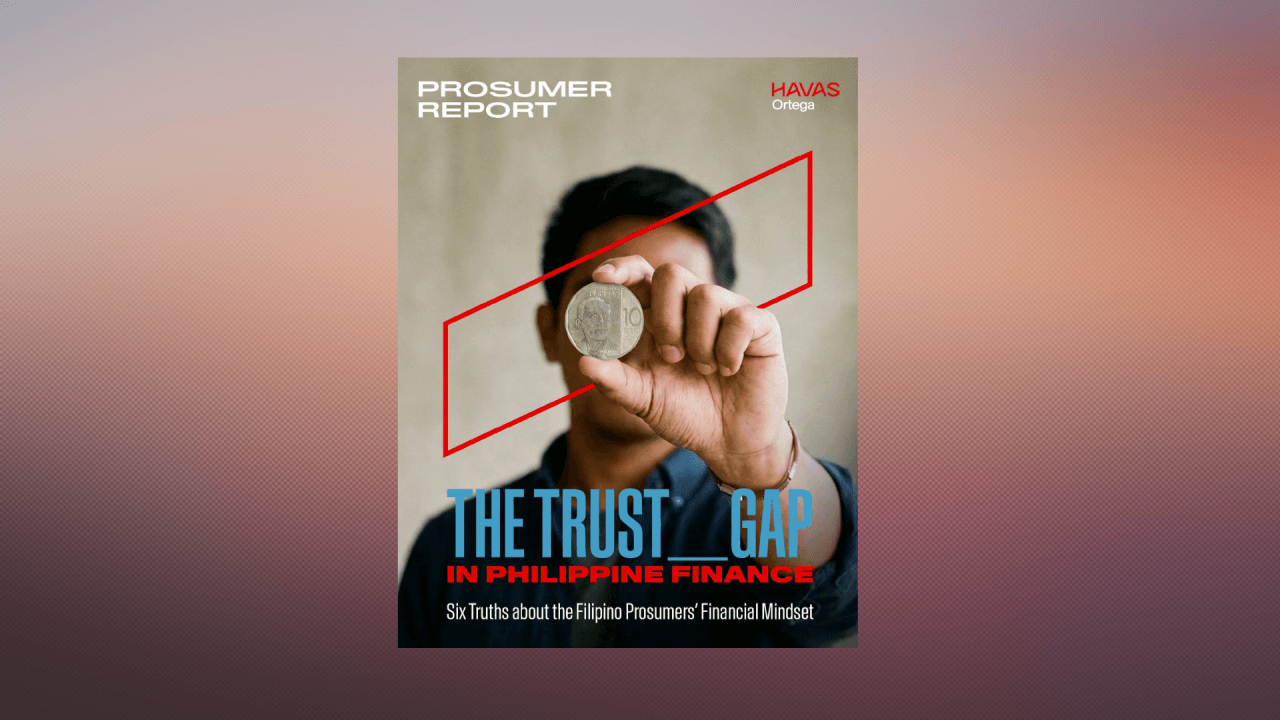
The big picture
Nearly all respondents, or 98 percent, said they actively look for investment opportunities, while 93 percent plan to save more this year. The study also showed that 90 percent maintain relationships with more than one bank.
The same research found that 72 percent believe banks are largely indistinguishable from one another, while 70 percent think financial institutions tend to prioritize their own interests over those of customers, underscoring a disconnect between financial participation and consumer confidence, the company said.
Havas Ortega general manager head of MX and Data & Analytics Phil Tiongson said the findings challenge how the industry has traditionally interpreted customer behavior.
"The numbers tell us that Filipino consumers are not disengaged from the financial system. They're participating more than ever. But participation should not be mistaken for trust. Many of the behaviors we traditionally associate with customer loyalty, such as maintaining multiple banking relationships, may actually reflect consumers managing their own risk rather than expressing confidence in any single institution."
Why it matters
The report also questioned the long-held view that financial literacy is the primary hurdle facing consumers.
Although 70 percent of respondents said financial matters remain confusing, the findings suggest financial products themselves may have become unnecessarily complex, the company said.
Consumers are already researching economic news, saving regularly, and seeking investment opportunities.
The next challenge for the industry is making financial products easier to understand while strengthening confidence through transparency and better customer experiences.
Havas Ortega chair and CEO Jos Ortega said trust has become the sector's defining competitive advantage.
"The challenge isn't convincing Filipinos to use financial products. They've already done that. The bigger question is whether institutions can build the kind of trust that encourages consumers to rely on them with confidence. Trust isn't created through advertising alone. It's built every day through products, transparency, customer service, and the experience people have when they need help the most."
What's next
The report concluded that banks, insurers, and fintech providers will increasingly compete on their ability to build long-term trust rather than simply acquire new customers.
Because Filipino Prosumers typically adopt attitudes and behaviors 18 to 24 months before the broader market, Havas Ortega said the findings offer an early indication of how consumer expectations are evolving and where the financial services industry will need to adapt next. —--Princess Daisy C. Ominga | Ed: Corrie S. Narisma