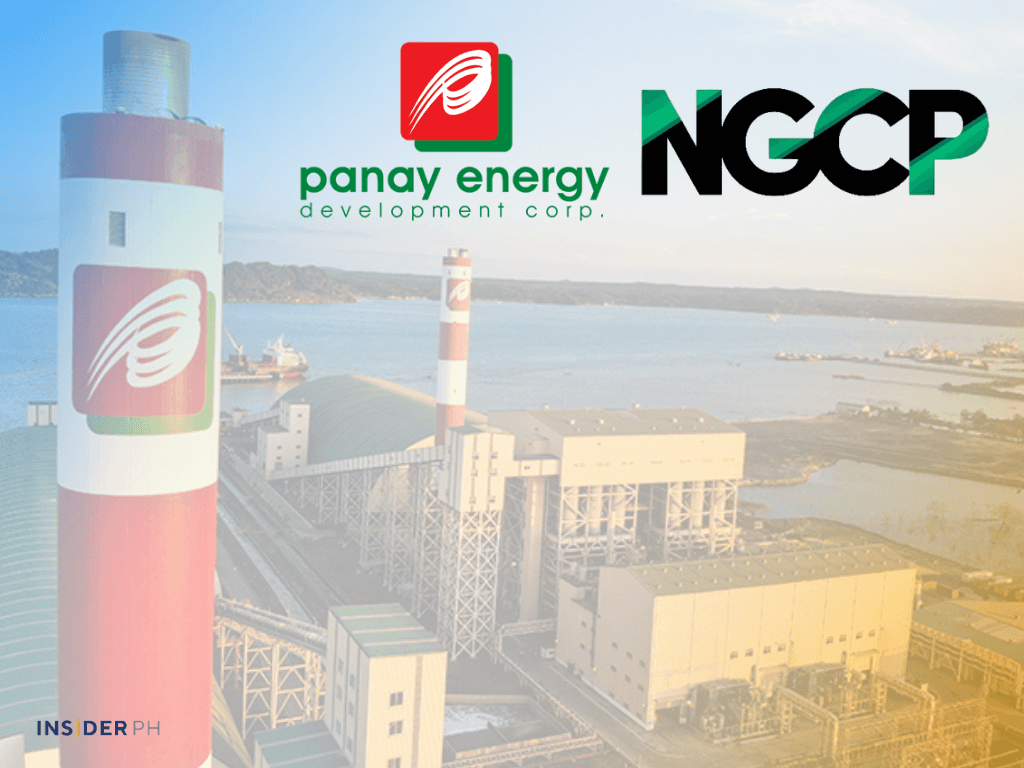
The grid received a boost after Unit 3 of Panay Energy Development Corp. (PEDC) in Iloilo returned to service at 2:14 p.m. on July 1, according to Amado Otarra III, network operations senior supervisor of National Grid Corp. of the Philippines' (NGCP) system operations-Visayas.
The reactivation of PEDC Unit 3 restored 150 megawatts (MW) of capacity to the Visayas grid, helping stabilize supply and ending a 51-day stretch of recurring yellow and red alerts that began on May 12.
"On previous days, yellow alerts were being issued as early as 6 a.m., but today, the last time I checked, there were no more yellow alerts issued for the whole day," Otarra told reporters during a forum on July 2. "We are closely monitoring the performance of this plant to ensure it remains stable."
The last yellow alert was issued at 2:47 p.m. on July 1, when operating reserves stood at 188 MW, with available capacity at 2,599 MW against demand of 2,411 MW.
Two units of Therma Visayas Inc. (TVI), each with a capacity of 169 MW, remain unavailable.
Otarra said the two units are expected to return to service by September, with the latest estimate pointing to restoration by late August.

Maintenance plans
The maintenance schedule for the remainder of 2026 will largely depend on when the two TVI units return to service, as they have a combined capacity of 338 MW.
Only after the units resume operations can other generating plants proceed with their scheduled preventive maintenance shutdowns (PMS). A PMS is a planned outage that allows operators to inspect, repair and service power plants to improve reliability, efficiency and safety while reducing the risk of unplanned outages.
Otarra said one power plant had been scheduled to undergo PMS on July 1 but had to postpone the shutdown because of the continued unavailability of the two TVI units.
"We cannot afford to shut down big power plants if these two are not online yet," he said.
Several major power plants are scheduled for preventive maintenance, including KEPCO-SPC Power Corp. (KSPC), PEDC Unit 1, Cebu Energy Development Corp. (CEDC), and several diesel plants.
Otarra said scheduled maintenance typically lasts about 20 days and is spread throughout the year, except during the summer months, when electricity demand is higher.
"If a plant requests a shutdown, we may move or defer it depending on grid conditions. If the requested date falls on a period where we see very small reserves, we request that the plant adjust its shutdown schedule. That is what we have been doing," he said.
With PEDC Unit 3 back online, Otarra said the outlook for the Visayas grid has improved, especially as electricity demand has started to ease following the end of the summer season.
Business impact
Forced outages at several power plants reduced available capacity in the Visayas grid during the summer months, prompting the NGCP to issue repeated yellow alerts.
On some occasions, red alerts were also declared, leading to manual load dropping and rotational brownouts to protect the integrity of the grid.
The business community in Cebu raised concerns over the recurring alerts, which began on May 12 and resulted in higher operating costs as companies relied on generator sets during rotational brownouts.
Several other generating plants also remained on forced outage for extended periods.
Based on NGCP's July 1 update, two plants had been on forced outage since July, eight since June, seven since May, one since March, three since 2025, two since 2024, two since 2023, and one since 2021.
Another 17 generating units were operating at derated capacity, meaning they were producing below their rated output because of equipment limitations, maintenance issues, or operating conditions.
Aging facilities
Otarra said some of the affected generating units are already decades old, with several dating back to the period when they were still operated by the National Power Corp. (Napocor), the government-owned corporation that previously operated power plants, managed the transmission grid, and sold electricity to distribution utilities before the industry was restructured under the Electric Power Industry Reform Act of 2001.
Some of the affected facilities are biomass and hydroelectric power plants that cannot operate at full capacity because of fuel or water shortages.
The lack of sugarcane bagasse has forced some biomass plants to suspend operations. Meanwhile, low water levels have limited the flow needed for hydroelectric plants to generate electricity. —Ed: Corrie S. Narisma

Contributor