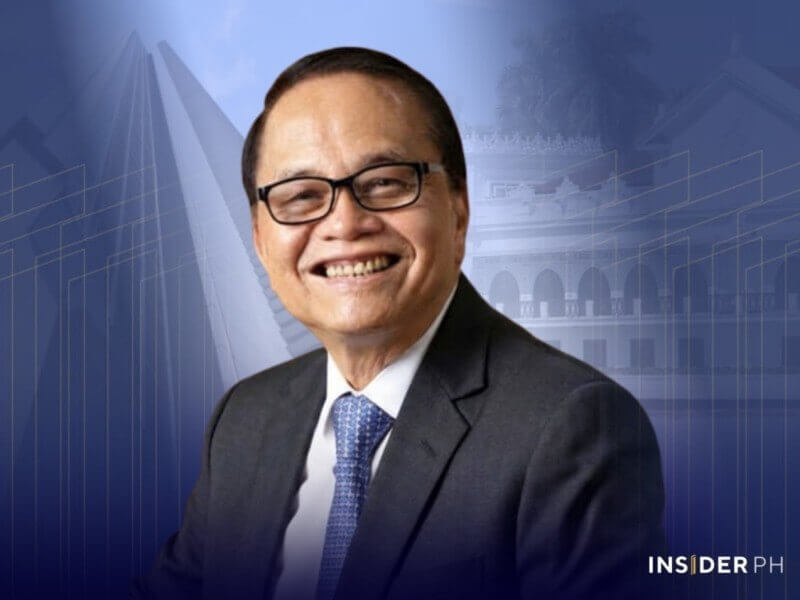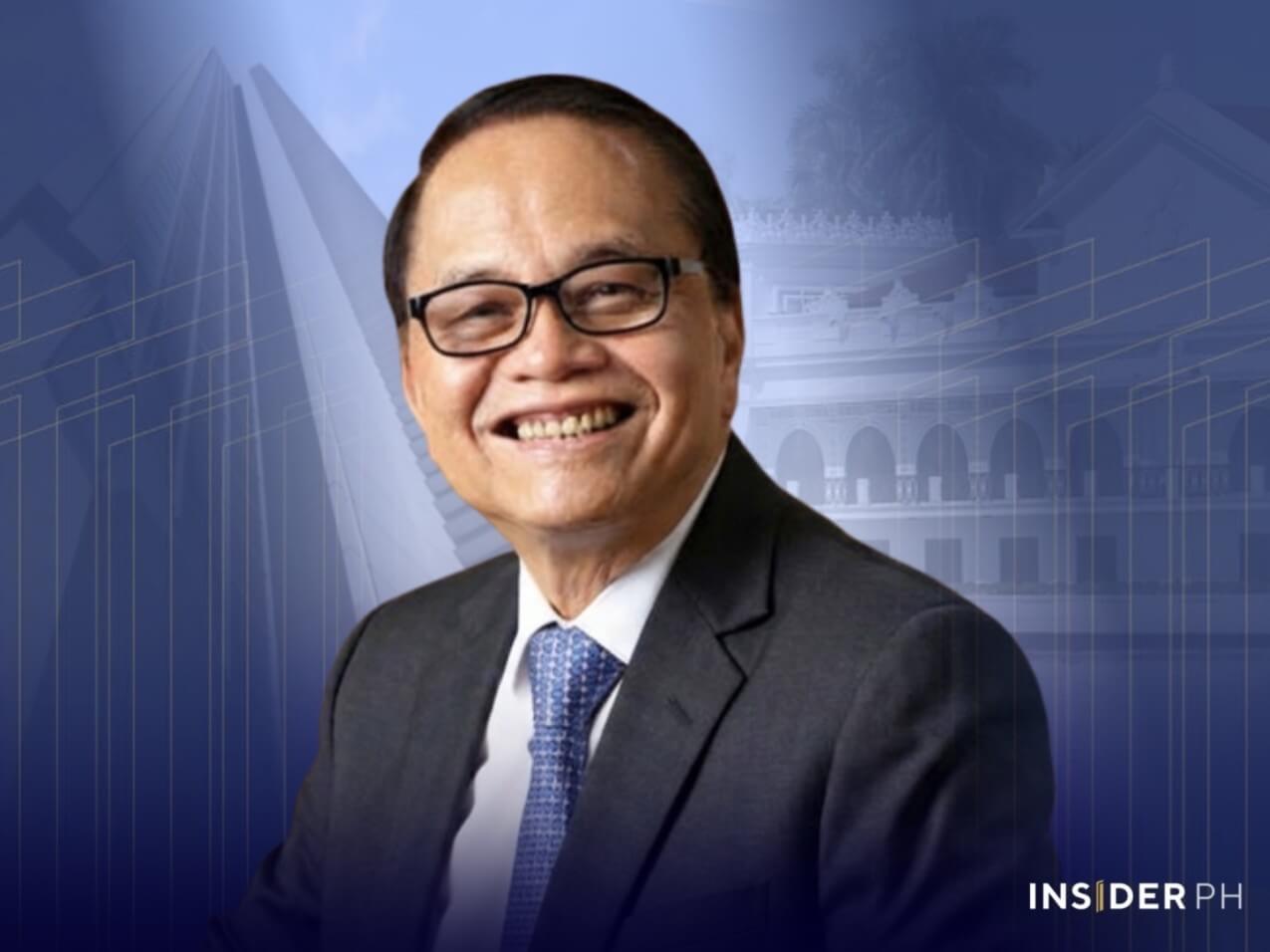
“I grew up in the rural community of San José in Nueva Ecija,” Sobrepeña told the Inquirer in 2013. “Even if I came from a land-owning family, I was familiar with farmers and their plight since we would interact with them even in high school.”
Nueva Ecija to Loyola Heights
Coming from a large brood, he was born in San Jose City, Nueva Ecija, on June 17, 1953, to Maurino Sobrepeña, a lawyer, and Leonor, née Mangahas.
After graduating as first honorable mention in high school, he entered the Ateneo de Manila University, where he earned a degree in political science, graduating cum laude in 1973.
At the Ateneo during the tumultuous period of the First Quarter Storm until the imposition of martial law during the Marcos regime, he was active in the student council and Sanggunian central board and would join rallies in solidarity with farmers’ causes. He was also a member of the Ateneo Catechetical Instruction League or ACIL, where, as a catechist, he was sent to San Mateo, Rizal.
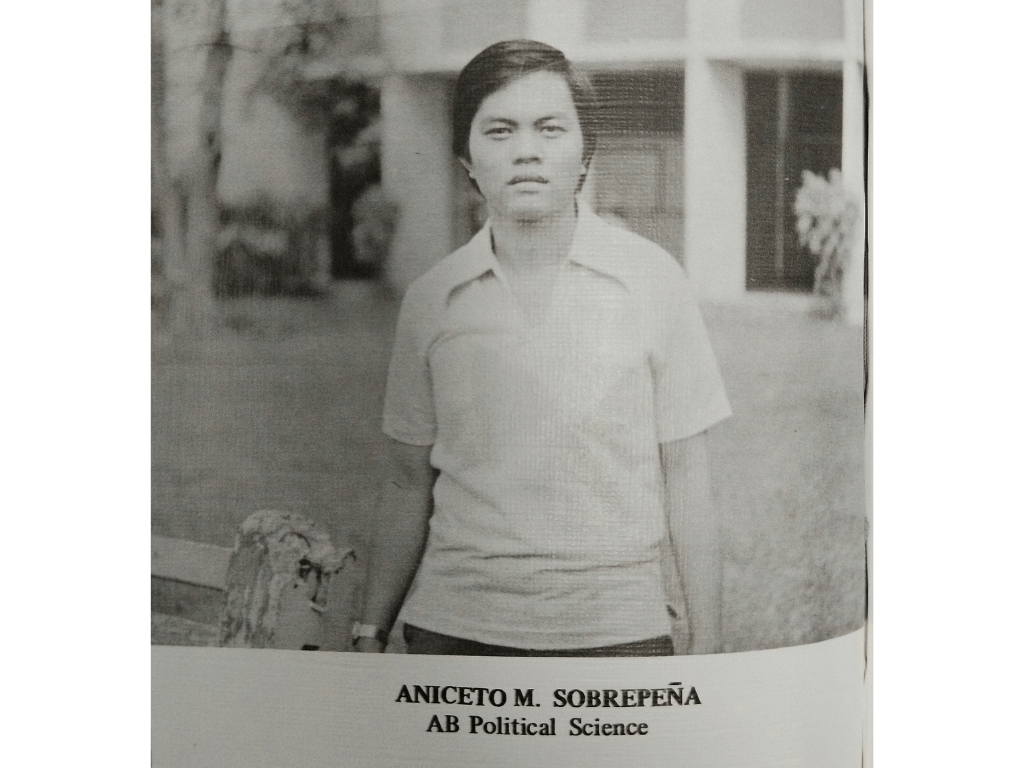
“We became better friends after school,” shared Jose Mari Treñas, Sobrepeña’s college classmate and the former country head of Coca-Cola Export Corp. “He was a [true] Atenean—a man for others.”
Entering government
Although caught up in the torment of the times, Sobrepeña did not join the revolutionary movement and go underground as some of his contemporaries did but, instead, went the opposite route: government service.
“Chito was actually part of the young professionals being prepared for NEDA (National Economic and Development Authority) in 1974,” recalled Gabby Lopez of the Philippine Institute of Environmental Planners and a fellow catechist at ACIL. “I was helping the NEDA regional development staff recruit planners for the region. Chito was assigned to NEDA Region 8 in Tacloban. From there, he rose through the ranks. We were Jesuit-formed servants.”
Reflecting on his early posting in Eastern Visayas as a 21-year-old on a two-year assignment, Sobrepeña said: “Being there at the grassroots level helped in my work at NEDA because we were able to come up with projects to benefit communities and consequently contribute to the country’s economic development.”
During his stint at NEDA, and under the auspices of a USAID program, he earned his Master of Arts in development economics from Williams College in 1977. In 1982, as director of the agency’s policy coordination staff, he co-authored with Celia Reyes the paper Improving National Productivity Statistics, one of the many papers he would write as a technocrat.
Youngest Cabinet secretary
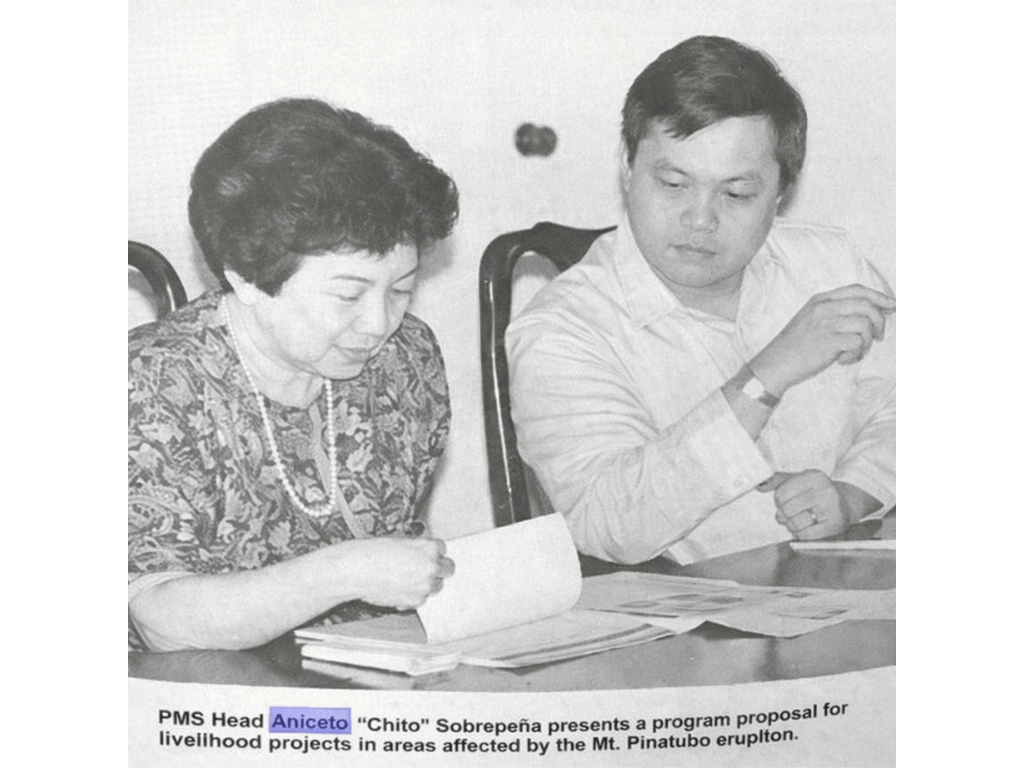
Despite having served under Marcos, President Corazon Aquino appointed Sobrepeña to Malacañang in 1987, first as Cabinet undersecretary under the mentorship of Jose “Ping” de Jesus. Subsequently, at age 36, he was named Cabinet Secretary—the youngest member of the Aquino Cabinet.
De Jesus and Sobrepeña would together spearhead the reorganization of the Cabinet Secretariat, with the objective of “making it an effective support staff of the highest advisory body of government.”
As Cabinet Secretary, he became part of the so-called Special Action Group—alongside Voltaire Gazmin of the Presidential Security Group, Maria Montelibano of RTVM, Miguel Perez Rubio of the Protocol Office, and a revolving representative from the Department of Foreign Affairs—which was responsible for coordinating the President’s state visits.
“Si Chito, ayaw yata ako pagpahingahin,” Mrs. Aquino jokingly quipped during a planning briefing for one of her state visits, wherein her proposed itinerary would end at 10:30 p.m. (Wanting to maximize her time during these foreign trips, as much as five official functions were scheduled per day.)
Sobrepeña was also chair of the editorial advisory board of The Aquino Management of the Presidency, a publication of the Presidential Management Staff or PMS.
Drawing on his experience in grassroots immersion work, Mrs. Aquino in the last two years of her presidency directed him to work with Norberto “Bert” Gonzales in conducting nationwide consultations with various sectors in the provinces to strengthen government-NGO relations.
Serving from 1992 to 1995 under the Ramos administration, Sobrepeña would cap his over two-decade stint in government where he began—at NEDA, this time as deputy-director general.
“Once you work in government, you cannot be mediocre,” he said.
The Metrobank Foundation
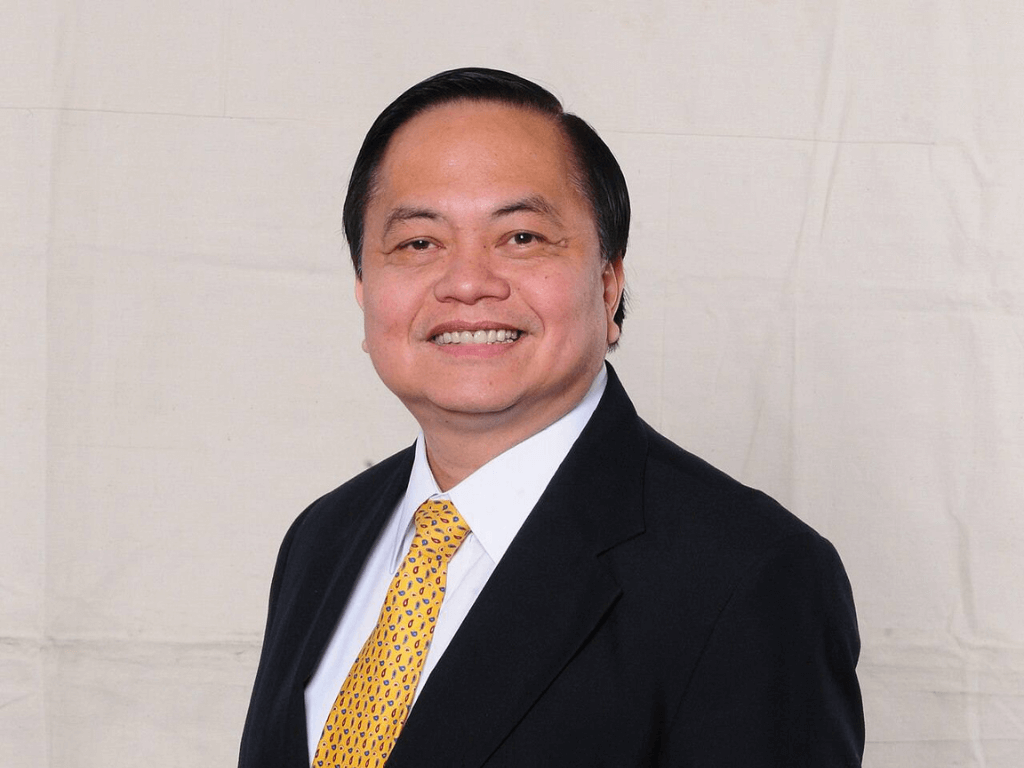
Entering the private sector in 1995, Sobrepeña became the Metrobank Foundation’s first executive director, leading the non-profit arm of one of the country’s largest banks until stepping down as president in 2025.
With him at the helm, the Metrobank Foundation became known for its advocacy of excellence recognition and human development, expanding its work into education, health, the arts, and livelihood—“creating enduring hope and opportunity for Filipinos from all walks of life.”
Among its key programs are the Metrobank Foundation Outstanding Filipinos, Metrobank Art and Design Excellence (MADE), and the Metrobank Scholarship Program.
Urging foundation scholars in 2000 to “harness your talents into a potent force for social development,” Sobrepeña echoed Metrobank Group founder George S.K. Ty’s call “to put more meaning into our achievements by giving back and sharing the fruits of our success with the society that made our success possible in the first place.”
As one of the stalwarts of the League of Corporate Foundations (LCF), Sobrepeña in 2003 described the critical role businesses play in the betterment of society: “By investing in social development, the business sector helps in building a healthy and stable business climate which will eventually redound to a better society where business will continue to prosper together with its stakeholders.”
Apart from the Metrobank Foundation and LCF, he was a trustee of the Galing Pook Foundation, Philippine Business for Education, and the Philippine Institute of Environmental Planners, and was also active in the Ang Ligaya ng Panginoon community.
A life partner
In June 1984, Sobrepeña married Anna Isabel Crisostomo, later editor-in-chief of Lifestyle Asia.
Writing about his wife on the occasion of their 40th wedding anniversary in 2025, he said: “She had qualities I had hoped for in a life partner, a woman who deeply loved the same God I did. She was a reflective woman with a keen intelligence who enjoyed conversation and learning with me. She could hold her own in the different circles of my engagement.”
They have three children—Gabriel, Rafael, Michaela.
Chito Sobrepeña died after a short illness earlier this month at the age of 72.
— Edited by Daxim L. Lucas
Features Reporter