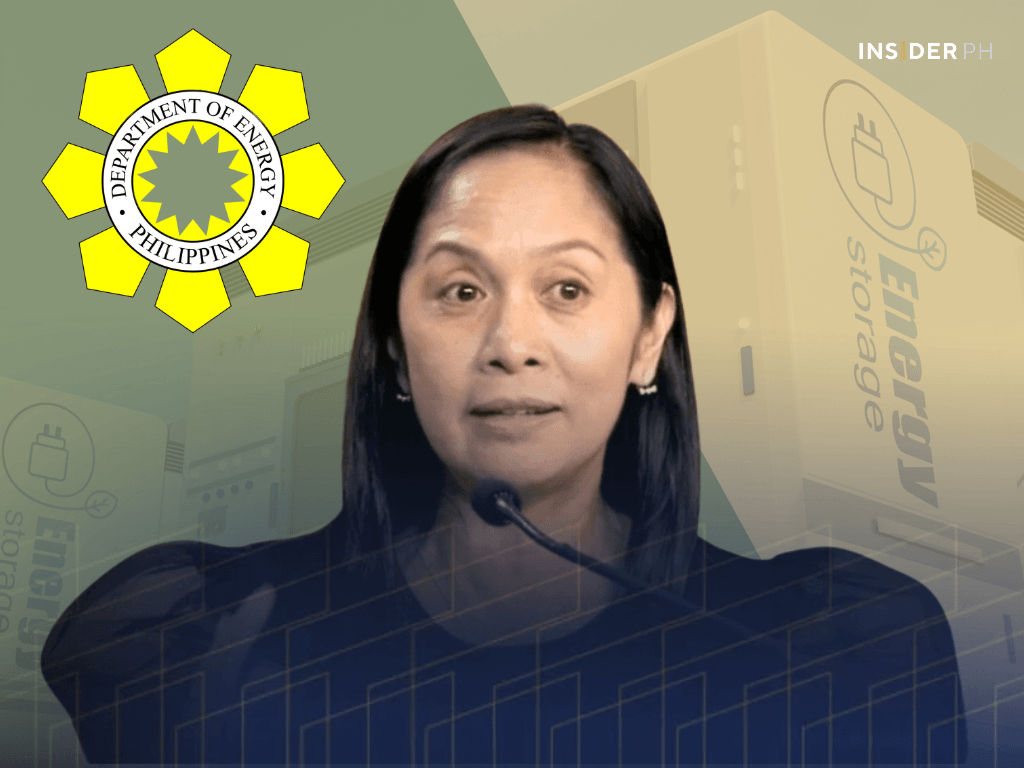
Energy Secretary Sharon Garin said the government is taking precautionary measures to prevent widespread power shortages, particularly in the Visayas, where recurring generation outages have triggered yellow and red alerts.
During an online media briefing on Nov. 23, Garin outlined a four-pronged strategy to strengthen energy security: expanding battery storage, deploying emergency generation capacity, accelerating renewable energy projects and promoting energy conservation.
The preparations come as the DOE anticipates a decline of up to 60 percent in hydropower generation because of reduced water availability during El Niño. Solar generation could also fall by an estimated 20 percent.
Additional capacity
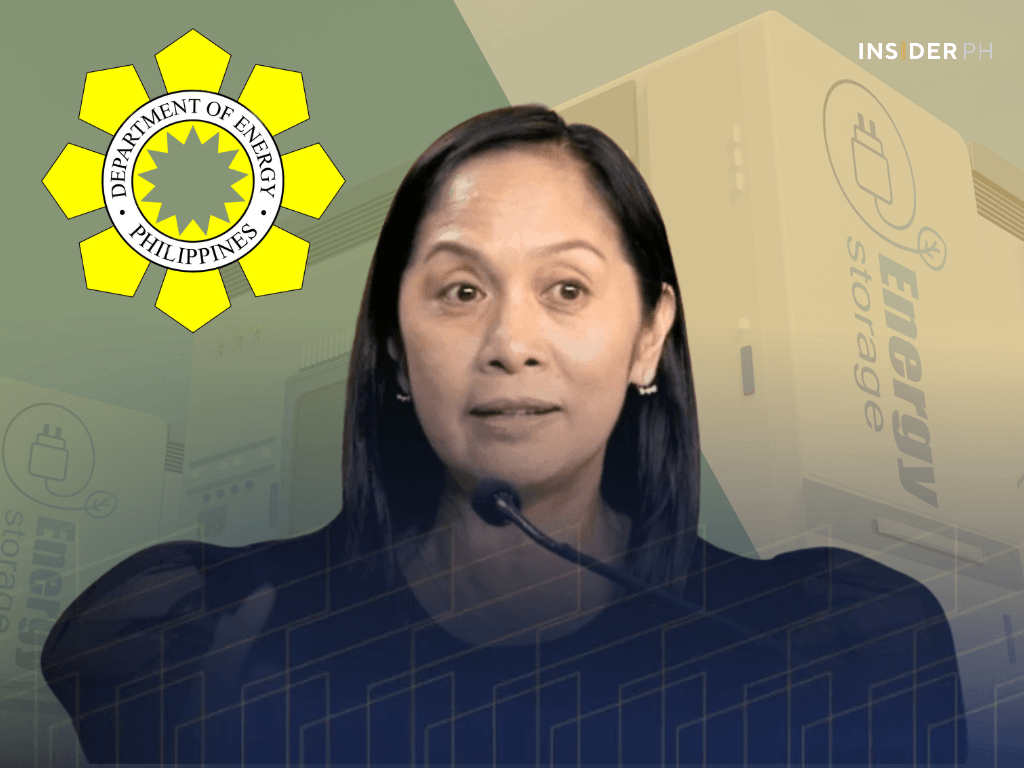
One of the immediate measures is the installation of additional battery energy storage systems (BESS) across the Visayas to store excess solar electricity generated during the day and release it during periods of higher demand, particularly in the evening.
Energy Undersecretary Mario Marasigan said the DOE is completing the remaining documentation for the deployment of 250 megawatts (MW) of additional battery storage capacity.
Another 268 MW of net dependable capacity is being prepared through four power barges and one land-based diesel facility.
The DOE has identified the proposed interconnection points, while some developers have begun preparatory work, including the installation of mooring facilities for the power barges.
Garin said the government is targeting deployment by early 2027, ahead of the expected increase in electricity demand during the summer months.
The emergency facilities are intended to support the Visayas grid while longer-term generation projects are being developed.
Supply vulnerability
The urgency of strengthening the region's power supply was underscored by another round of generation outages that threatened to place the Visayas grid under a red alert on Nov. 23.
Marasigan said the National Grid Corporation of the Philippines (NGCP) initially projected a one-hour red alert from 5 p.m. to 6 p.m. because of insufficient generation capacity.
However, the alert was subsequently lifted after available capacity improved to about 2,900 MW against projected peak demand of 2,506 MW.
Despite the improvement, electricity reserves remained tight.
Marasigan attributed the supply constraints to simultaneous planned and forced outages at major generating facilities, compounded by reduced electricity imports from Mindanao.
Among the plants undergoing scheduled maintenance were Palm Concepcion Power Corp.'s 135-MW Unit 1 and a 103-MW unit of Kepco Salcon Power Corp.
The situation was aggravated by the forced outage of Therma Visayas Inc. (TVI) Unit 1 on Nov. 14, which removed 169 MW from the grid. TVI Unit 2, also rated at 169 MW, was operating at reduced capacity.
Meanwhile, Mindanao, which had been supplying 450 MW to the Visayas grid, was experiencing its own supply constraints, with 463 MW of planned outages and 219 MW of forced outages, limiting its ability to export electricity.
Long-term solutions
Beyond emergency measures, the DOE is pursuing longer-term solutions to address the intermittency of renewable energy and provide more dependable electricity.
Marasigan said the department is preparing mid-merit auctions for liquefied natural gas (LNG) facilities that could provide flexible generation capacity to complement renewable energy.
Unlike solar generation, LNG-fired plants can be dispatched when renewable output declines, particularly during evening peak demand.
He said the government would also continue supporting additional baseload generation projects not covered by the country's coal moratorium.
The DOE's position comes amid renewed calls from Cebu's business community for a balanced energy policy that ensures reliable and competitively priced electricity.
During a roundtable organized by the Cebu Federation of Beat Journalists on Nov. 20, business leaders warned that recurring power shortages and high electricity costs could weaken Cebu's competitiveness as an investment destination.
They stressed that the transition to renewable energy must be supported by dependable generation capacity capable of meeting industrial and commercial demand around the clock.
Renewable energy pipeline
Garin said the DOE is accelerating renewable energy development to reduce dependence on imported fossil fuels and strengthen long-term energy security.
The department is targeting approximately 4,000 MW of additional renewable energy capacity in 2026 and another 2,000 MW in 2027.
Marasigan reported that 60 power projects with a combined capacity of 4,167 MW had been completed under the DOE's monitored project pipeline.
These included 14 battery energy storage projects totaling 1,067 MW, providing ancillary services and supporting grid stability.
The DOE expects total completed project capacity to reach 6,587 MW by the end of 2026, comprising 5,341 MW in Luzon, 733 MW in the Visayas and 513 MW in Mindanao.
Marasigan said the government's broader target of bringing 10,000 MW of additional generation and storage capacity online by 2028 remains on track.
The department is also preparing green energy auctions covering offshore wind, floating solar, rooftop solar, geothermal, biomass and other renewable technologies.
Garin said floating solar facilities could help reduce water evaporation from reservoirs during El Niño while generating electricity.
Energy conservation
The DOE is encouraging households and businesses to adopt energy-efficient practices, particularly during extreme heat when electricity demand typically rises because of increased use of cooling equipment.
Garin said reducing unnecessary electricity consumption would help ease pressure on the grid and lower the risk of supply alerts.
She emphasized the need to strengthen the country's electricity system before another supply crisis emerges.
"Resilience cannot be built after a crisis; it must be built before one comes.” —Ed: Corrie S. Narisma

Contributor