Opening the session, Scam Watch Pilipinas co-founder Jocel de Guzman stressed that while institutions continue to strengthen cybersecurity systems, equal attention must now be directed toward educating and protecting people who have become the primary targets of fraud.
“Across sectors, we invest millions in cybersecurity. We protect servers, secure networks, and harden systems. That is very important. But we have neglected something equally critical. We have neglected the digital safety of the people those systems are intended to protect,” de Guzman said.
“Cybersecurity protects infrastructure. Digital safety protects citizens. Today, it is the user, not the server, that is under attack,” he added, emphasizing that resilience must extend to the last mile — the consumers.
Rising global threat
In January 2026, the World Economic Forum identified cyber-enabled fraud as one of the most pervasive global risks, with 73 percent of surveyed leaders reporting personal or organizational impact.
Now surpassing ransomware, fraud and phishing rank among top CEO concerns, driven by geopolitical tensions, AI-powered social engineering, and vulnerabilities across increasingly complex supply chains.
De Guzman noted that while leaders often call for a “Whole of Society” approach to combat scams, many institutions have yet to implement a “Whole of Organization” approach within their own structures.
“Before we can achieve a Whole of Society approach, we must first embrace a Whole of Organization approach. Digital safety cannot remain confined to a single department. CISOs cannot carry it alone. Communications cannot do it alone. Compliance cannot do it alone,” he said.
Building organizational culture
“Protecting people from scams must become part of organizational culture, integrated into leadership priorities, employee onboarding, customer journeys, product design, and community engagement so that digital safety is built in, not bolted on,” de Guzman added.
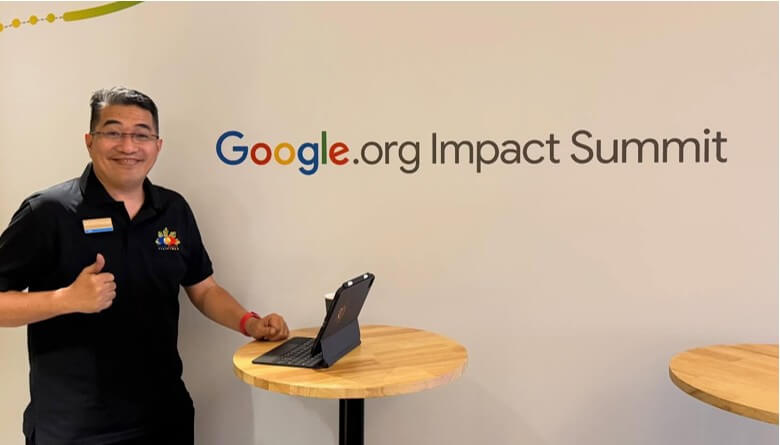
Rowan Barnett, director of Google.org for APAC, EMEA and Global Stronger Communities, invited Scam Watch Pilipinas to open the roundtable, citing interest in its systemic framework for tackling scams and its national strategy to bridge the last mile in protecting vulnerable communities.
Participants included representatives from the Tech for Good Institute, Centre for Social Research India, Good Things Foundation, ASEAN Foundation, DataLEADS, The Asia Foundation, Mastercard, Google.org, CyberPeace Foundation, Global Cyber Alliance, and GSMA.
Philippine anti-scam model
De Guzman presented the Philippine Anti-Scam Quad Model, which combines behavioral change, community-based education, cross-sector collaboration, and tech-enabled reporting into an integrated resilience framework.
“The Philippine Anti-Scam Quad Model promotes everyday protective habits through the Kontra Scam Attitude, mobilizes communities as multipliers of digital safety, aligns government, private sector, civil society, and media for coordinated action, and strengthens accessible reporting channels such as the 1326 National Anti-Scam Hotline and digital platforms such as the Whoscall Anti-Scam app by Gogolook to transform citizen vigilance into actionable intelligence,” he said.
He added that the framework recognizes that if one pillar weakens, the entire system weakens.
Without behavioral change, users remain vulnerable. Without community engagement, knowledge does not scale. Without collaboration, responses become fragmented. Without reporting, intelligence collapses. — Ed: Corrie S. Narisma