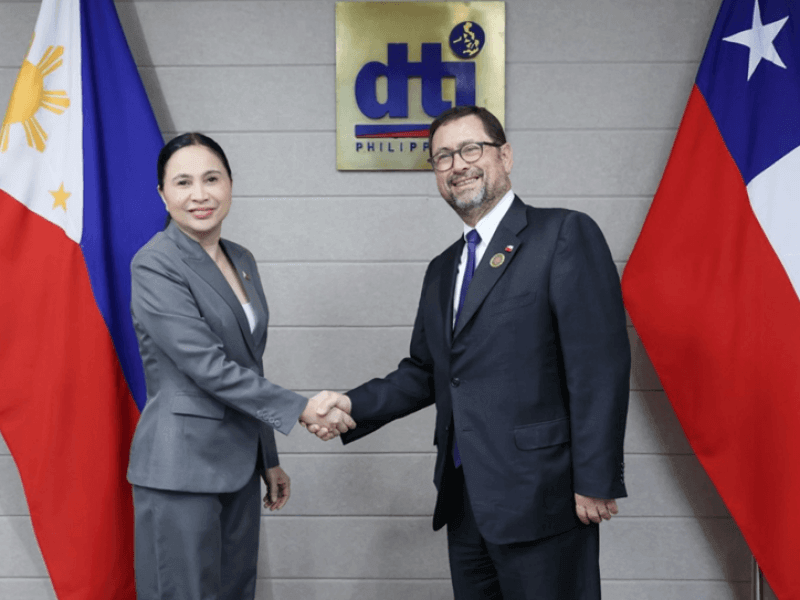
Three of these are separate free trade agreements (FTAs) with the European Union (EU), Canada, and Chile, while the fourth is a trade arrangement that would expand Philippine exports to India, Roque said during the ASEAN (Association of Southeast Asian Nations) Business Media Exchange on Investing in Resilience at the International Media Center on May 6.
She said negotiations for the Philippines-EU Free Trade Agreement are expected to conclude by June or July, while the Philippines-Canada FTA is likewise targeted for completion this year. The Philippines-Chile FTA is expected to be signed within the year, paving the way for greater access of Philippine products to the South American market.
She added that the Philippines could secure as many as 21 free trade agreements before President Ferdinand Marcos Jr. ends his term in 2028 — potentially the highest number of FTAs forged under any Philippine administration.
Lower costs
Roque underscored the importance of free trade agreements, saying these would allow Philippine exports to benefit from preferential or reduced tariffs, making local products more competitive in the global market.
Roque stressed that with these trade pacts, the Philippines will be more competitive alongside its Asean neighbors.
“This will give many Filipino products more opportunities and access to more export markets.”
She noted that while Philippine products have long been recognized for their quality, high tariffs imposed by importing countries often made them more expensive compared to competing goods.
“With free trade agreements in place, we can enjoy preferential rates, even zero tariffs,” Roque added.
Roque also highlighted the strong performance of the country’s export sector since last year.
She said exports grew by 7.9 percent in January and 8 percent in February before surging by 20.4 percent in March — the highest growth recorded since 1991.
New star
While the country exports electronics, minerals, semiconductors, and automotive products, Roque said the biggest winner has been the agriculture sector because of its “new star”—ube (purple yam).
“We see coconut, bananas, and pineapples, but the new star or superstar that we see is ube. In fact, in London, Starbucks just launched an ube drink. So, we now have a lot of demand for ube,” Roque said, adding that the country generated $3 million from ube exports last year.
Roque added that the government is also exploring the export of halal-certified products, citing strong and growing demand in the global halal market. —Ed: Corrie S. Narisma

Contributor