The declaration, contained in Executive Order No. 43, mandates that only residual waste may be collected and transported to landfills as part of the city’s intensified waste reduction campaign.
Under the order, biodegradable waste must be composted at source, while recyclable materials should be sold, donated, or brought to junk shops and Material Recovery Facilities (MRFs).
“The City Government calls for urgent action, underscoring that waste management is a pressing crisis impacting the entire community and one that can only be effectively addressed through unified effort and cooperation,” the EO read.
“An appeal is extended to all households, businesses, and institutions to take responsibility in reducing waste and ensuring its proper disposal,” it added.
The EO was issued on May 6, although it was made public only on May 11 — nearly four months after the closure of a privately operated landfill in Barangay Binaliw, where a portion of the site collapsed on Jan. 8, killing 36 people.
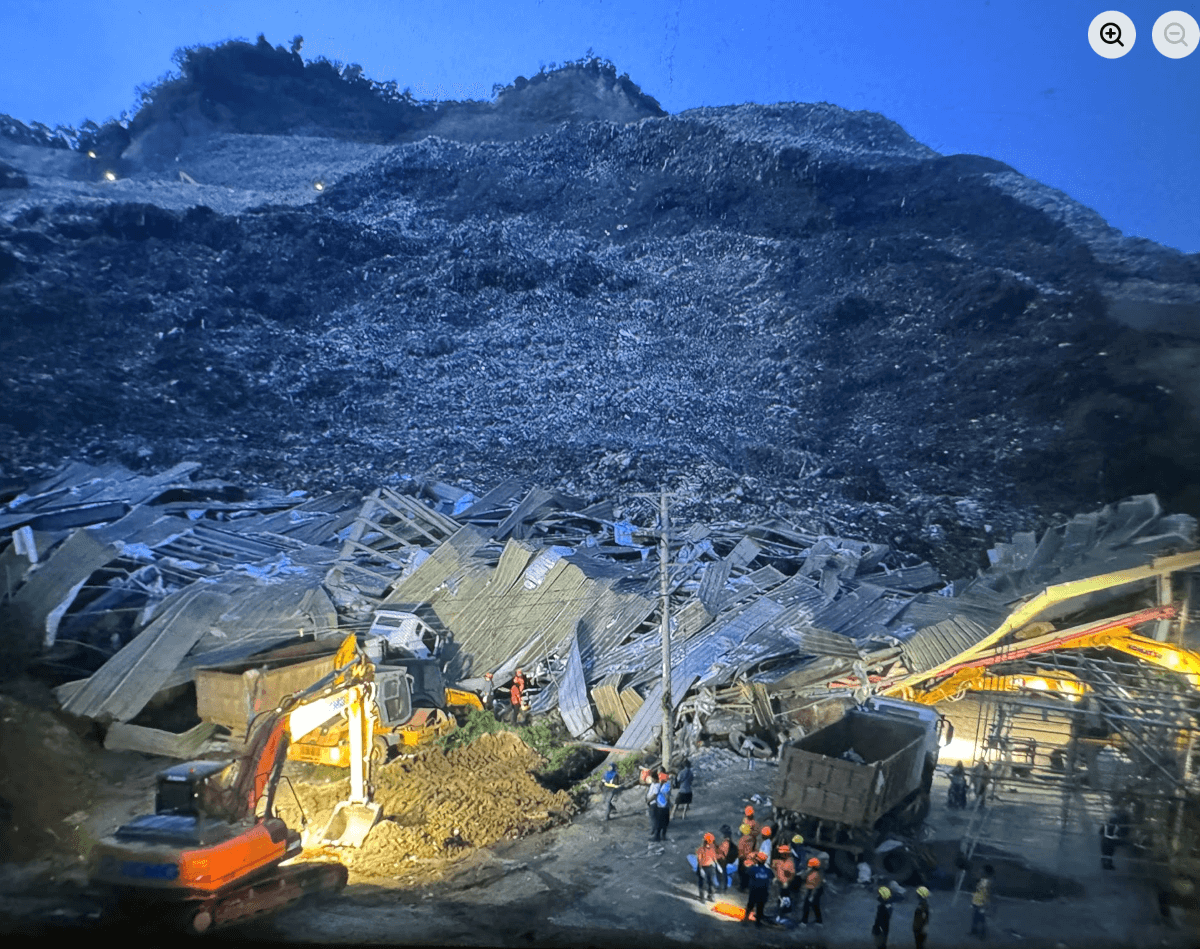
The landfill’s shutdown forced the city government to scramble for alternative disposal sites for the roughly 600 tons of garbage generated daily in Cebu City.
Officials eventually secured access to a private landfill in Aloguinsan town, about 60 kilometers southwest of the city.
However, rising diesel prices linked to tensions in the Middle East drove up hauling costs, prompting Archival to seek an additional P500 million budget from the city council.
Waste segregation
Under EO 43, all businesses were directed to put in place facilities and measures aimed at reducing waste and ensuring strict compliance with waste segregation rules.
Homeowners’ associations were likewise ordered to establish and operate their own Material Recovery Facilities (MRFs), promote waste reduction initiatives, and enforce proper waste segregation within their communities.
The EO said businesses and homeowners’ associations would be subject to inspections and compliance checks by government agencies and volunteer groups. However, the order did not specify penalties for violators.
Still, the EO cited Republic Act No. 9003, or the Ecological Solid Waste Management Act of 2000, which requires waste segregation at source and mandates that only residual waste — estimated at just 15 percent of total garbage generated — be disposed of in landfills.
Pilot areas
The implementation of EO 43 will be carried out in phases, with 10 barangays initially identified as pilot areas: Basak San Nicolas, Barrio Luz, Carreta, Calamba, Tejero, Mabolo, Tinago, Inayawan, Lorega, and Kalunasan.
After three months, the Cebu City Solid Waste Management Board (CCSWMB) will evaluate the pilot rollout and determine whether the program should be expanded to other areas in the city.
The EO also provides for the appointment of a mayoral representative to the CCSWMB, who will be authorized to convene and preside over meetings and coordinate with stakeholders on behalf of the mayor.
Task force
A task force will be created to assist the CCSWMB in implementing and monitoring the policies under the EO.
It will be headed by an executive director and supported by personnel designated or detailed from existing city government offices who will act as data managers, community organizers or trainers, and administrative assistants.
The task force’s functions include the following:
Information dissemination
Barangay captains were directed to spearhead information, education, and communication campaigns aimed at promoting proper waste management practices and reactivating and operationalizing Material Recovery Facilities (MRFs) in their respective villages.
They were also instructed to designate “eco-aides,” “eco-warriors,” or “waste marshals” tasked with monitoring compliance and submitting weekly waste diversion and compliance reports to the City Environment and Natural Resources Office (CCENRO).
The city government also called on the Department of Education, the Commission on Higher Education, educational and religious institutions, and civil society groups to help raise awareness and mobilize students, parishioners, volunteers, and communities in support of the waste management campaign.
“It is further recommended that schools, chapels, and similar institutions establish centers for composting and recyclable materials,” the EO stated. —Ed: Corrie S. Narisma

Contributor