The move comes as the Philippine Exporters Confederation (PHILEXPORT) Cebu Chapter urged authorities to immediately open discussions with the Office of the United States Trade Representative (USTR) over a new 12.5-percent tariff on Philippine exports, warning that the measure could undermine exporters' competitiveness and threaten jobs.
Signed by the Departments of Trade and Industry (DTI), Labor and Employment (DOLE), and Finance (DOF), the JAO creates an inter-agency committee tasked with investigating complaints involving imported goods suspected of being produced wholly or partly through forced labor.
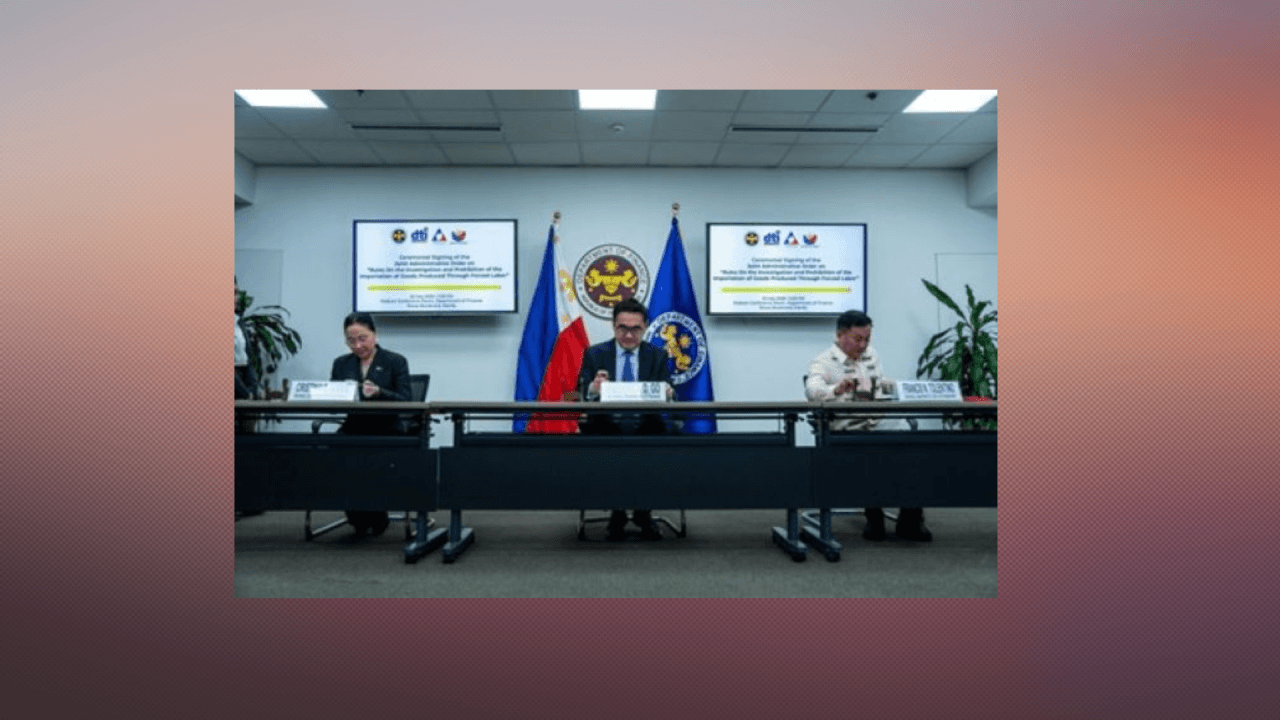
The Bureau of Customs (BOC), Board of Investments (BOI), and Philippine Economic Zone Authority (PEZA) are also members of the committee, which will recommend enforcement actions against violators.
The JAO and PHILEXPORT Cebu’s call come just days after U.S. President Donald Trump approved a memorandum directing the Office of the United States Trade Representative (USTR) to impose an additional 12.5-percent Section 301 tariff on imports from 60 economies, including the Philippines, citing their failure to effectively prohibit goods produced through forced labor.
Government response
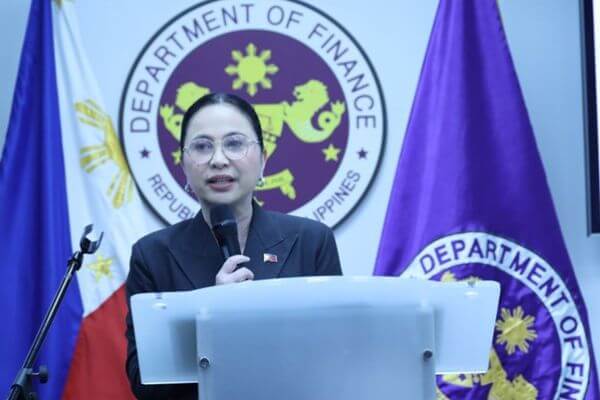
Trade Secretary Cristina A. Roque said the JAO reinforces the Philippines' position as a trusted trading partner by aligning its trade policies with growing global expectations on ethical sourcing and transparent supply chains.
"As businesses and consumers place greater value on ethical sourcing and transparent supply chains, the Philippines must ensure that our market supports responsible business conduct," Roque said, adding that the measure promotes fair competition while strengthening investor confidence.
Labor Secretary Francis N. Tolentino said the order advances the country's commitment to protecting workers and ensuring that Filipino businesses are not disadvantaged by products made through forced labor.
Finance Secretary Frederick D. Go, meanwhile, said effective enforcement would be critical, with the Bureau of Customs implementing measures against imports found to have violated the new rules.
The JAO also establishes a coordinated mechanism for investigation, information sharing and enforcement, reinforcing the country's obligations under international labor conventions while protecting consumers, workers, importers, exporters and legitimate businesses from unfair trade practices.
Industry appeal
PHILEXPORT Cebu said the government should immediately capitalize on the new policy by opening discussions with USTR officials to prevent the tariff from undermining Philippine exports.
The group urged the DTI, Department of Foreign Affairs (DFA), DOLE, and BOC to begin diplomatic engagement with the United States, strengthen labor compliance and supply-chain traceability systems, and establish a public-private task force that would help exporters meet evolving international requirements.
PHILEXPORT Cebu executive director Federico T. Escalona Jr. said the proposed tariff could significantly affect exporters, particularly micro, small and medium enterprises that rely on the United States as one of their largest export markets.
"The proposed tariff could reduce the competitiveness of Philippine products in the U.S. market at a time when exporters are already coping with high production costs, expensive logistics, and intense global competition," Escalona said.
The organization warned that higher tariffs would increase costs for U.S. buyers, potentially dampening demand for Philippine-made products while adding pressure on exporters already grappling with rising manufacturing and shipping expenses.
It also urged the government to help exporters adopt enhanced compliance systems while accelerating efforts to diversify export markets beyond the United States.
Key market
The United States remained the Philippines' largest export destination in 2025.
According to the Philippine Statistics Authority's International Merchandise Trade Statistics of the Philippines 2025, exports to the U.S. reached $13.46 billion, accounting for 15.9 percent of the country's total exports during the year. Leading exports included semiconductors, integrated circuits, electronic data processing equipment, consumer electronic components, wiring harnesses and other electronic products.
PHILEXPORT Cebu emphasized that many Philippine exporters already comply with stringent international labor standards and undergo regular audits by overseas buyers.
"Responsible exporters should not become unintended casualties of trade measures intended to address broader policy concerns," Escalona said.
"The Philippines shares the objective of eliminating forced labor from global commerce, but solutions should be achieved through cooperation, stronger compliance mechanisms, and constructive engagement rather than measures that may adversely affect legitimate businesses and Filipino workers."
The Cebu chapter has around 260 direct member-exporters and another 400 companies through affiliated industry associations.
Cebu concerns
The Mandaue Chamber of Commerce and Industry (MCCI) warned that the new tariff would compound existing challenges facing exporters, including high electricity costs, elevated logistics expenses, rising wages and recurring natural disasters.
The chamber said Cebu's furniture, fashion accessories, processed food and electronics sectors could lose price competitiveness in their biggest export market, placing MSMEs and supply-chain employment at risk.
It also cautioned that Chinese products shut out of the U.S. market could be redirected to destinations such as the Philippines, intensifying competition for local manufacturers, while shifts in global trade volumes could place additional pressure on Cebu's ports, maritime logistics network and industrial zones.
To cushion the impact, MCCI urged the government to provide targeted relief through power subsidies, more efficient port logistics and sustained diplomatic efforts to expand alternative export markets while negotiations with U.S. trade officials continue. —Ed: Corrie S. Narisma

Contributor