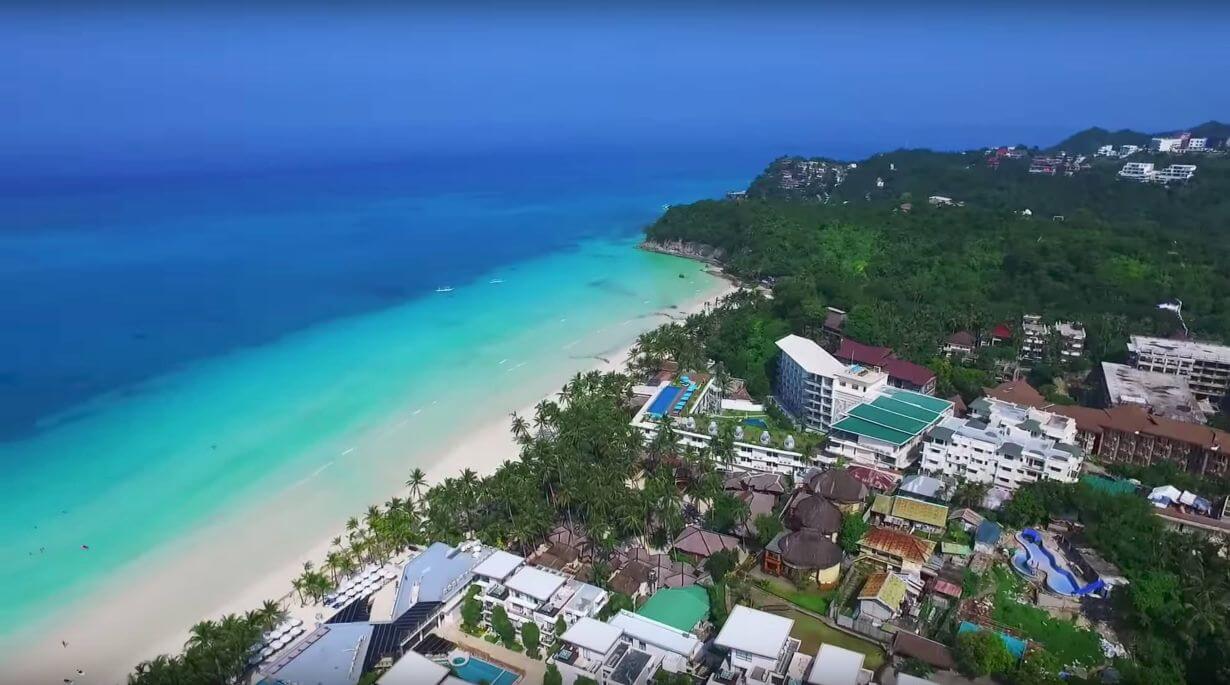
As part of efforts to deepen sustainable management, strengthen environmental safeguards, and preserve the gains achieved since the island’s 2018 closure, authorities are tightening oversight of projects seeking to operate or expand in the country’s premier tourism destination.
In line with this, the Department of Environment and Natural Resources (DENR) has issued Administrative Order (DAO) No. 2025-36, prescribing stricter guidelines for the processing of Environmental Compliance Certificates (ECC) and Certificates of Non-Coverage (CNC) for projects on Boracay Island.
The order reinforces the government’s long-term commitment to ensuring that all developments on the island adhere to carrying capacity limits, geohazard safety standards, and approved land use and zoning frameworks.
Stricter screening measures
DAO 2025-36 establishes enhanced standards for evaluating carrying capacity and geological hazards in reviewing ECC and CNC applications.
The policy covers all existing projects, expansion projects, and new developments falling under the Philippine Environmental Impact Statement (EIS) System, as well as new and existing structures that qualify for CNC issuance.
Under the guidelines, proponents of existing structures without an ECC, expansion projects, and new national government projects covered by the EIS System are required to secure an ECC prior to proceeding.
Applicants must submit an Environmental Impact Statement (EIS) or an Initial Environmental Examination (IEE) Checklist, certification from the local government unit (LGU) confirming compatibility with land use plans, zoning certificates, and/or a Sangguniang Bayan Resolution on land reclassification or exemption.
Expanded documentary requirements
Project proponents are also required to provide a project layout overlaid on a Google project location map and a Site Development Plan signed by registered professionals.
They must present proof of authority over the project site, whether public, private, or within ancestral domains, and secure certification from the Provincial Environment and Natural Resources Office (PENRO) on land classification. Compliance with beachfront and road easement requirements must likewise be certified.
For new projects, additional submissions include an Engineering Geological and Geohazard Assessment Report endorsed by the Mines and Geosciences Bureau (MGB) or an MGB-issued Geohazard Verification Report.
Carrying capacity assessments endorsed by the Ecosystems Research and Development Bureau (ERDB) and LGU certification on compliance with physical carrying capacity limits are also required.

Manual CNC processing
Projects not covered by the EIS System — including certain national government projects under applicable thresholds, qualified family dwellings, small local businesses, places of worship, and minor public infrastructure — must secure a CNC.
All CNC applications for Boracay projects will be filed and processed manually at the Environmental Management Bureau (EMB) Region VI to allow proper validation and site inspection before issuance.
The DENR stressed that only projects consistent with Boracay’s approved land use, zoning, and development framework will be eligible for ECC or CNC issuance. No new government project or expansion may proceed without the required environmental clearances.
Safeguards strengthened further
For ECC applications based on an EIS or Environmental Performance Report and Management Plan, the Environmental Impact Assessment Review Committee will include resource persons from the ERDB and MGB to assess carrying capacity impacts and geohazard risks.
The DENR Regional Office is mandated to ensure strict compliance with environmental safeguards, including proper wastewater treatment through established sewerage facilities. Discharge of untreated or inadequately treated wastewater into island waters exceeding national water quality guidelines for Class SB and SC waters is prohibited.
Proper solid waste management must also be ensured in coordination with the Local Government of Malay, consistent with its 10-year Solid Waste Management Plan and Republic Act No. 9003, alongside adherence to traffic management policies.
Through DAO 2025-36, the DENR reaffirmed its commitment to protecting Boracay’s fragile ecosystems while allowing carefully regulated development that supports sustainable tourism and public welfare. —Ed: Corrie S. Narisma
A copy of the DAO may be accessed here: https://apidb.denr.gov.ph/infores/uploads/DAO-2025-36.pdf.