
Bridging local gaps
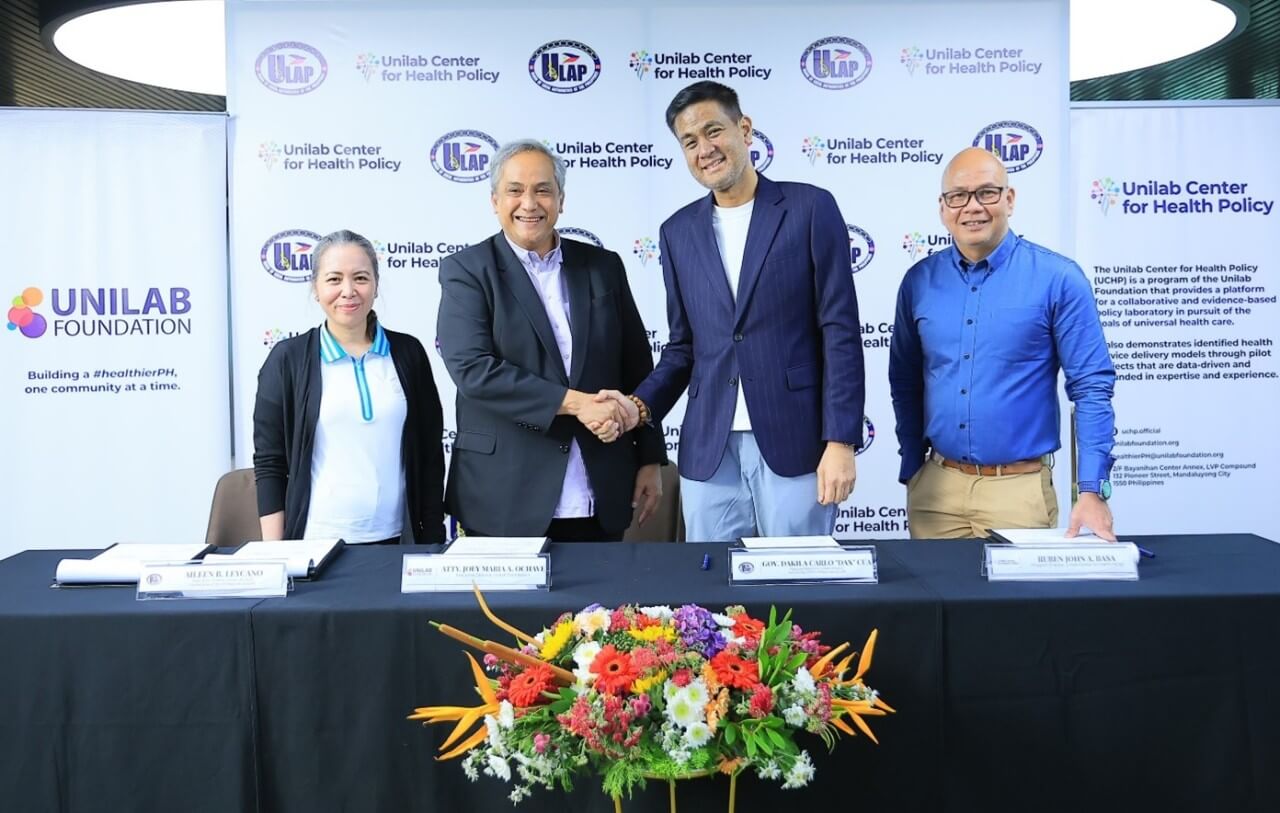
The partnership was formalized through the signing of a memorandum of understanding that seeks to identify and address barriers hampering local government units (LGUs) in carrying out UHC reforms.
Both institutions aim to confront fragmented policies, processes, proficiencies, and systems that have slowed or complicated implementation on the ground. The initiative aligns with the broader mandate of empowering LGUs, particularly as the devolution of healthcare delivery functions from the national government continues.
Ensuring that devolution does not result in inconsistent health services across provinces, cities, and municipalities remains a central concern of the collaboration.
From policy to practice
Beyond policy discussions, UCHP and ULAP will pilot programs in selected LGUs to demonstrate how UHC can be implemented effectively at the local level.
Lessons drawn from these pilot sites are expected to inform national-level policy improvements while allowing successful strategies to be replicated in other localities.
ULAP national president and Quirino Governor Dakila Carlo “Dax” Cua underscored the importance of collaboration in achieving meaningful reform.
“[This MOU] reflects our shared understanding that Universal Health Care is ultimately realized when governance meets execution which is at the local level, and that this cannot be done by government alone. We need the support of all stakeholders,” Cua said.
He added that many of today’s challenges are structural and systemic, requiring collective action rather than isolated efforts.
“We are hopeful that this partnership will continue to grow, expanding from policy and systems, strengthening toward deeper collaboration and service delivery models, innovation, and efforts that deliberately reach the unreached and underserved Filipino,” he said.
Empowering local leaders
For his part, Unilab Foundation executive director Atty. Jose Maria Ochave emphasized that UCHP’s role is to support government leaders in realizing their health goals for constituents.
“Our role is to show that certain things can work and can be implemented. But the one who can really move the needle is still the government,” Ochave said.
He stressed that local governments will play the most critical role in the coming years, as governance is most directly felt by citizens at the community level.
As part of its ongoing efforts, UCHP recently commissioned a study showing that a significant portion of local health budgets is spent on personnel salaries, leaving limited funds for actual programs and services.
The Department of Budget and Management lauded the study as a valuable resource in maximizing local funds.
UCHP has also partnered with Ormoc City to develop and implement a UHC-aligned primary care framework for geographically isolated and disadvantaged communities. —Ed: Corrie S. Narisma