Insider Spotlight
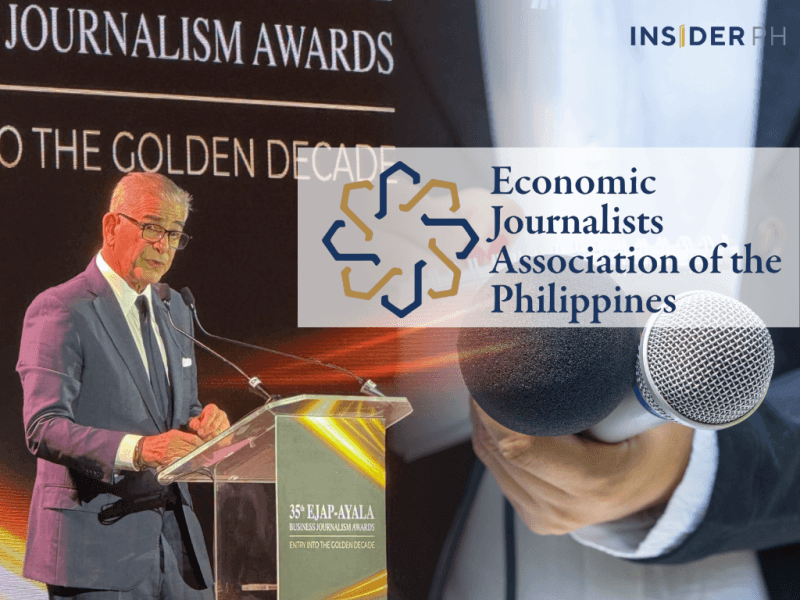
Speaking at the Economic Journalists Association of the Philippines’ awards night in Makati City on Nov. 6, 2026, the head of the country’s oldest conglomerate said corporate decisions affect employees, customers, investors and communities, making independent reporting essential to understanding their consequences and holding institutions accountable.
The accountability test
“This also stands as a challenge to us in the private sector. Business also shapes public understanding through the information that we release and the access we provide. In so doing, we in business should make ourselves open to scrutiny,” Zobel said.
He said public distrust reflected real failures, unmet expectations and the absence of accountability. Businesses and newsrooms faced questions about whether they were competent, honest and responsive to people’s needs.
Why reporting matters
Zobel cited figures from the Reuters Institute Digital News Report showing that only 28 percent of Philippine respondents trusted news most of the time, while 51 percent avoided news when possible.
Economic reporting, he said, helps Filipinos understand how inflation affects household budgets, interest rates influence housing and investments generate jobs. Its influence over investment decisions, public debate and reputations requires accuracy, fairness and sufficient context.
A headline, quotation or statistic could be accurate in isolation yet leave audiences with a misleading impression when broader context was missing, he said.
Room for difficult questions
“Journalists need room to ask difficult questions and reach independent conclusions, while businesses need to engage substantively,” Zobel said.
He proposed greater access to executives, technical specialists and useful data, alongside site visits and discussions beyond major corporate announcements. Such engagement could strengthen reporting on artificial intelligence, climate risks, shifting trade relationships and a just transition.
The next step
Journalists, in turn, could bring public concerns into corporate discussions and identify issues needing clearer explanations, he said.
Zobel said reporting should connect individual corporate developments with their wider economic and social consequences, helping audiences assess how business decisions ultimately affect jobs, livelihoods, investment and the communities that companies serve.
— Edited by Daxim L. Lucas
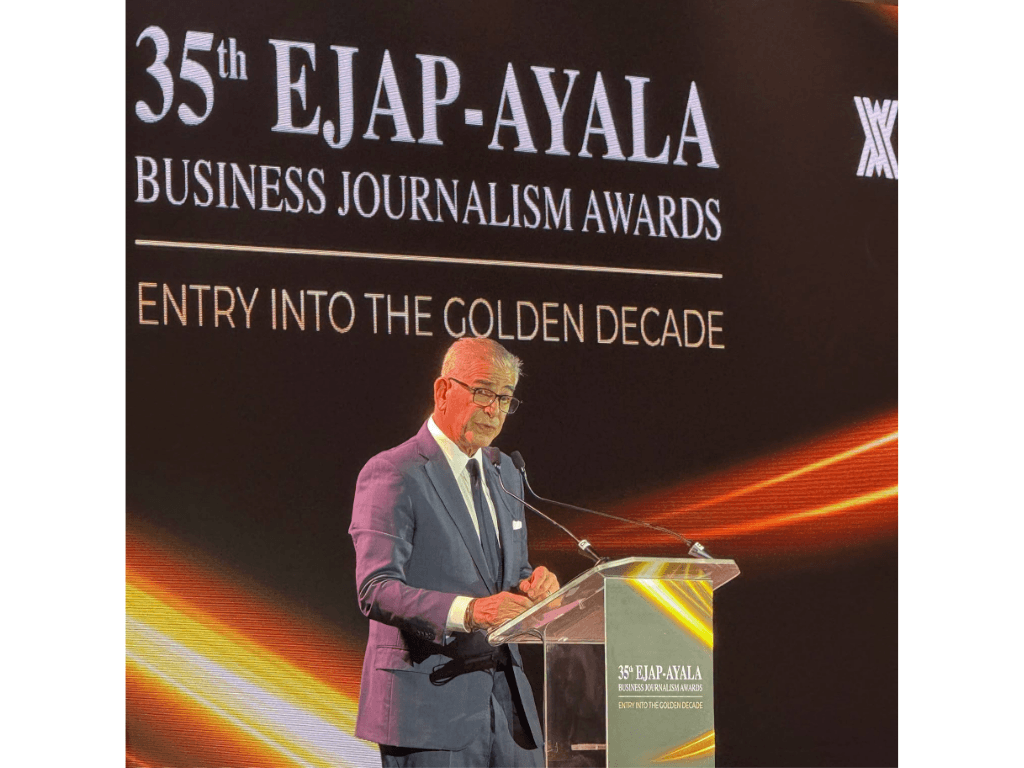
Full text of the keynote address of Ayala Corp. chair Jaime Augusto Zobel de Ayala during the EJAP Awards Night, November 6, 2026.
---------------------
Good evening.
On behalf of all of us from the Ayala Group, our congratulations to the Economic Journalists Association of the Philippines on a landmark 41st year. Our congratulations also to the honorees of the 35th Business Journalism Awards. Journalism is a difficult profession, given its many requirements: the persistence needed in chasing leads and sources, the rigor required in checking every datapoint, and, perhaps most importantly, discipline it demands in wielding the tremendous power it holds in shaping public opinion.
EJAP continues to do excellently in providing the fertile ground needed to develop high-quality journalistic talent that safeguards the truth and likewise speaks truth to power.
We are also grateful for EJAP’s trust in once again engaging Ayala as your partner for this annual gathering. We salute the hard and honorable work that economic journalists, as well as those from other beats, do every day. Company decisions, especially those in significant positions, affect thousands of employees, customers, investors, and communities. Independent journalism helps people understand the thinking behind these choices, assess their consequences, and keep institutions, including us in business, in check.
Journalists, business leaders, and corporate communications professionals all shape public understanding. More than anything, our institutions are challenged to prove ourselves worthy of our stakeholders’ trust—and I hope we can center our celebrations and conversations tonight around this idea.
In building that trust, we must first start by recognizing that we live in highly disrupted times. Unfortunately, institutions appear to bear the brunt of the people’s distrust—especially here in the Philippines. People are asking whether institutions are competent, honest, and responsive to their needs. This skepticism is not without reason as we continue to see real failures, unmet expectations, and individuals and institutions not being held to account.
The environment has also become tougher for journalists. The most recent Reuters Institute Digital News Report, considered the most comprehensive study of news consumption worldwide, has found that only 28 percent of Philippine survey respondents trusted news most of the time, and a staggering 51 percent of respondents avoid the news if they can.
There is hope. While most Filipinos today access news directly from social media, trust in individual brands and newsrooms have remained solid—and may I mention that Filipino journalists rank among the most diligent and committed worldwide.
The Reuters Institute opines that developments beyond journalism have made things challenging. The declines in trust are not a reflection of deteriorating newsroom performance. We are simply living in a world influenced by increasing political rhetoric and a noisier and more fragmented information environment.
This leads me to my second point: building and maintaining the trust of the people is a shared responsibility.
Businesses have a stake in safeguarding the spaces where Filipinos encounter journalism. These must be kept accessible, credible, and ultimately, sacred. Your work explains how inflation affects household budgets; how interest rates affect housing and monetary flows; and how investments create jobs and transform communities.
Filipinos need authentic channels where these pieces of information are presented in a way that are easy to understand and guide their decision-making.
Ensuring reliable and understandable economic reporting is both a duty and a challenge. Reporting shapes investment decisions, public debate and reputations.
This influence carries an obligation to pursue the truth and represent it faithfully and fairly. Concurrently, there is also the obligation to be mindful of the conclusions that audiences draw from your reporting. A headline, quote, or statistic may be accurate when read in isolation, but it may create a misleading impression when the entire context is lacking.
This also stands as a challenge to us in the private sector. Business also shapes public understanding through the information that we release and the access we provide. In so doing, we in business should make ourselves open to scrutiny. Well-founded reporting can reveal shortcomings and encourage improvements. Taken another way, economic journalism can also discover developments that are worth celebrating—a landmark investment, a formidable partnership forged, and concrete examples of how lives have improved through private capital, from bringing electricity to remote communities to helping local farmers bring their produce to overseas markets.
The ability to influence carries both power and responsibility. This depends on a healthy relationship between economic journalists and industry that should be grounded on respectful and constructive dialogue and debate. Journalists need room to ask difficult questions and reach independent conclusions, while businesses need to engage substantively.
All these said, allow me to end with some thoughts on further energizing our partnership.
Our audiences and the platforms they engage with continue to change. The issues that they are concerned with, as well as the issues that they should be informed about, are also evolving.
Artificial intelligence, increasing climate risks, shifting trade relationships, and ensuring a just transition are changing the prospects of companies and people. There is value in learning from one another and in making that knowledge more useful to the people we serve.
The private sector possesses immense expertise around these and other topics. We can offer access to executives, technical specialists, useful data, and facilitate site visits and deeper discussions that go beyond major announcements.
Meanwhile, economic journalists can bring the public’s concerns into the conversation and help businesses understand which issues need clearer explanations. Robust and collaborative reporting can connect individual corporate developments to wider economic and social consequences.
I certainly look forward to also hearing from you on how else our sectors can work together.
To close, tonight is about recognizing the people who have excellently exemplified what makes Philippine economic journalism great. To our awardees and everyone here tonight, we at Ayala deeply appreciate your tireless efforts in helping Filipinos understand what’s happening to the economy, and for asking the tough questions that encourage our institutions to be better.
May we continue to work with openness and mutual respect, conscious of the influence we hold, and determined to be worthy of the people’s trust.
A good evening to everyone.