In a policy brief, the ADB said economic growth in the region could fall by as much as 1.3 percentage points over 2026 to 2027 if disruptions in global energy markets persist for more than a year. Inflation, meanwhile, could rise by up to 3.2 percentage points over the same period.
The impact stems largely from higher energy prices, supply chain disruptions, and tighter global financial conditions, with spillover effects expected on trade, tourism, and remittances.
Scenario outlook
The ADB outlined three scenarios showing that the severity of the economic impact will depend on how long the conflict disrupts energy markets.
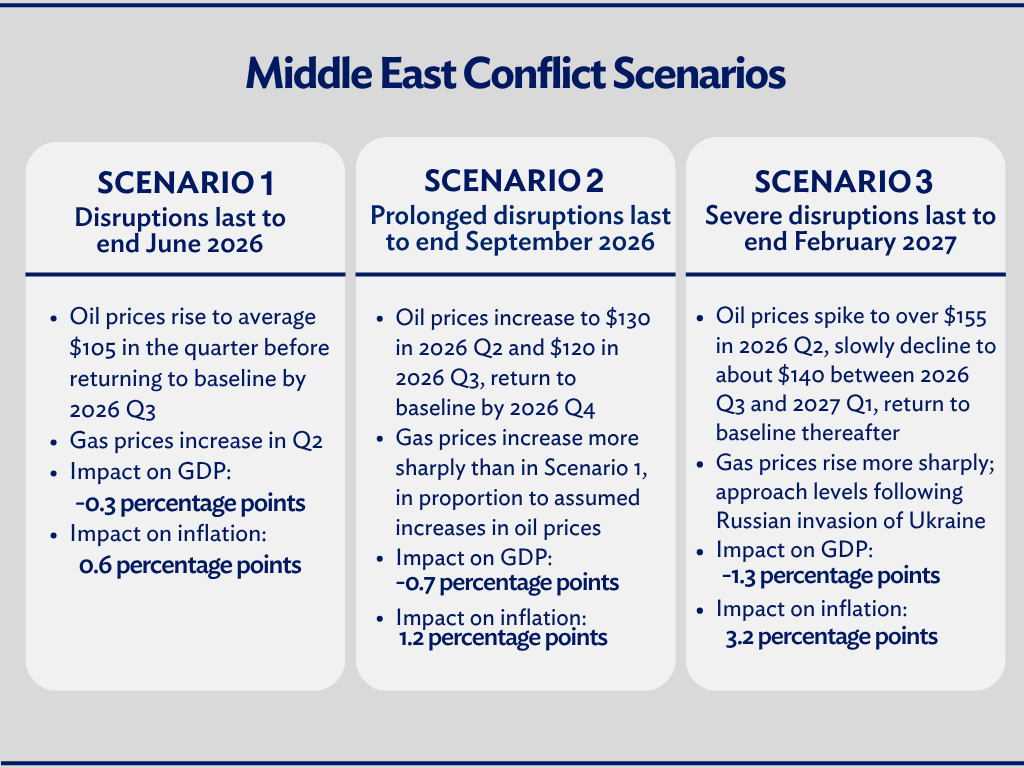
Under a short-lived conflict, energy prices may stabilize quickly, limiting broader economic fallout. However, prolonged disruptions could result in sustained inflationary pressures and weaker growth across the region.
Developing Southeast Asia and Pacific economies are seen as the most vulnerable to slower growth, while South Asian economies may face the highest inflation increases.
Policy dilemma
“Prolonged energy disruptions could force economies in developing Asia and the Pacific to navigate a difficult trade-off between weaker growth and higher inflation,” said ADB Chief Economist Albert Park.
He added that governments should prioritize measures that contain market stress and protect vulnerable sectors, while building long-term economic resilience.
Policy response
The ADB outlined key policy recommendations to help economies manage the shock.
Authorities are advised to allow some energy price adjustments to pass through to consumers to encourage conservation and investment in alternative energy. Broad subsidies and price controls, the bank warned, may distort markets and delay necessary adjustments.
Fiscal support should be targeted and temporary, focusing on vulnerable households and the most affected industries to mitigate the social impact of higher prices while limiting fiscal strain.
Monetary stance
Central banks, meanwhile, are urged to focus on maintaining market stability and anchoring inflation expectations.
The ADB cautioned against overly aggressive monetary tightening, which could worsen growth conditions and increase financial volatility. Instead, targeted liquidity support and clear communication are seen as critical in managing inflation risks.
Demand measures
Governments are also encouraged to implement practical measures to curb energy demand, including limiting air-conditioning use, promoting energy-saving campaigns, and encouraging public transport and flexible work arrangements.
Such measures, the ADB said, can help reduce pressure on energy systems during periods of elevated demand.
Long-term outlook
While the outlook remains uncertain, the ADB emphasized the importance of coordinated policy responses to manage short-term risks and strengthen long-term resilience.
The bank said the region’s ability to navigate the current shock will depend on how effectively governments balance inflation control, growth support, and energy security. —Ed: Corrie S. Narisma