
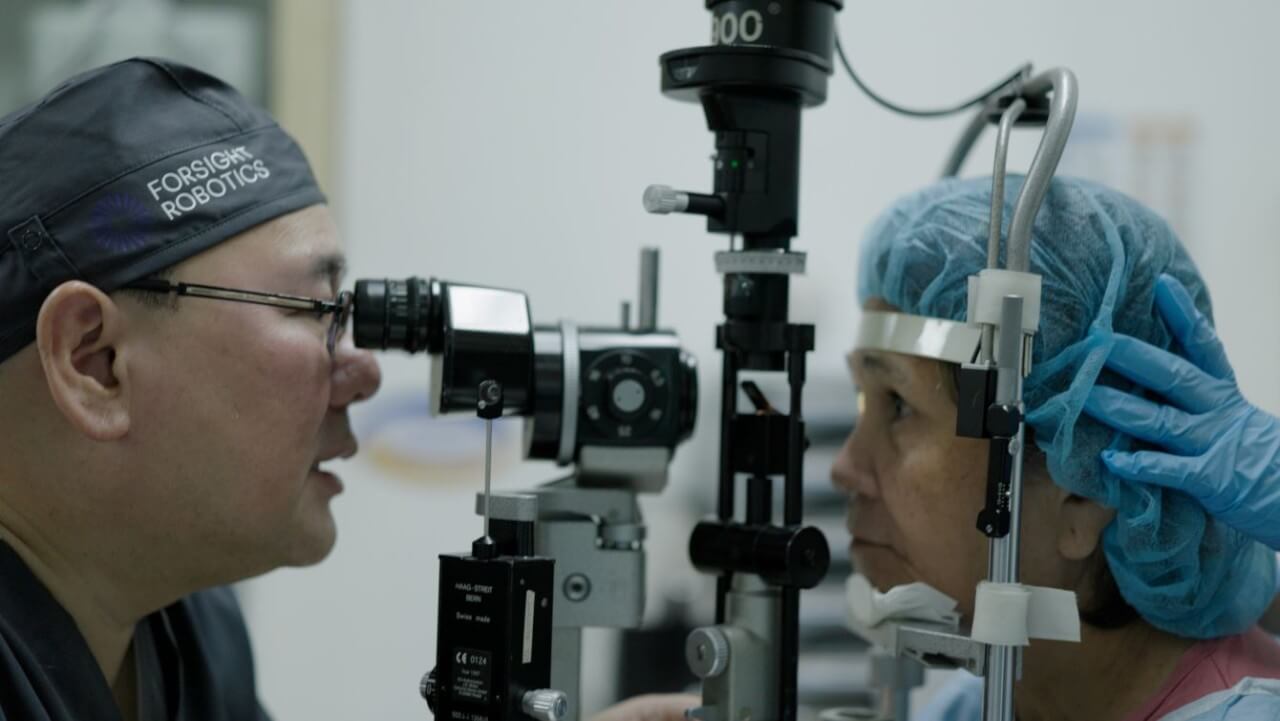
The procedure was performed using ForSight Robotics’ proprietary Jasper Platform and led by Dr. Alexey Rapoport, with Dr. Robert Edward T. Ang of the Asian Eye Institute serving as principal investigator. The milestone positions both the country and the institute at the forefront of innovation in vision care.
Tech breakthrough
“This technological breakthrough presents a shift in how we think about performing eye surgery,” said Ang, who is also Senior Consultant and Head of Cornea and Refractive Surgery at Asian Eye.
He noted that robotic-assisted systems have the potential to improve surgical precision, reduce variability, and expand access to high-quality cataract procedures.
Cataract surgery is among the most commonly performed procedures worldwide, and experts say innovations that improve consistency and efficiency could benefit millions of patients, particularly in underserved areas.
Research leadership
Asian Eye Institute played a central role in advancing the first-in-human study, reinforcing its reputation as a leading center for clinical research in ophthalmology in Asia. Over the past 25 years, the institute has contributed to developments in cataract treatment, refractive surgery, glaucoma care, and retinal disease management.
Medical Director Dr. Juan Ma. Pablo Nañagas said the milestone reflects the institute’s long-standing commitment to integrating global innovations into local practice. “Clinical research is not separate from patient care. It is how patient care continues to evolve,” he said.
Ang added that research is key to fulfilling the institute’s mission of bringing advanced technologies to patients. He said robotic systems could help bridge gaps in access by enabling more efficient procedures without compromising quality.
Future Care
Beyond robotic-assisted surgery, Asian Eye is currently involved in multiple research projects, including studies on advanced intraocular lenses, presbyopia laser treatments, glaucoma drug delivery systems, and therapies for macular degeneration.
Officials said the breakthrough not only highlights technological progress but also underscores the importance of sustained research in improving patient outcomes. They added that expanding access to clinical trials allows more patients to benefit from emerging treatments.
Patients interested in participating in ongoing studies may contact the institute for screening and inclusion. —Ed: Corrie S Narisma