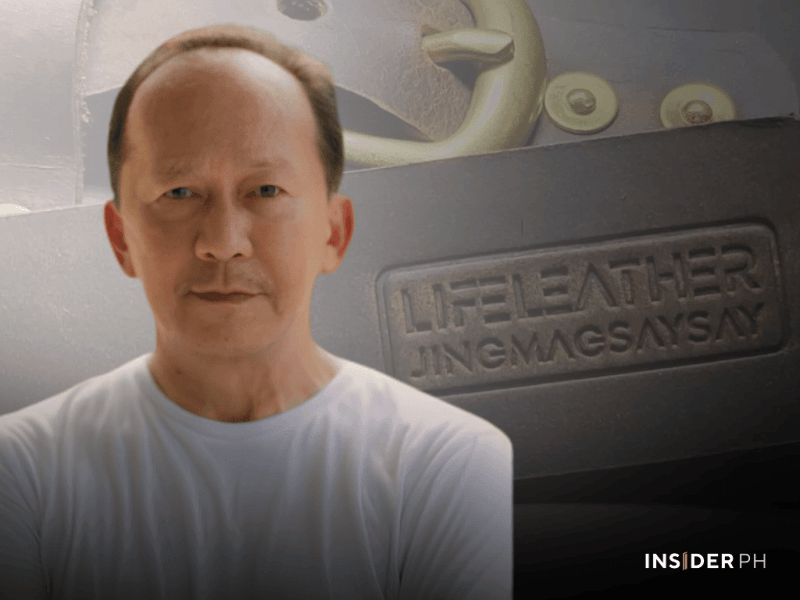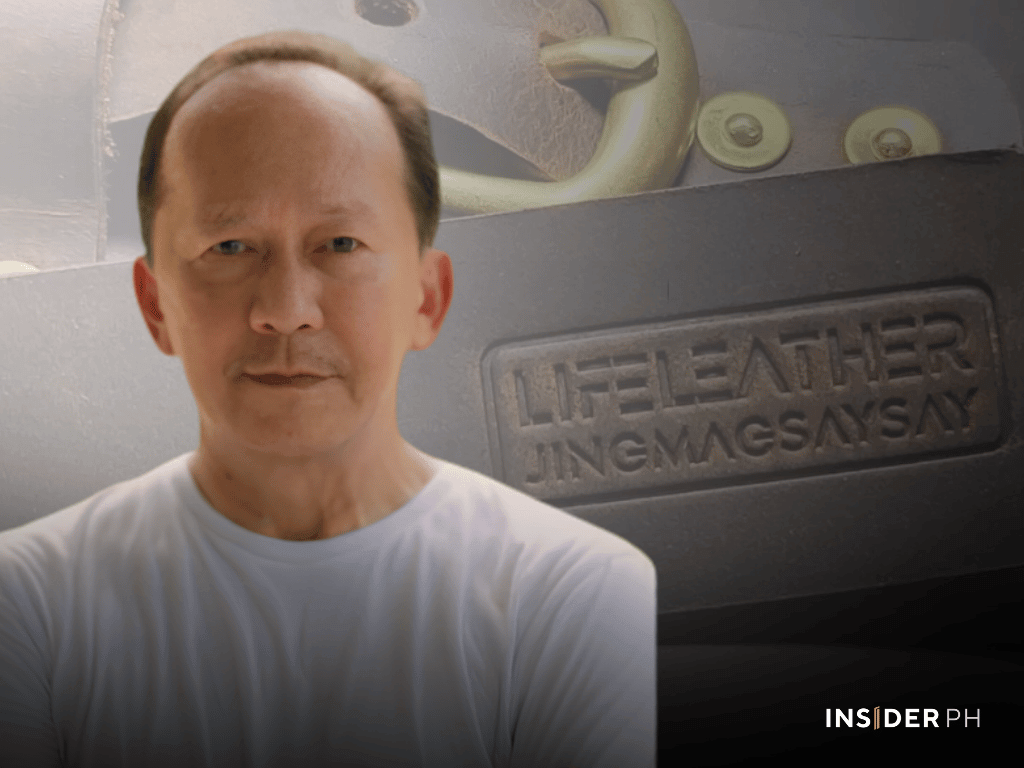
“I moved to Tagaytay — actually, Alfonso — in 2020, during the pandemic,” Jing says.
Now retired from the relentless, round-the-clock pace of broadcast journalism, the veteran newsman who covered the Mt. Pinatubo eruption — and once volunteered to drive a satellite dish from Manila to ABS-CBN’s Davao station — is savoring the cool climate, quiet charm, and fresh air of his bucolic Tagaytay surroundings.
“I’m home most of the time,” Jing shares — though he graciously made the trip down to Quezon City, his old stomping grounds, for this feature.
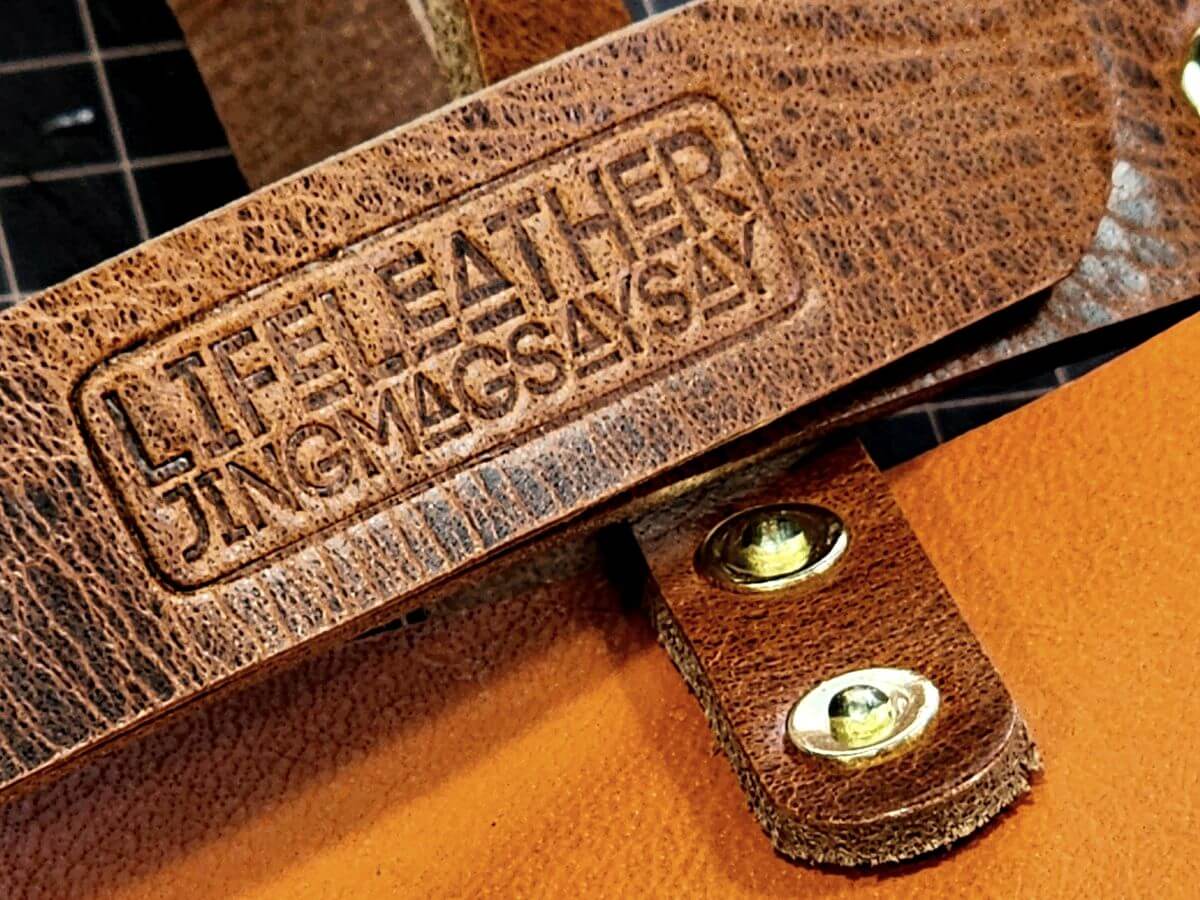
Yet Jing — who recently joined former colleagues Ging Reyes, Charie Villa, and Danny Buenafe on a podcast — is far from simply lounging around in retirement. Many may be surprised to learn that he has taken up bag-making, a hobby that quickly evolved into a small business called LifeLeather (by LifeLeather Leather Works). The brand carries a distinctive whale-tail logo that symbolizes, among other things, “a deep respect for the sea,” as well as strength and the enduring spirit of the ocean.
“It’s leather for life, also leather for any kind of life,” he further explains.
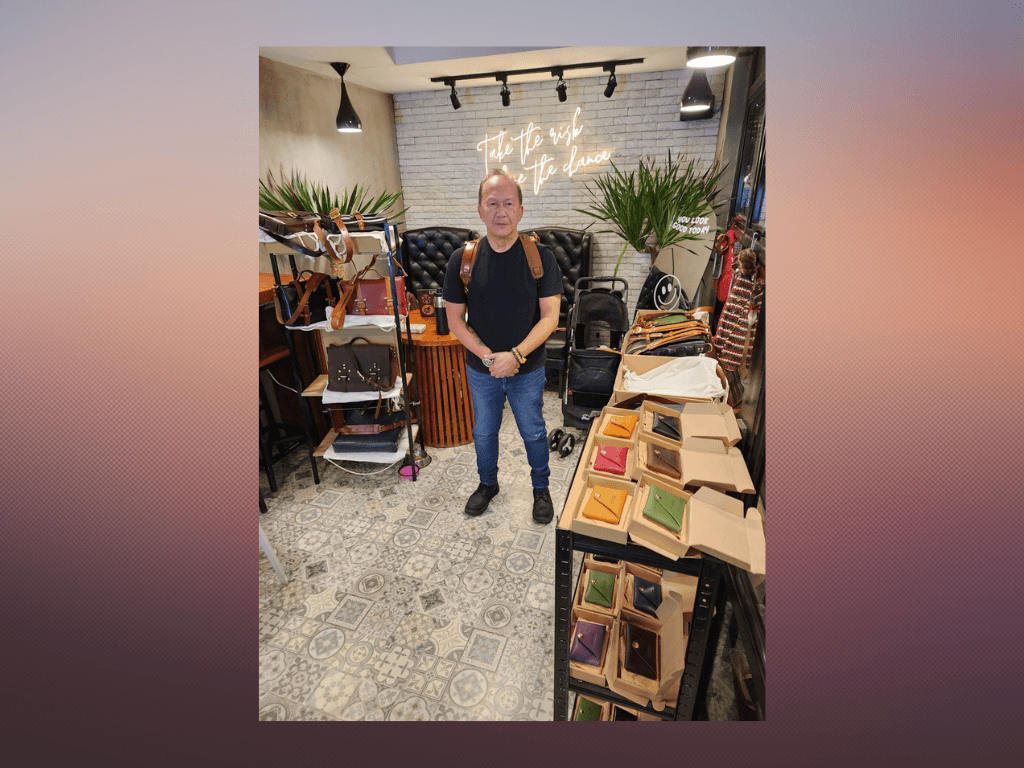
Bag man
“I’ve always liked bags since I was young,” Jing says. “I’ve always liked using them because I tend to carry a lot of things. Maabubot ako — I’m the type who likes tools, utility knives, ball pens. I also draw a lot.” The latter comes naturally to him, given his background in fine arts.
Four years ago, on a whim, Jing decided to make a bag for himself. Having handled tools all his life, and given his love for leather — which he traces back to a childhood fascination with Roman soldiers and the skirts they wore, “pieces of leather, one over the other, for mobility,” as well as cowboys and Indians — getting into bag-making came naturally.
Another reason: As a longtime bag owner, Jing was never really satisfied with the ones he had, branded bags included.
“The first thing that breaks in a bag is the tahi,” Jing says. “More so if you’re always on the go.”
Something unique
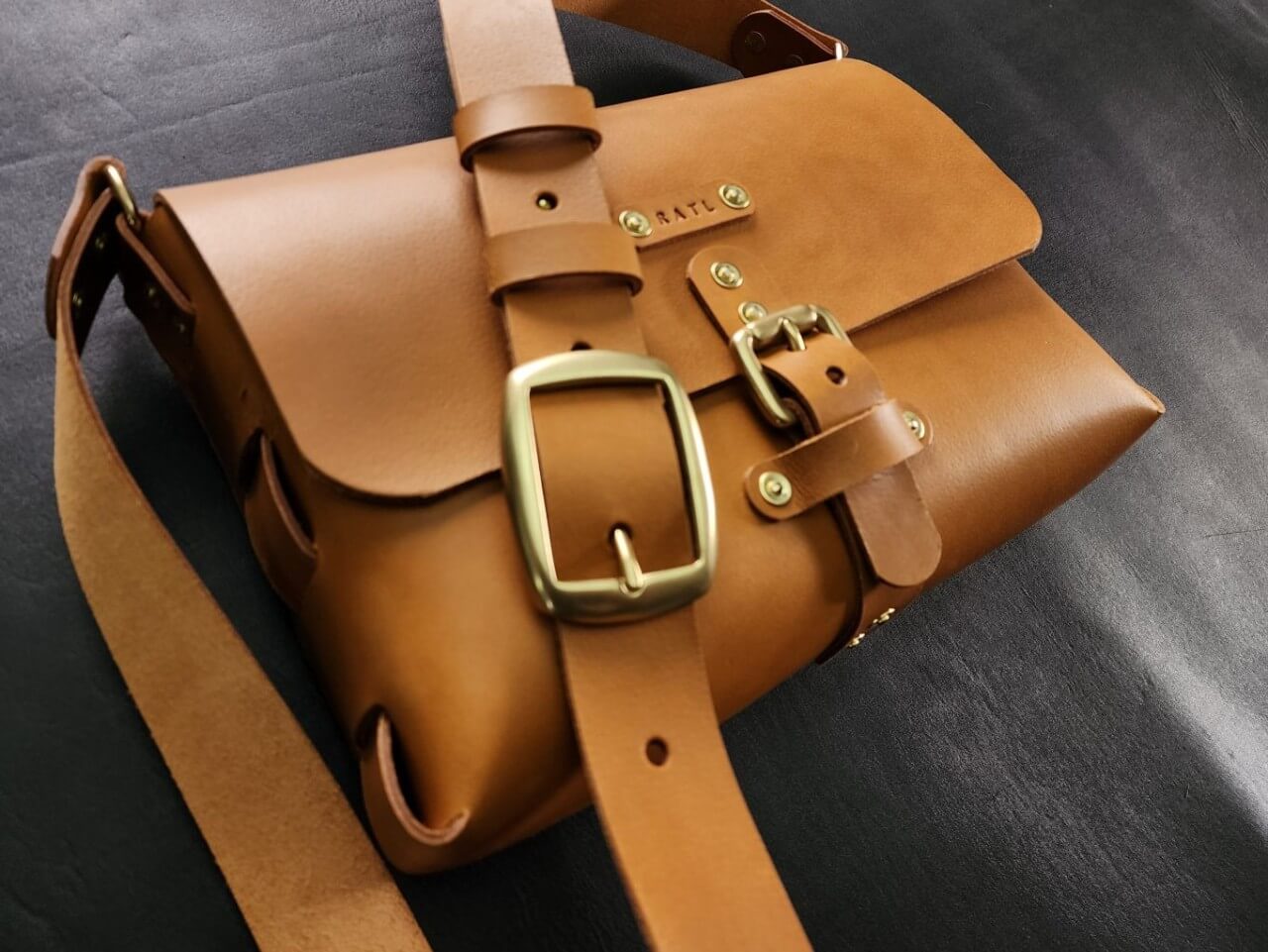
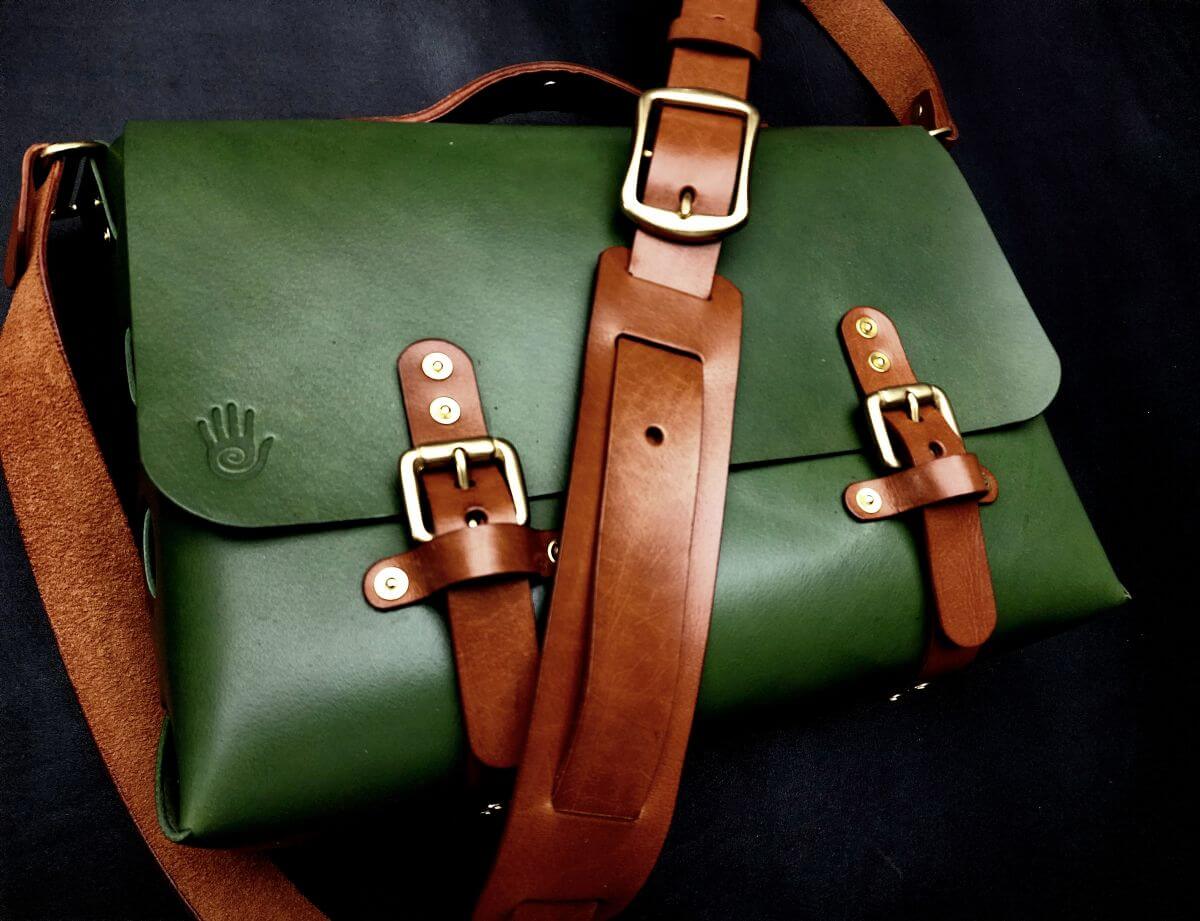
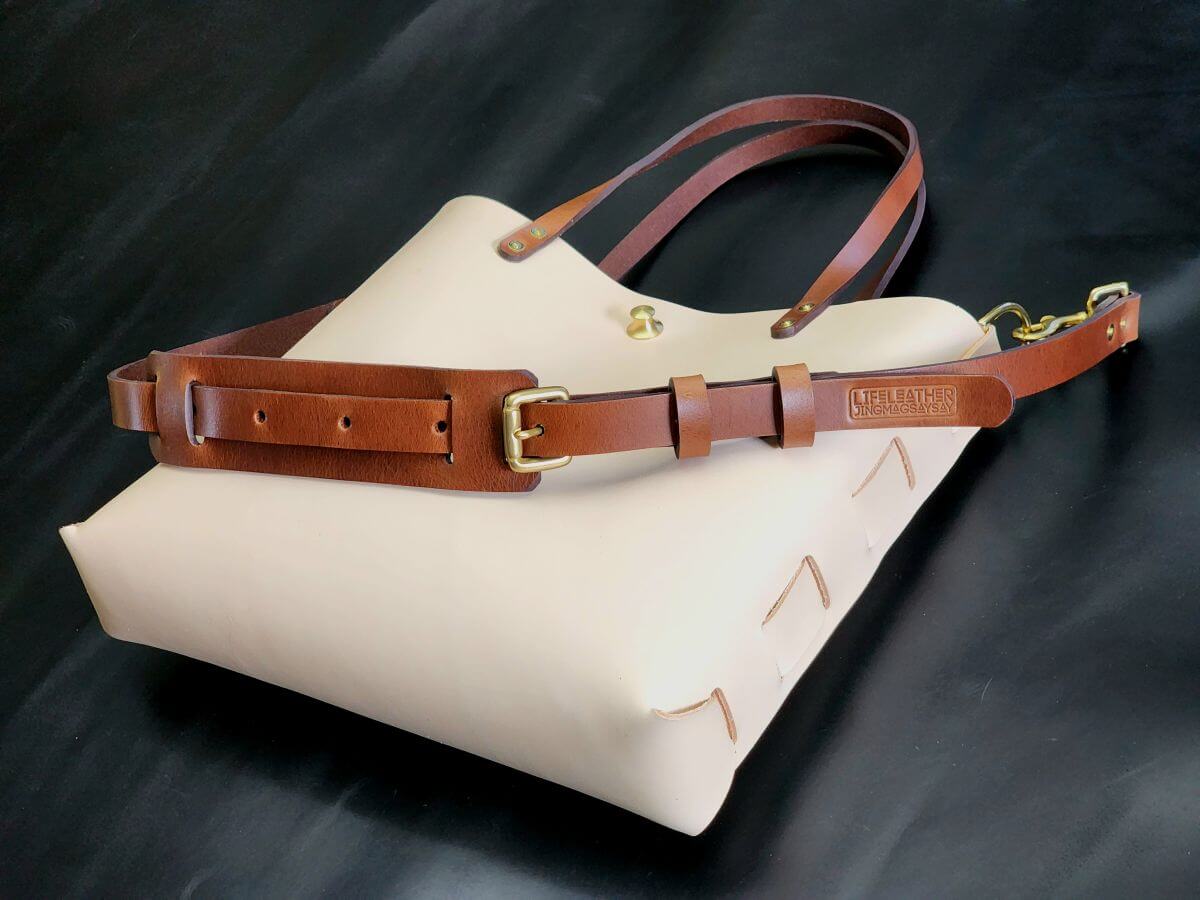
He quickly decided that his bags had to be different. Instead of stitches, they would use rivets, with the leather woven into itself.
So off he went — despite the absence of existing patterns and with no guarantee the design would even work, since no one had tried anything quite like it before.
“I designed and designed and developed, made bags — all failed,” he says, until the eureka moment came. “I think I like this version now” — never mind that it was still quite rough.
After posting it on Facebook, restaurateur Elbert Cuenca, a cousin, took a liking to it and paid a small price.
“He has the fourth prototype of the bag,” Jing shares.
Soon, people started noticing, and along with it came order inquiries.
Imported materials, local craftsmanship
“I get all my raw materials from abroad,” says Jing. The leather he uses — thick, per his specifications, up to 3.5 mm — comes from China, India, Pakistan, Argentina, Japan, and Italy.
He also uses solid brass, which he imports because, as Jing laments, the Philippines does not manufacture its own hardware — a reality that, for a time, created challenges due to tariffs and supply-chain issues.
“I have to project what I’m going to need. During the Christmas season, for instance, I buy in bulk.”
Meanwhile, the number of orders he accepts at any given time varies and is never quite the same from month to month, though he estimates he can produce around 15 bags monthly.
“I’ve gone from a two-week lead time to a 10-week lead time,” he says, recalling a period when he was completely backed up. “I make an average of one bag every one and a half days, as I don’t work daily.”
And so far, the response has been nothing short of positive. Shares Jing: “There was a time people were ordering 10 bags each. One lady even ordered 20 bags — all as gifts.”
Pretty impressive for something that began merely as an experiment and a hobby.
“Who knew there was a market for these types of custom-made bags. I certainly didn’t,” admits Jing.
For daily use
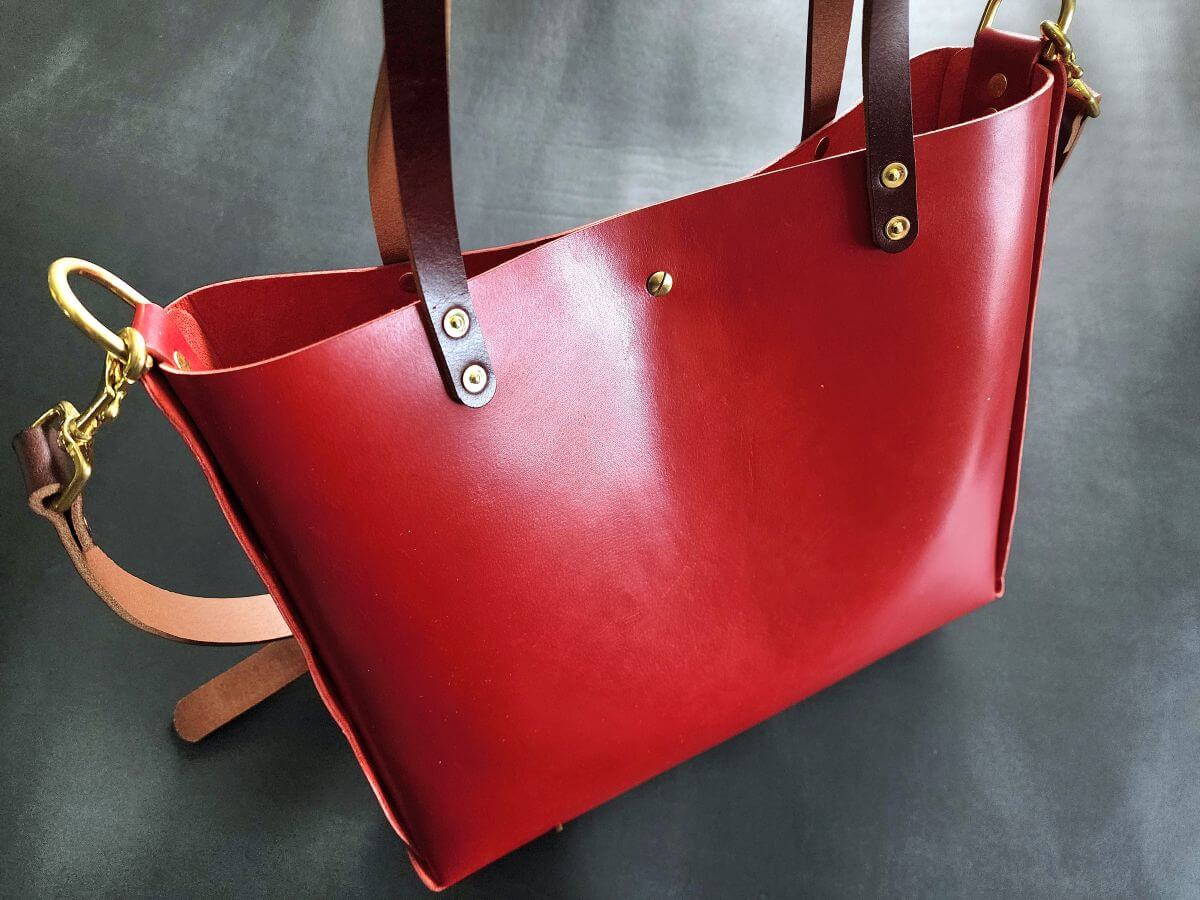
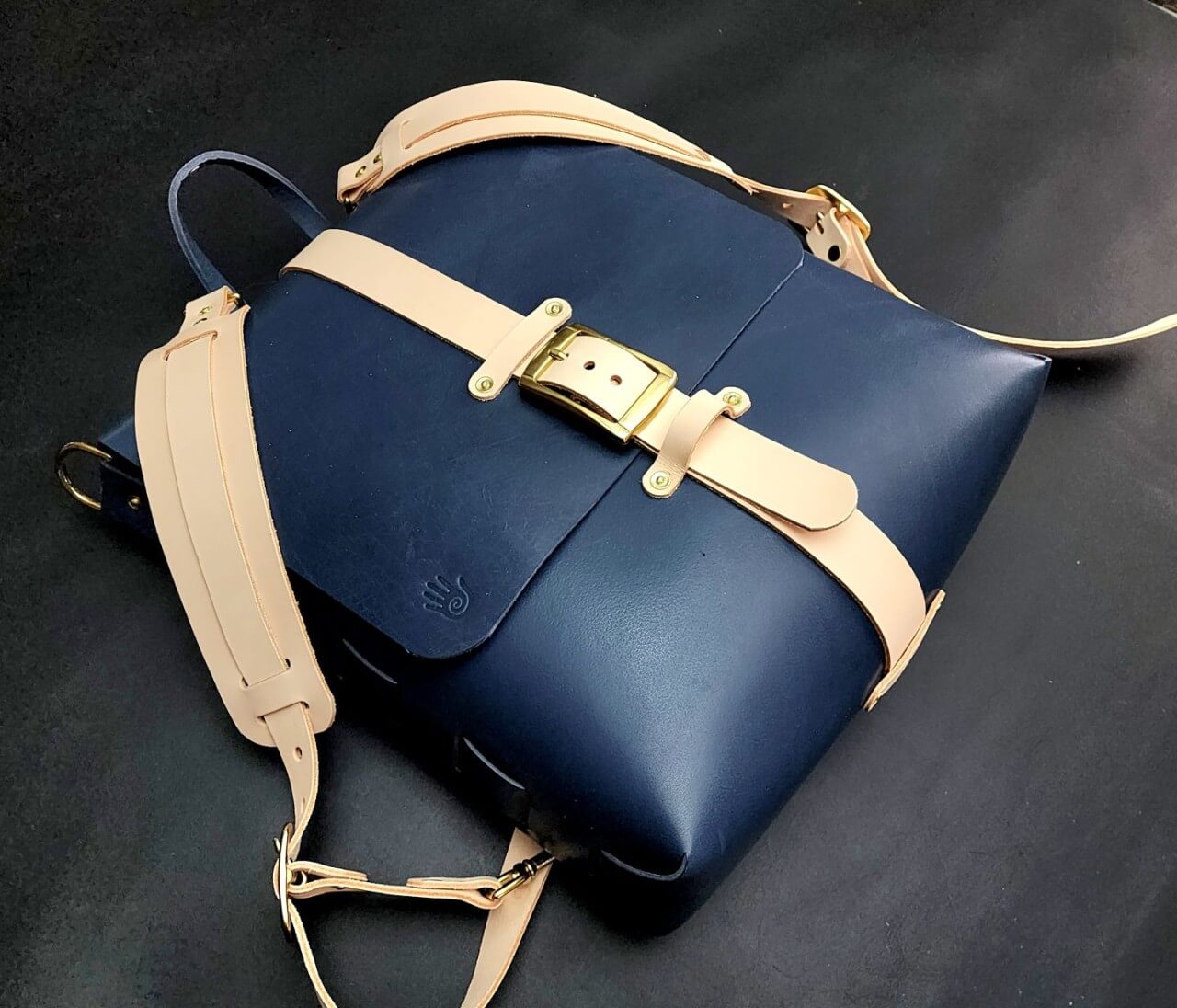
Deciding that he should “cover all the types of bags people use on a daily basis,” his product line includes satchels that can carry laptops, a backpack, a tote, and what is dubbed “The Commuter.”
Bigger, longer, and wider at the bottom, it is fitted with two cavalry buckles and two straps for safety. A single-buckle version is also available, a response to frequent customer requests.
Prices range from P18,000 for the smallest to P35,000 for the backpack — all handmade, one must remember.
Online presence
And as many have asked: no, LifeLeather doesn’t have a store, as he wouldn’t be able to fill demand anyway. Everything is marketed online — including short video clips featuring Jing himself — on Facebook, Instagram, and Threads.
Currently, he has 11,000 followers, with Threads, surprisingly, being the most effective platform.
“I have to be conscious about the frequency [of my posts],” Jing explains.
Now, with all the goings-on in local politics and current events, I inevitably ask Jing if he misses the grind; that is, his former life as a journalist. Here, he waxes a bit sentimental.
“Yeah, you know, when you’re in the news, when you’ve been in it and in the middle of it all, you always look forward. On days like these, I do miss it.”
But with bag-making now fully occupying his time, thanks to the unexpected reception and interest LifeLeather has generated, it seems that chasing stories or bagging an exclusive interview — just like old times — will have to take a back seat for now. —Ed: Corrie S. Narisma

Features Reporter