A rare governance structure
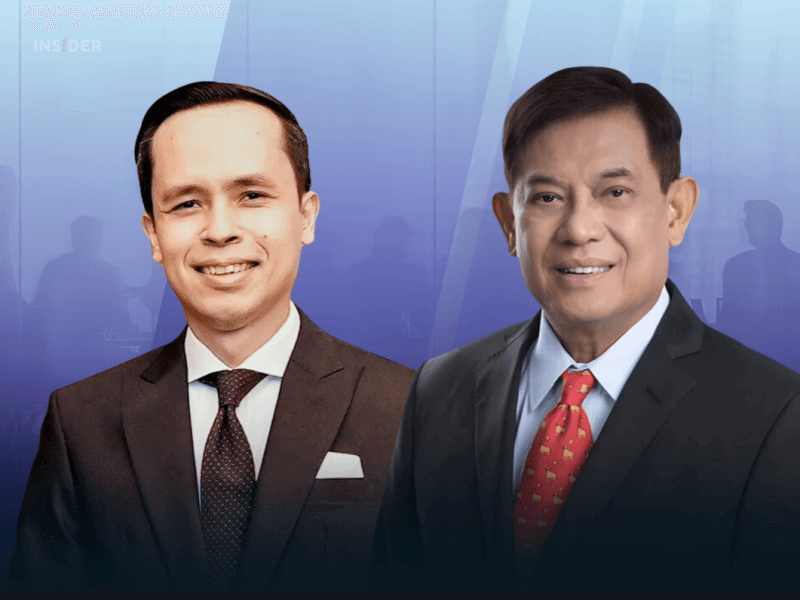
His appointment — first as independent director in 2020, then elevated to chair in 2023 — reflects a shift in governance thinking, but also underscores the weight of his institutional background: 12 years as governor of the country’s central bank and chair of its seven-man Monetary Board.
That experience, he said, shapes how he runs the SM board: less through assertion of authority than through consensus-building grounded in data.
“Our discussion are always based on fact and on actual evidence, and on the wisdom of individual board members,” Tetangco said in a recent interview with InsiderPH.
Consensus over confrontation
Unlike Western corporate boards where dissent is often explicit and voting outcomes are public, he describes a more collegial process. Decisions at the SM holding firm, which controls P1.8 trillion in assets, rarely come down to a formal vote. Instead, they evolve through deliberation until a common position emerges.
“I don’t even have to call for a vote,” he said, noting that alignment is usually sensed and arrived at during discussions.
This approach mirrors his years at the Bangko Sentral ng Pilipinas, where policy decisions were also typically unanimous or near-unanimous. Disagreements, when they arose, were resolved through extended discussion rather than confrontation.
“It was very rare that the board ended up with non-unanimous [decisions],” he said of the Monetary Board whose decisions determine, among others, how fast the Philippine economy grows and how much the peso is worth.
Central bank discipline at work
At SM, the same template applies. Diverging views, whether on pricing, deal structure or timing of major transactions, are absorbed into the process. Proposals are revised, sometimes significantly, before being adopted.
“There have been some vigorous discussions. But at the end of the day, we all agree on one position,” Tetangco said.
This consensus-driven model is tested by the inherent dynamics of a family-controlled conglomerate. Yet he emphasized that the controlling shareholders do not simply impose their will.
“No one can just overrule the other members of the board,” Tetangco said, pointing to the one-director, one-vote principle and shared fiduciary duty.
Independents hold majority
Instead, influence is exercised through persuasion. Positions—whether from family members or independent directors—must be defended with evidence and logic.
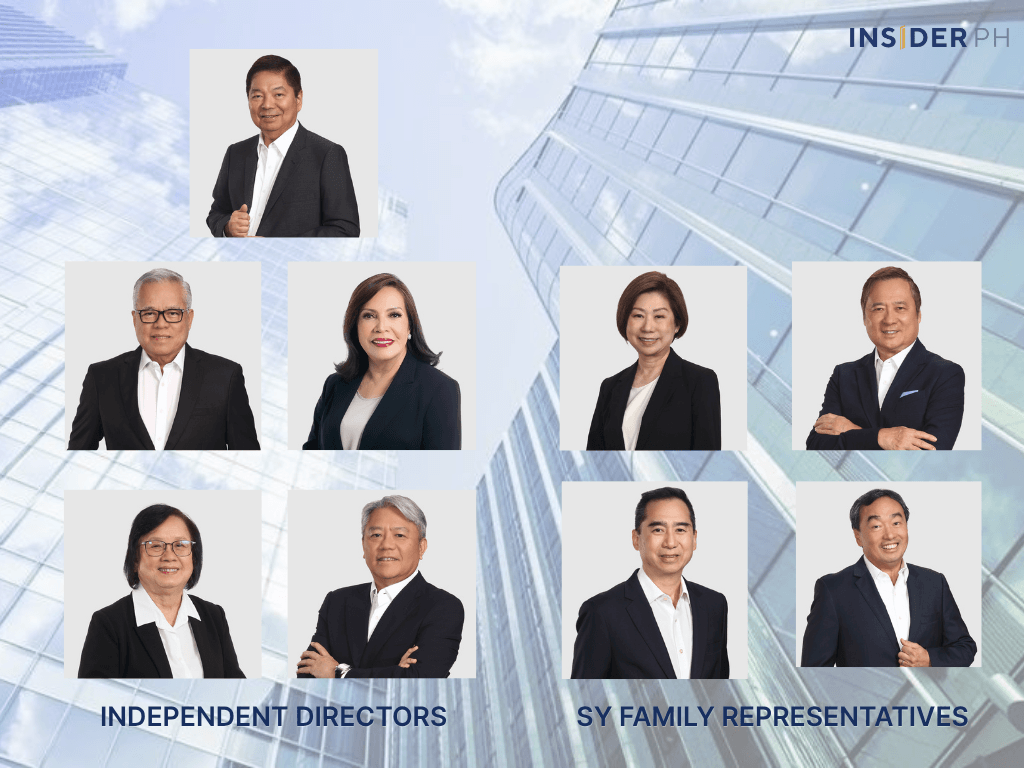
The structure of the SM board reinforces this balance. Independent directors account for a majority—five out of nine members—and key committees, including those overseeing audit and related-party transactions, are led by independents.
Apart from the former central bank chief, other SM Investments independent directors are former Trade Secretary Ramon Lopez, banker Robert Vergara, former Finance Undersecretary Lily Gruba, and business process outsourcing pioneer Marife Zamora.
Directors representing the Sy family meanwhile are vice chair Teresita Sy, vice chair Henry Sy Jr., executive director Harley Sy, and president and CEO Frederic DyBuncio.
This setup goes beyond regulatory minimums and, in Tetangco’s view, strengthens institutional credibility
“All my life as a regulator, I’ve tried to build institutional credibility,” he said. “I wouldn’t have joined this group if the principles that I’ve upheld… [were] not there.”
Balancing control and independence
For Tetangco, the role of an independent chair in a family conglomerate is not about displacing ownership control, but about broadening the decision-making framework.
“It’s really more being open to independent thinking and independent judgment. That’s very important,” he said.
The model also departs from the more adversarial conception of independent directors in Western markets, where they are often cast as explicit advocates of minority shareholders. In SM’s case, Tetangco said governance is approached more holistically.
“The interest of the minority shareholders is considered along with the company’s as a whole,” he said.
That includes stakeholders beyond equity holders: suppliers, partners and the broader enterprise ecosystem.
Still, Tetangco rejects the notion that consensus equates to the absence of tension. In fact, he views disagreement as necessary.
“If there is a total lack of dispute, that will be really concerning,” he said.
A test case
The measure of effectiveness, he added, lies not in unanimity at the outset, but in the board’s ability to converge on a well-considered outcome.
Whether this governance model becomes more widespread remains uncertain. Tetangco believes it will gain traction as markets mature, though he acknowledged that SM’s structure is still an exception.
For now, his presence at the helm stands as a test case: a technocrat leading a family empire, applying central banking discipline to corporate governance and, in the process, redefining how power is exercised in one of the country’s most influential business groups. —Daxim L. Lucas | Ed: Corrie S. Narisma