Insider Spotlight
The company said cultural institutions are moving beyond static panels and printed displays as audiences increasingly expect visuals that are easier to absorb in large and high-traffic environments.
Projection systems, Epson noted, allow institutions to display historical timelines, archival images, educational materials, and artworks at scale while maintaining clarity and visibility across exhibition spaces.
Why it matters
Museums and galleries face growing pressure to modernize visitor experiences while preserving the integrity of cultural content. Large-scale projection technology is becoming a key tool for institutions that want flexible and immersive storytelling formats without permanently altering heritage spaces.
Epson said clear visuals are particularly important in large venues where details can be lost due to distance, ambient lighting, or heavy foot traffic.
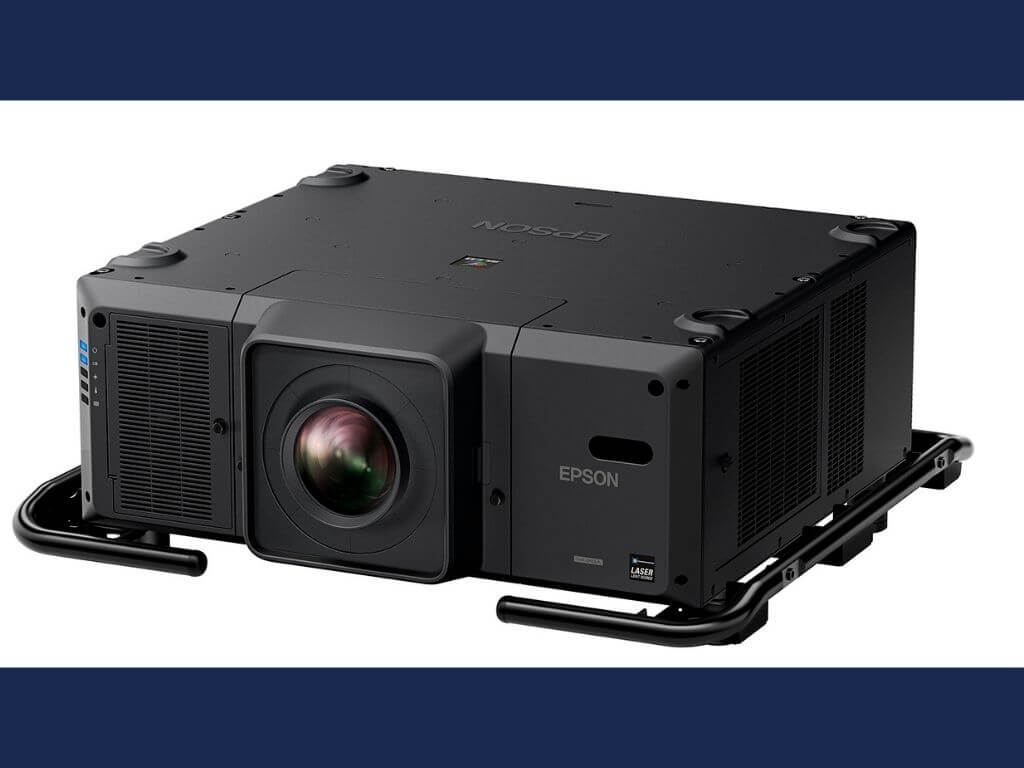
The company highlighted its EB-L30000UNL projector, which delivers up to 30,000 lumens of brightness designed for large exhibition environments. According to Epson, the projector allows historical murals, archival photographs, and maps to remain visible even under mixed lighting conditions.
Built for long-term exhibitions
Beyond brightness, Epson emphasized reliability for permanent and long-running installations.
The company said its laser light source technology can operate for up to 20,000 hours without maintenance, helping museums and cultural institutions reduce operational interruptions and maintenance costs.
For smaller galleries and educational spaces, Epson also promoted its L-Series projectors, which provide up to 8,000 lumens with 4K enhancement. The projectors include short-throw capabilities and wireless connectivity, allowing institutions to adapt installations for rotating exhibits or changing programs.
Sustainability focus
Epson also linked its projection solutions to broader sustainability efforts.
The company said it has transitioned to 100 percent renewable electricity across its global sites and now uses more than 80 percent recycled cardboard in projector packaging.
“Through efficient, compact, and precise technologies and engineering that solves real-world issues, Epson has always focused on creating new value for the real world,” Masako Kusama, president and director of Epson Philippines Corp., said in a press statement.
“We continue to build on our legacy by creating solutions that make content clearer and more accessible, while supporting responsible use of resources,” she added. —Vanessa Hidalgo |Ed: Corrie S. Narisma