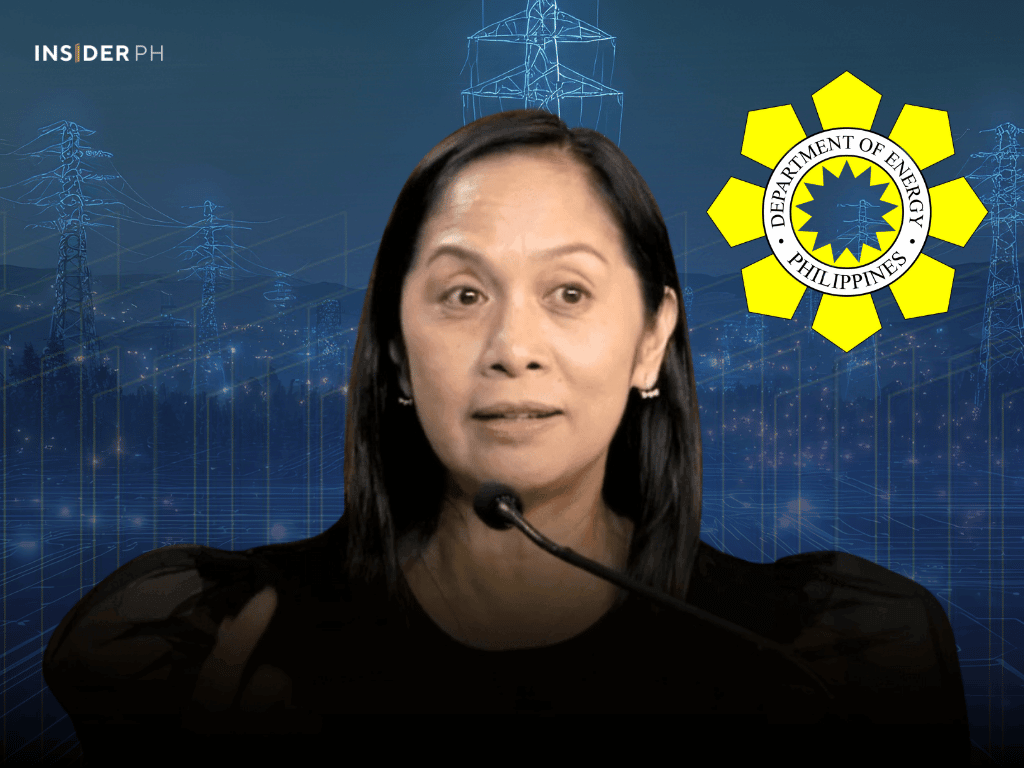
“Our plans will result in a Visayas that will not be dependent on the supply of Mindanao or the supply of Luzon,” Energy Secretary Sharon Garin said in an online press conference on Sept. 15.
The plan includes 135 megawatts (MW) of new baseload capacity for Panay Island by 2028, followed by an additional 270 MW in 2029 and 150 MW in 2030.
The DOE is also considering between 220 MW and 440 MW of gas-fired mid-merit capacity by 2028, subject to investors’ assessments. The facilities would serve Panay and Negros, which are linked through the transmission system.

Baseload plants provide a steady supply of electricity, while flexible gas-fired units can respond when a major plant trips or output from solar and wind facilities declines.
Garin acknowledged that permanent projects would take years to complete and that some facilities should have been planned much earlier.
“This should have been planned five years ago,” she said. “The good news is that the companies are willing to rush the construction of these power plants.”
Multi-pronged approach
Garin said the restoration of existing plants, deployment of batteries and entry of temporary generators would support the grid from 2026 through 2028. The DOE expects the power situation in Panay, Negros and the wider Visayas to become healthier by 2029.
The long-term plan will also require National Grid Corp. of the Philippines (NGCP) to expand transmission capacity to accommodate new generating projects expected to come online beginning in 2028.
Garin urged the grid operator to accelerate the Batangas-Mindoro and Mindoro-Panay interconnections. The proposed links would provide another route for moving electricity into the Visayas and strengthen the resilience of the regional grid.
The DOE presented its power development plans to the Regional Development Council in Iloilo City on Sept. 14, a day before Garin’s news conference, amid complaints from various sectors over recurring brownouts in the region.
The Visayas grid has experienced a series of red and yellow alerts following forced outages at several power plants, leaving the system with insufficient reserves and triggering rotating brownouts. Supply problems in Mindanao have also reduced the amount of electricity that can be exported to the Visayas.
On Sept. 16, the Visayas grid was placed under red alert from 5 p.m. to 6 p.m., with yellow alerts from 4 p.m. to 5 p.m. and 6 p.m. to 9 p.m. Available capacity stood at 2,536 MW against projected peak demand of 2,538 MW.
Stabilize grid first
Garin said the DOE’s immediate priority remained stabilizing the Visayas grid as recurring red and yellow alerts increasingly affect economic activity across Western, Central and Eastern Visayas.
The DOE’s short-term strategy includes returning unavailable power plants to service, deploying 253 MW of battery energy storage capacity and bringing in as much as 250 MW of temporary generating capacity.
These measures are intended to bridge the region’s supply gap until permanent generating plants begin coming online in 2028.
Garin said the 82-MW Cebu Energy Development Corp. Unit 1 returned to service on Sept. 2. Panay Energy Development Corp.’s 150-MW Unit 3 in Iloilo was targeted to resume operations on Oct. 3, while the 169-MW Therma Visayas Unit 1 was scheduled to return on Sept. 18.
Therma Visayas Unit 2 had briefly resumed operations but was taken offline again after overheating, she said. DOE and Energy Regulatory Commission engineers were dispatched to inspect the facility and verify the operator’s technical assessment.
Batteries needed
Aside from restoring unavailable plants, the government is advancing 253 MW of battery energy storage projects across the Visayas.
Garin said the batteries would store excess renewable electricity generated during the day and release it during late-afternoon and evening peak periods. The Visayas has a high concentration of renewable energy facilities, but their strongest production does not always coincide with peak demand.
Simulations conducted by the DOE and the Independent Electricity Market Operator of the Philippines showed that battery storage could reduce the frequency of grid alerts, according to Garin.
The DOE is coordinating with NGCP to connect the storage facilities to the grid.
The government is also looking for 200 MW to 250 MW of temporary capacity from power barges or available diesel plants, which Garin said could be deployed by the end of 2026 or during the first quarter of 2027.
She stressed, however, that batteries, barges and diesel plants would only serve as bridging measures while the region waits for permanent generating capacity. —Ed: Corrie S. Narisma

Contributor