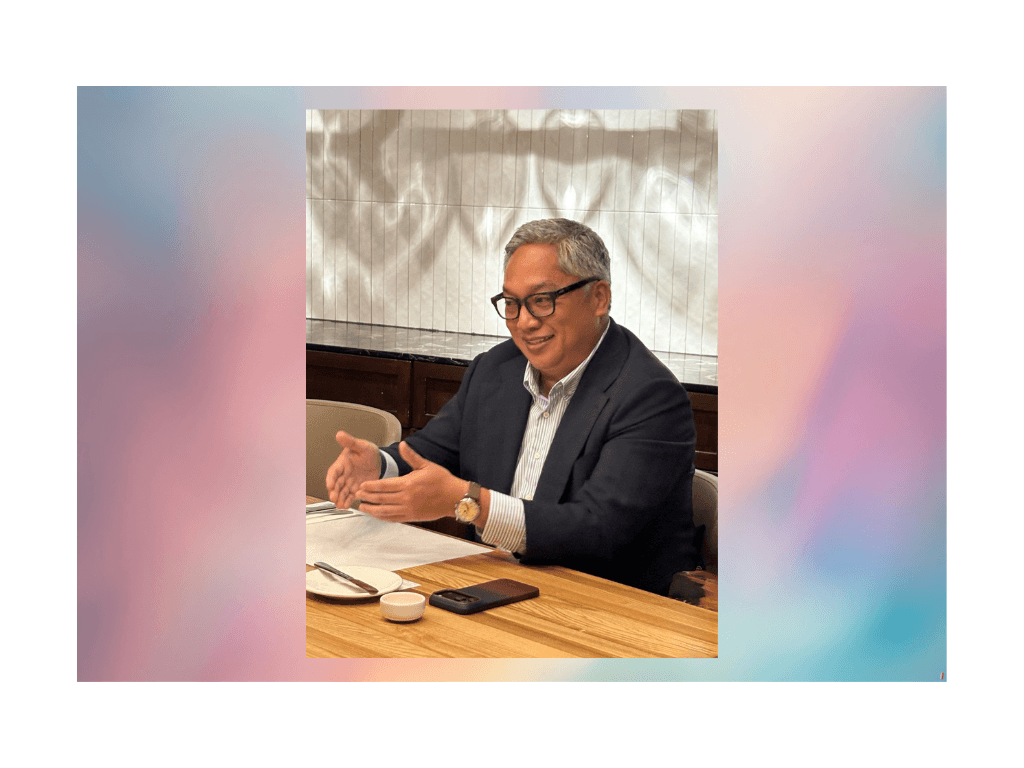
Security Bank executive vice president and chief data and technology officer Patrick Meneses said the growing adoption of AI should encourage businesses to rethink how employees create value rather than focus solely on the potential displacement of jobs.
"Empathy is a superpower when it comes to AI," Meneses said during a media roundtable in Makati.
He emphasized that while AI can process massive amounts of information, generate reports and automate routine processes, people remain essential in understanding problems, making decisions and building meaningful relationships.
Why it matters
As businesses accelerate AI adoption, Meneses said the challenge is to equip employees with skills that complement technology rather than compete with it.
"I think we spend too much time asking, 'Which jobs will AI replace?'" he said. "The more useful question is: 'How will AI change the work people do, and how can we use that capacity to create more value?'"
He acknowledged that AI would reshape jobs, eliminate certain tasks and require workers to develop new capabilities.
However, automating repetitive work could also free employees to focus on higher-value activities such as interpreting information, advising customers and solving complex problems.
"It's still human-led," Meneses said. "AI can help, but the big value is problem formulation and judgment. It's always human."
Problem first
Meneses stressed that effective AI adoption begins with understanding real-world problems rather than simply deploying new technologies.
Citing his wife's small baking business, he explained that while AI could help forecast demand and manage inventory, developing useful solutions requires understanding customer preferences, sales patterns and operational challenges.
He said this highlights the importance of empathy in technology adoption.
Business owners and employees do not necessarily need advanced technical expertise to benefit from AI because they already understand the challenges within their respective fields.
Meneses also pointed to Filipino resourcefulness, or diskarte, as a potential advantage in identifying practical applications for AI.
The critical question, he said, is not what AI can accomplish but which problems need solving.
Human-centered banking
Meneses said AI adoption should not mean automating every customer interaction, particularly when personal service remains important.
He cited his 90-year-old mother, who still prefers speaking with a bank teller rather than relying entirely on digital channels.
For customers like her, technology could work more effectively behind the scenes by helping bank employees access relevant information, simplify processes and provide personalized assistance.
"I want to put my money where I can get a better experience," Meneses said. "I want to put my money where I know people are looking out for me."
The bigger picture
At Security Bank, Meneses envisions a human-led, AI-enabled institution where technology strengthens employees' ability to make informed decisions and deliver better customer experiences.
He believes the competitive advantage will increasingly depend not on AI capabilities alone but on how effectively organizations combine technology with human understanding.
"If we can all be a little bit more humble, and all be a little bit more empathetic about the problems we all experience, we can build better solutions," he said.
As AI becomes more integrated into business operations, Meneses maintained that technology should enhance human capabilities rather than diminish the importance of people. — Ed: Corrie S. Narisma