
The DA is exploring whether the high-value freshwater species can help reshape local aquaculture by giving farmers a new income stream beyond traditional fish and rice production.
What’s happening
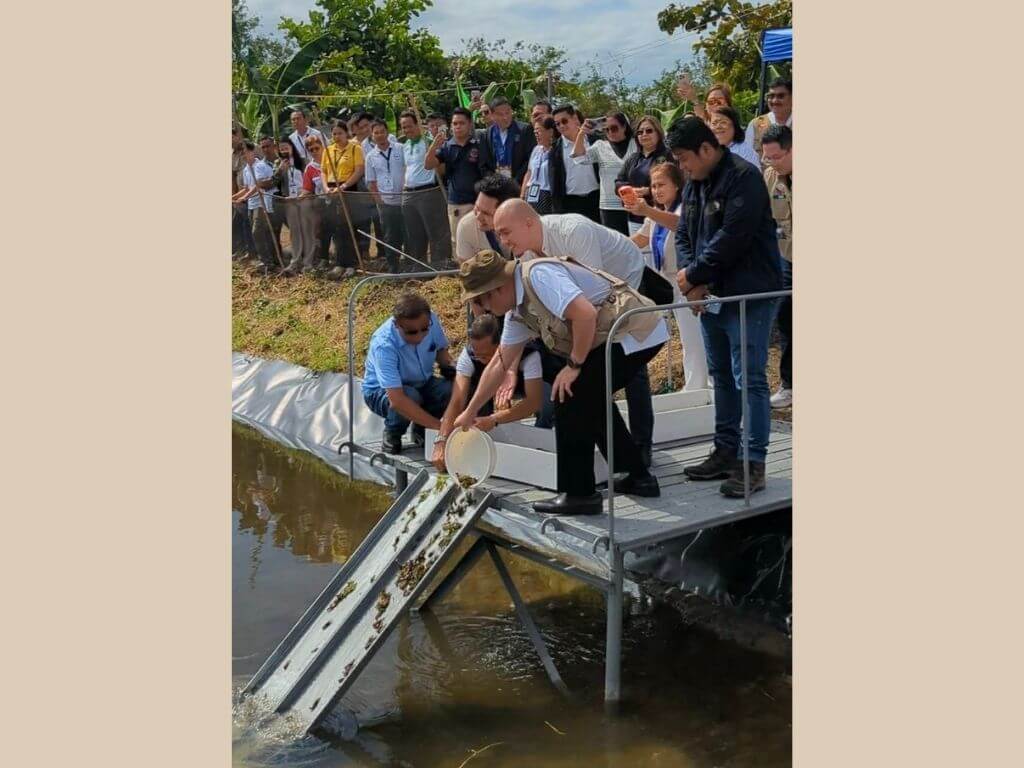
Agriculture Secretary Francisco P. Tiu Laurel Jr. on Thursday led the ceremonial stocking of 14,000 craylings, formally launching an on-farm verification trial to determine whether redclaw crayfish can be raised profitably in Philippine freshwater ponds.
What they’re saying
“We want our farmers to grow profits, not just crops,” Tiu Laurel said. “With proper observance of good aquaculture practices and biosecurity measures, the culture of Redclaw crayfish offers huge potential that could sustainably transform fish farming in the Philippines.”
Why it matters
The initiative reflects a deliberate shift toward aquaculture guided by science, market demand, and regulatory controls—rather than unchecked expansion.
Policy backdrop
That approach was formalized late last year with the issuance of BFAR Administrative Circular No. 001, series of 2025, which established the country’s first national rules for culturing Australian redclaw crayfish.
Under the guidelines, broodstock and craylings must be sourced from certified local hatcheries or BFAR facilities to manage biosecurity risks.
Inside the program
At the core of the effort is BFAR’s prototype hatchery at the National Freshwater Fisheries Technology Center. The facility is anchored by 30 female and 10 male breeders, supported by 200 future breeders.
The setup can produce up to 5,000 craylings per cycle over three to five cycles annually, with an additional 300 craylings allocated for tank-based trials.
On the ground
The Nueva Ecija trial will run four to five months across four ponds, testing two stocking densities—10 and 15 crayfish per square meter. Survival rates, growth performance, feed efficiency, and potential returns will determine commercial viability.
What’s next
If successful, BFAR plans to translate the findings into full technology demonstrations, complete with protocols for farmer training and wider rollout in suitable inland areas.
The bottom line
While redclaw crayfish command premium prices, they also pose ecological and market risks. By emphasizing controlled trials, biosecurity, and private-sector partnership, the DA is signaling a new aquaculture playbook—one focused on value, sustainability, and discipline. —Ed: Corrie S. Narisma