Insider Spotlight
Fresh data from Filipino tech startup Packworks shows that sari-sari stores—long considered informal and hyperlocal—are becoming strategic touchpoints for culturally driven consumer demand during Chinese New Year.
Using its Sari IQ business intelligence tool, Packworks analyzed over a million monthly transactions across 300,000 stores, comparing sales two weeks before and after Chinese New Year (CNY) from 2023 to 2025.
The results reveal a clear pattern. Products tied to prosperity, luck, and abundance consistently outperform during the festive window.
The big picture
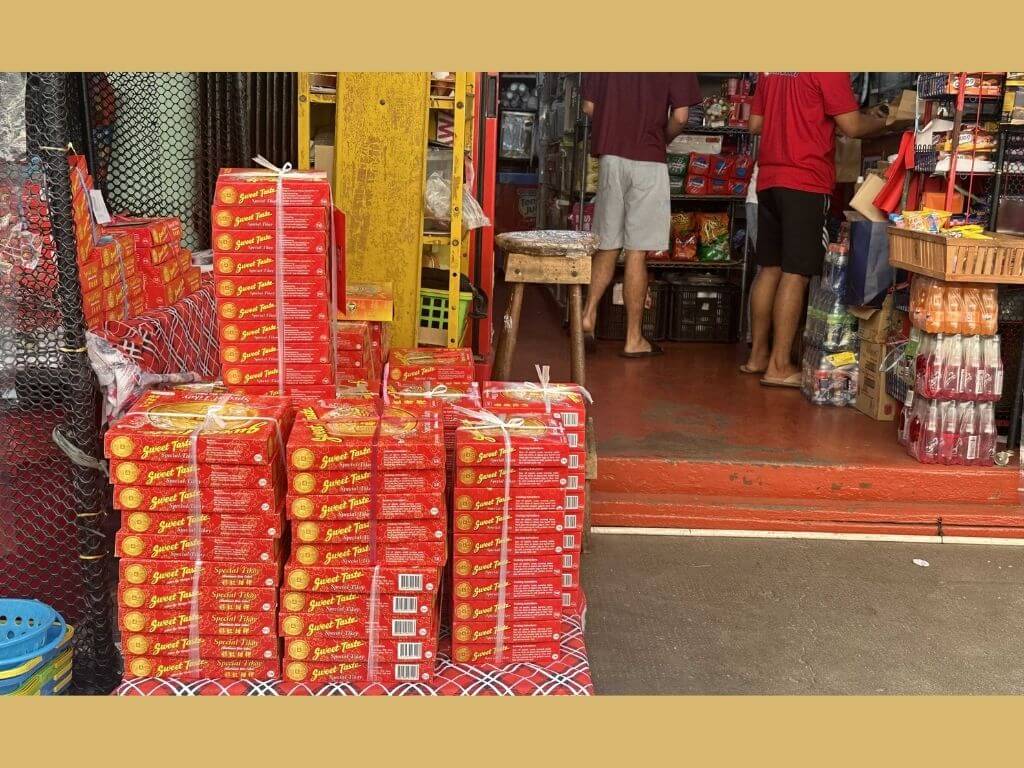
The so-called “prosperity basket”—composed of hopia, Chinese wine, Asian noodles, and key pantry staples—reflects how Filipino consumers translate cultural beliefs into everyday purchases at the neighborhood level.
Hopia’s median gross merchandise value rose 20 percent in 2025, accelerating from 14 percent growth in 2023.
Chinese wine saw its median gross merchandise value (GMV) leap 36 percent in 2025, up sharply from just 3 percent two years earlier. Even Asian noodles, symbolizing long life, rebounded with a 10 percent sales increase in 2025.
These gains were not confined to traditional urban centers. Regions such as Central Visayas, Eastern Visayas, and Soccskargen posted outsized growth, underscoring how deeply embedded Chinese cultural influence is across provincial markets.
Beyond symbolic goods
The halo effect extended to essential cooking ingredients used in holiday meals. Soy sauce climbed 9 percent in sales in 2025, seasoning granules and MSG rose 7 percent, and cooking oil increased around 13 percent in both sales and transactions. Chocolates surged 36 percent, reinforcing the “sweet year” narrative.
“Our historical data underscores how deeply traditional beliefs and cultural influences are embedded in the Filipino psyche, proving that commerce is inseparable from culture,” Andoy Montiel, Packworks chief data officer, said in a press statement on Feb. 16, 2026.
“The sales trends show that for the average Filipino, Chinese New Year isn't just a holiday, but a window for ‘investing’ in prosperity. These cultural nuances are mirrored in the sari-sari store ecosystem, proving that in our local market, heritage often leads the hand that shops,” Montiel said.
The strategic takeaway
For fast-moving consumer goods, passive distribution is no longer enough. Aligning assortments with cultural moments—especially in sari-sari stores that dominate daily consumption—can unlock latent demand invisible in modern trade.
Packworks expects overall GMV to grow 10 percent and transactions to increase 4 percent this Chinese New Year season, reinforcing a key lesson for brands: in grassroots retail, understanding culture is not a soft metric — it is a growth strategy. —Vanessa Hidalgo | Ed: Corrie S. Narisma