Cebu-based environmental consultancy Envi-Comm Corp., in partnership with Singapore's NTUC LearningHub, is bringing the Certified Event Sustainability (CES) program to the Philippines, with the inaugural class scheduled for Nov. 23 to 27 in Cebu City.
The program, accredited by the Singapore Association of Convention & Exhibition Organizers & Suppliers (SACEOS) and NTUC LearningHub, will allow Filipino MICE and hospitality professionals to earn an internationally recognized sustainability credential without traveling abroad.
Envi-Comm founder Karlo Cuizon said Cebu was chosen as the initial training site because of its growing MICE industry and expanding infrastructure for international conventions, exhibitions and business events.
"Cebu is at the forefront of being the MICE industry for the whole Philippines. We have a very strong presence in terms of our new venues to do such events," Cuizon said during a press briefing on Nov. 6.
Competing for global events
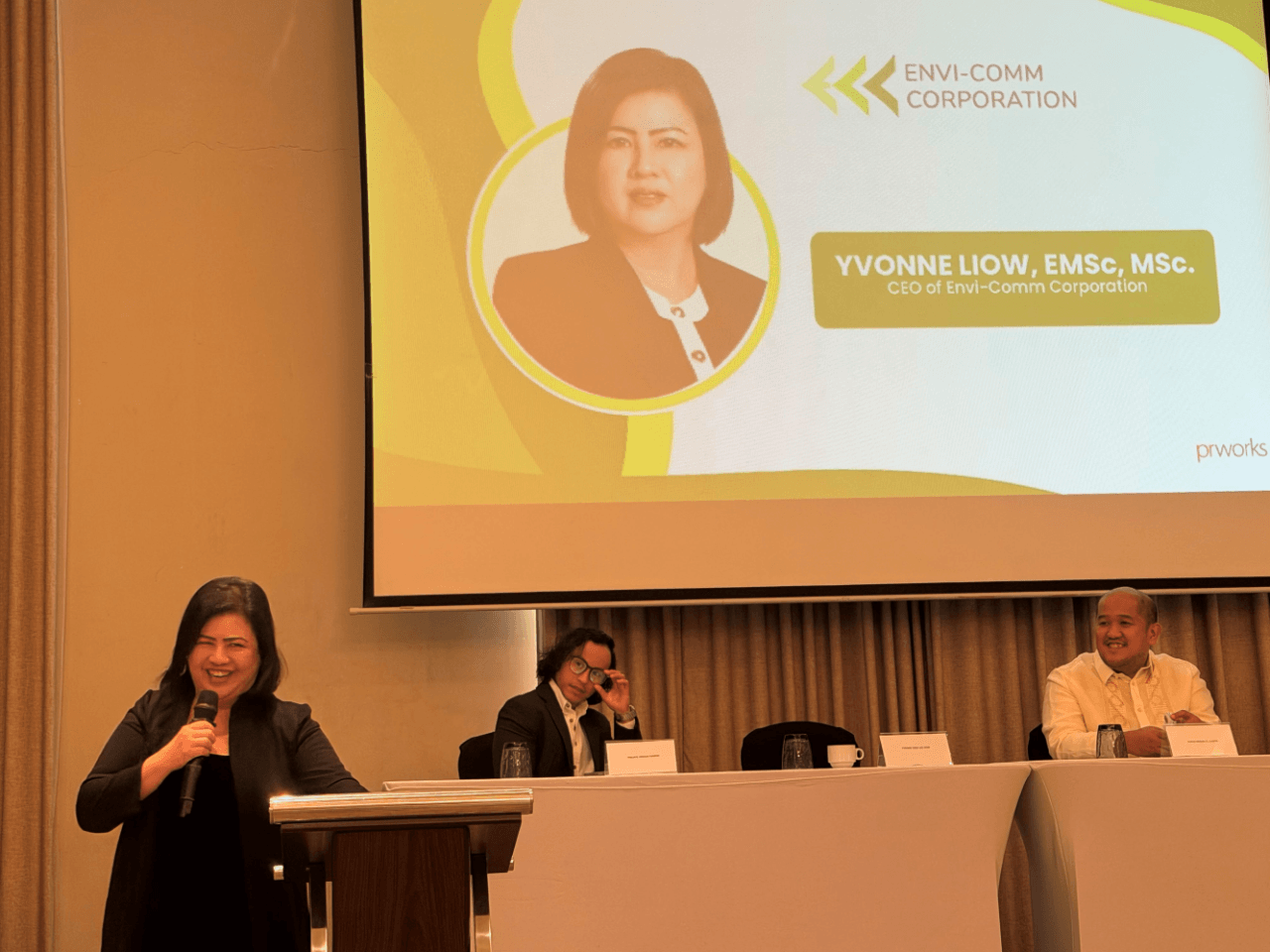
Envi-Comm chief executive officer Yvonne Liow said sustainability credentials could give Filipino professionals a competitive advantage in securing international events, particularly in markets where environmental standards are becoming part of business requirements.
Introduced in Singapore in 2023, the CES accreditation has since expanded to Hong Kong and Malaysia.
More than 150 professionals have been accredited in Singapore, including personnel from major hotels, convention venues and event organizations.
Liow said having CES-accredited professionals could improve the ability of Philippine event companies to participate in international projects, particularly those involving organizers and corporate clients from markets where the accreditation is already recognized.
She noted that Singapore has accreditation requirements for event companies under its industry framework, while the Philippines has yet to adopt comparable requirements.
However, Liow said Filipino professionals need not wait for mandatory regulations before developing sustainability competencies.
She said international clients increasingly consider environmental credentials when choosing event organizers, hotels and convention venues.
As an example, she cited the selection of Citadines Cebu City as the venue for the inaugural CES class because of its certification under the Global Sustainable Tourism Council (GSTC) framework.
Addressing sustainability gaps
Despite Cebu's expanding MICE infrastructure, Cuizon said the local industry still faces challenges in translating sustainability awareness into actual business practices.
One area needing improvement is food waste management during conferences, conventions and other large gatherings.
Cuizon said event organizers often prepare excessive amounts of food without monitoring actual consumption or measuring how much is discarded afterward.
"We don't even count after the event where this food goes," he said.
He explained that organizers could reduce food waste by gathering information on participants' preferences, improving food preparation estimates and monitoring leftovers.
Cuizon said hotels and event venues already have the capacity to adopt environmentally responsible practices, but many still lack systematic approaches to sustainability.
"The practice in doing sustainability is what's missing," he said.
Other areas requiring attention include waste segregation, carbon emissions monitoring, responsible sourcing of materials and the adoption of circular economy principles in event operations.
Liow said sustainability considerations could also influence venue selection, particularly in terms of public transportation accessibility and the environmental impact of transporting delegates.
She emphasized the importance of evaluating venues not only on cost and facilities but also on their ability to help organizers minimize carbon emissions.
Training and accreditation
The CES program consists of two compulsory modules and one elective, with participants required to pass assessments to qualify for professional accreditation.
The first module covers sustainability strategies for the MICE industry, including sustainable supply chains, stakeholder management, environmental risks and sustainability performance reporting.
The second focuses on sustainable tourism and event operations, including waste management, carbon emissions reduction and circular economy practices.
The elective covers sustainability communication through storytelling, helping professionals communicate environmental initiatives effectively to clients and stakeholders.
Envi-Comm marketing, media and communications director Philip Joshua Ibarno said the program is designed for event planners, organizers, producers, hotel and convention venue operators, tourism professionals, marketing executives and educators.
The accreditation is valid for three years and may be renewed through continuing education.
The inaugural Philippine class is expected to accommodate 10 to 20 participants.
During the briefing, company officials said the program fee was still being finalized but was expected to exceed SGD 2,000, or roughly P100,000.
Strengthening MICE competitiveness
The introduction of the CES accreditation comes as the Philippines pursues its MICE Roadmap 2030, which seeks to strengthen the country's position as a competitive international destination for meetings, conventions and exhibitions.
Cuizon said developing a sustainability-ready workforce is essential to preparing the local industry for evolving international standards.
He said Envi-Comm's involvement in the accreditation is part of its broader strategy to expand beyond environmental compliance consultancy into sustainability technology and professional development.
Established in 2021, Envi-Comm provides environmental compliance and environmental impact assessment consultancy services to businesses across various industries.
The company is also developing its Sustainability School to help professionals and organizations integrate sustainability principles into their operations.
Cuizon said businesses increasingly need professionals capable of translating environmental commitments into measurable improvements. —Ed: Corrie S. Narisma

Contributor