Insider Spotlight
In a press statement on Monday, Aug. 24, 2026, the ratings agency said fiscal metrics are expected to stabilize over the next two years as economic growth gradually rebounds and the government continues implementing fiscal consolidation. It also cited the country's strong access to domestic and international funding markets and ample foreign exchange reserves as buffers against global financial volatility.
Why it matters
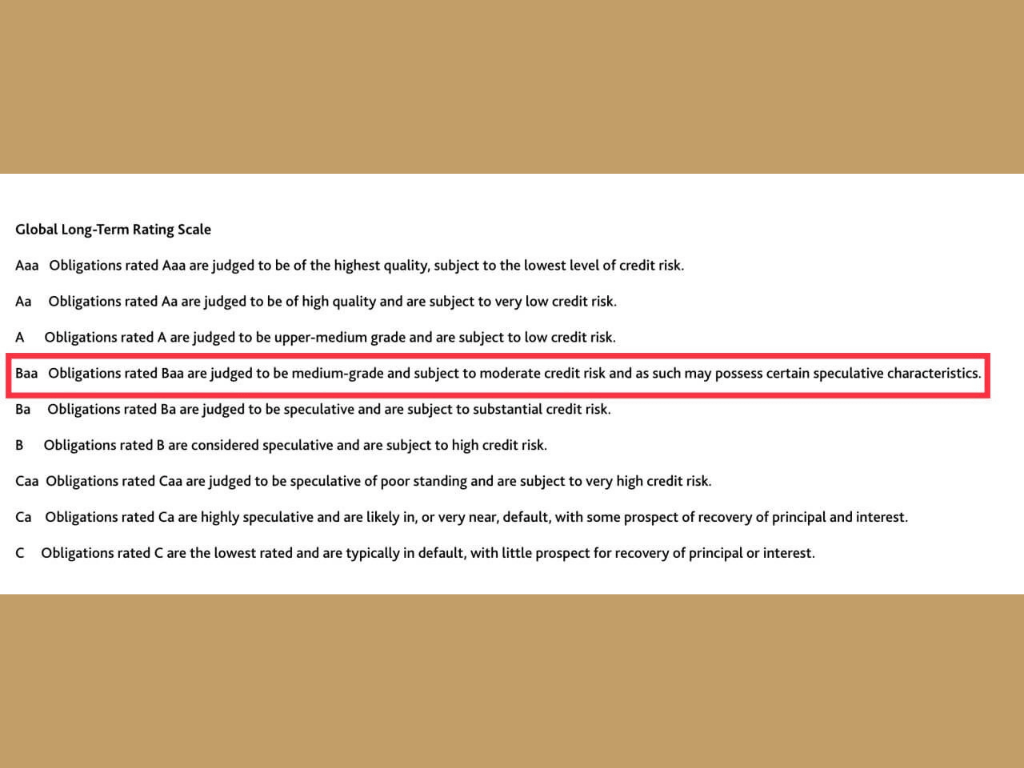
The affirmation keeps the Philippines firmly within investment-grade territory, supporting investor confidence and helping contain government borrowing costs even as global economic uncertainties persist.
Moody's said these strengths are offset by weakening debt affordability, institutional constraints, relatively low income levels and the country's high exposure to climate-related disasters.
The agency expects Philippine real gross domestic product growth to slow to around 3.6 percent in 2026 before recovering to about 5.3 percent in 2027. It attributed the weaker near-term outlook to higher food and energy prices linked to the conflict in the Middle East and reduced public investment following the government's probe into flood-control projects.
The big picture
Despite the slowdown, Moody's said the country's medium-term growth prospects remain supported by favorable demographics, resilient remittances, a strong business process outsourcing industry and reforms such as the CREATE MORE Act, foreign investment liberalization and greater private sector participation in renewable energy.
The agency also expects public infrastructure spending and public-private partnerships to drive investment once government project execution normalizes.
On the fiscal front, Moody's said consolidation remains broadly aligned with the government's updated Medium-Term Fiscal Framework, although at a slower pace than previously planned. It expects the general government deficit to narrow to around 3.9 percent of GDP in 2026 from 4.3 percent in 2024.
Government debt is projected to peak at around 58 percent of GDP in 2026 and 2027 before gradually declining as growth improves and primary balances strengthen.
What to watch
Moody's warned that debt affordability will continue to deteriorate as older debt is refinanced at higher interest rates, with interest payments expected to consume more than 14 percent of government revenue over the next two to three years.
The agency also highlighted risks from slower private investment, delays in infrastructure execution and political uncertainty ahead of the 2028 presidential election, including ongoing Senate impeachment proceedings involving Vice President Sara Duterte.
Still, Moody's said a material shift in economic policy is unlikely because most major structural reforms have already been enacted and attention is increasingly focused on implementation.
The ratings agency said an upgrade would require sustained fiscal consolidation, a clear decline in government debt and stronger medium-term growth, while a prolonged economic slowdown, weaker fiscal performance or further deterioration in debt affordability could put downward pressure on the sovereign rating.
— Edited by Daxim L. Lucas