
The two companies recently broke ground on the Mega CP Layer Complex in Zamboanga City, positioning the region as an emerging hub for modern poultry production.
The project is expected to be among the first world-class egg layering facilities in Zamboanga and reflects a shared push to strengthen local food systems and improve long-term food security.
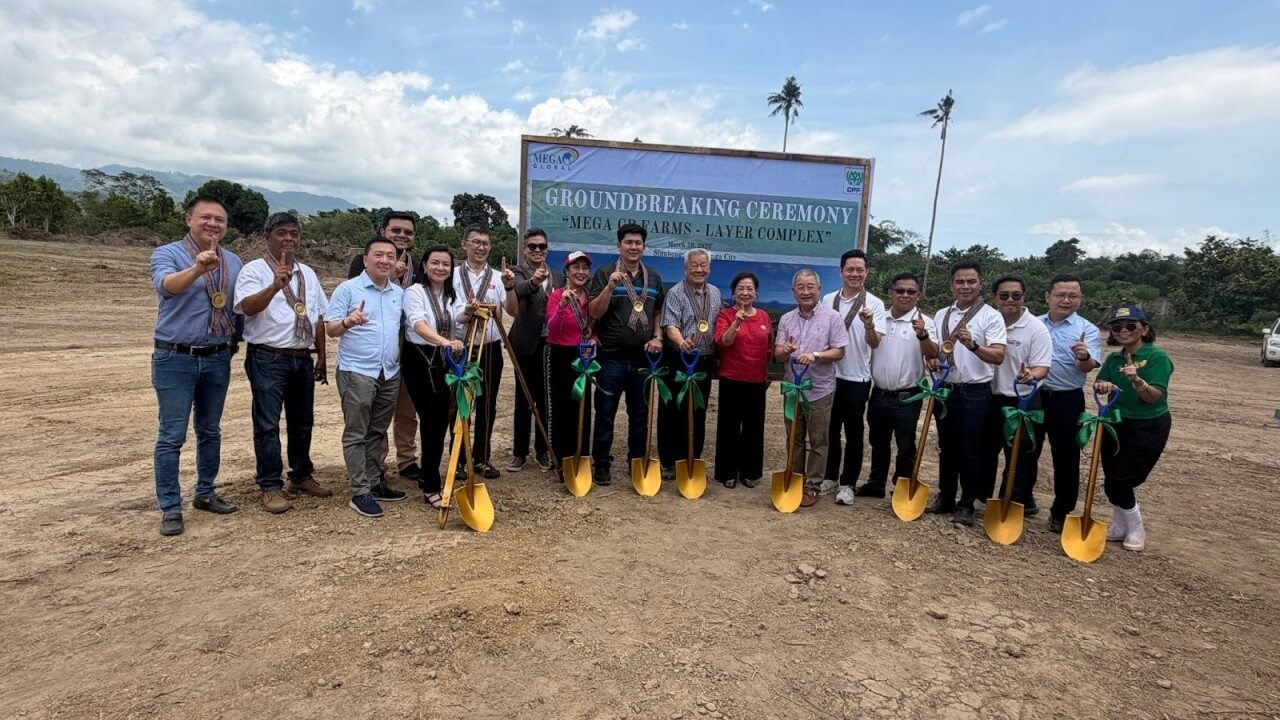
Two giants, one goal
The partnership combines MPFI’s strong local market presence with CPF’s global expertise in integrated agriculture and poultry operations.
CPF, headquartered in Thailand, is one of the world’s largest agro-industrial and food companies, with established systems in livestock and poultry production.
Officials said the collaboration aims to build a more resilient and scalable food ecosystem that can support both domestic nutrition needs and industry development.
“This collaboration reflects our continued commitment to innovation and nation-building,” Michelle Tiu Lim-Chan, president and chief executive officer of MPFI, said in a statement..
“As we expand beyond seafood, we aim to strengthen food security, support local communities, and deliver accessible, high-quality nutrition to Filipino families,” she added.
Egg capacity
The Mega CP Layer Complex is designed to produce up to 100 million eggs annually, helping address rising demand for affordable protein among Filipino households.
Initial estimates indicate that production capacity could increase up to fivefold as operations expand.
The facility will adopt CPF’s fully integrated layer complex model, incorporating advanced farm systems, strict biosecurity measures, and globally recognized operational standards adapted to Philippine conditions.
This approach is expected to ensure efficiency, consistency, and scalability while maintaining high standards in food safety and quality.

Global expertise
CPF will lead the implementation of technical systems and farm management, bringing its global experience into the local agricultural landscape.
Spanning 22 hectares, the facility is designed with sustainability features, including an odor control system and a biogas facility that converts waste into renewable energy for electricity generation.
Officials said these technologies will support more efficient and environmentally responsible operations.
The partnership highlights how international expertise can be leveraged to strengthen domestic agricultural capabilities.
Economic impact
Beyond boosting food supply, the project is expected to generate jobs and support economic activity in Zamboanga and surrounding areas.
The development will create employment within the facility and benefit local communities through related industries and services.
Industry observers say the investment further positions Zamboanga as a strategic location for modern agricultural infrastructure, reinforcing its role in the country’s evolving food production landscape.
Strategic shift
From its roots as a fishing business established in 1975 through Mega Fishing Corp., MPFI has grown into one of the country’s leading food manufacturers.
The expansion into agriculture marks a significant step in its transformation into a diversified food company.
Marvin Tiu Lim, MPFI chief growth and development officer, said the partnership signals a broader push to build a future-ready food system.
“By combining our strong local foundation with global expertise, we are building a system that supports both national nutrition and long-term industry growth,” he said. —-Ed: Corrie S. Narisma