Insider Spotlight
The company, which exclusively distributes the brand in the Philippines, said the system combines energy efficiency, lower indoor emissions and easier cleanup with the sleek surfaces increasingly favored in premium residential and commercial spaces.
Why it matters
In a market where kitchen upgrades are increasingly tied to wellness, sustainability and multifunctional living, InvisaCook is being sold as a way to cut energy waste while preserving open-plan design.
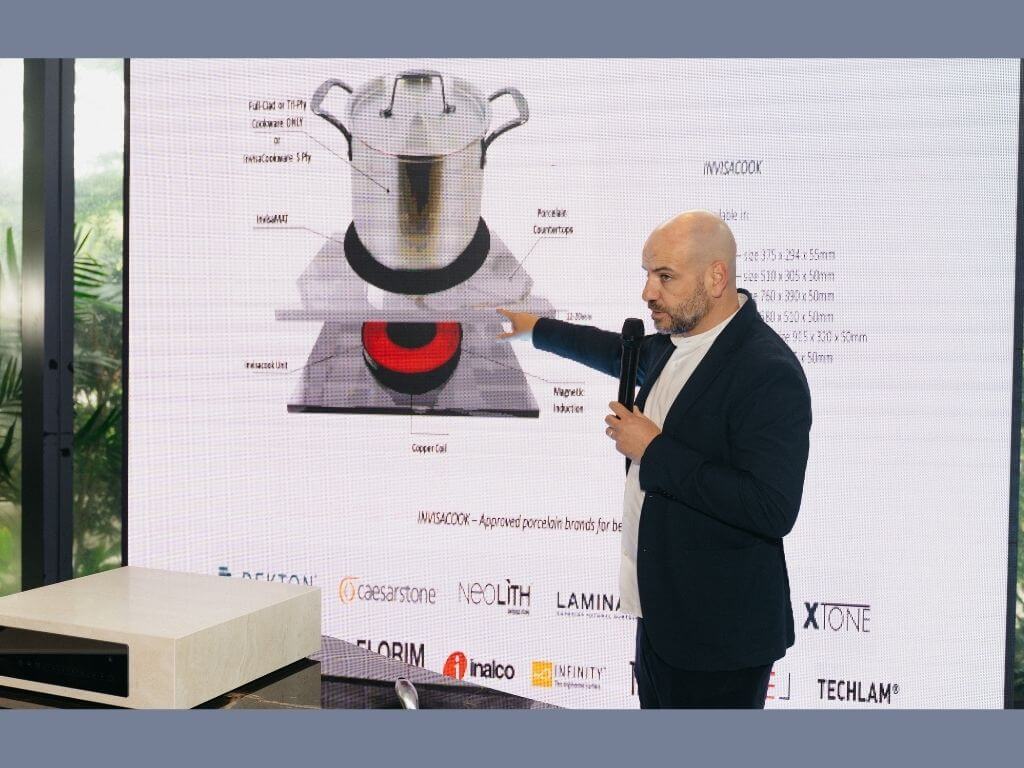
The system works by placing the induction unit beneath a sintered stone countertop, allowing cookware to heat directly while the surface remains visually uninterrupted.
Haig & Lee says that setup can help reduce cleaning time and costs, while also trimming HVAC load compared with gas-based cooking.
What they’re saying
“Designers have been wrestling with the eyesore of a visible hob for years,” Alvin Lim, general manager of Haig & Lee, said in a press statement.
“The moment we learned about InvisaCook—a truly invisible induction cook-top—and the local penchant of homeowners for seamless, Instagram-ready interiors, we saw how it will be the kitchen technology of the future and the perfect fit for the local market.”
Lim added that with up to 90 percent thermal efficiency, the system boils water up to 50 percent faster than gas, cuts indoor emissions and reduces HVAC load.
Between the lines
For design-led buyers, the appliance’s strongest edge may be what it removes. With no visible hob, countertops can function as both prep area and social space, an advantage for compact condominiums and open-plan homes.
“Because the cook-top is hidden, we can treat countertops as part of a design instead of as a functional element. For me as a designer this is key to create unique spaces with pure forms. I appreciate how it allows me to be creative, integrating form and function together” said Luis Castillo of Linea Casa.
The bottom line
InvisaCook is entering the Philippines as a premium kitchen product, but its green credentials could widen its appeal as developers and homeowners look for cleaner, more efficient ways to cook without sacrificing design. —Vanessa Hidalgo | Ed: Corrie S. Narisma