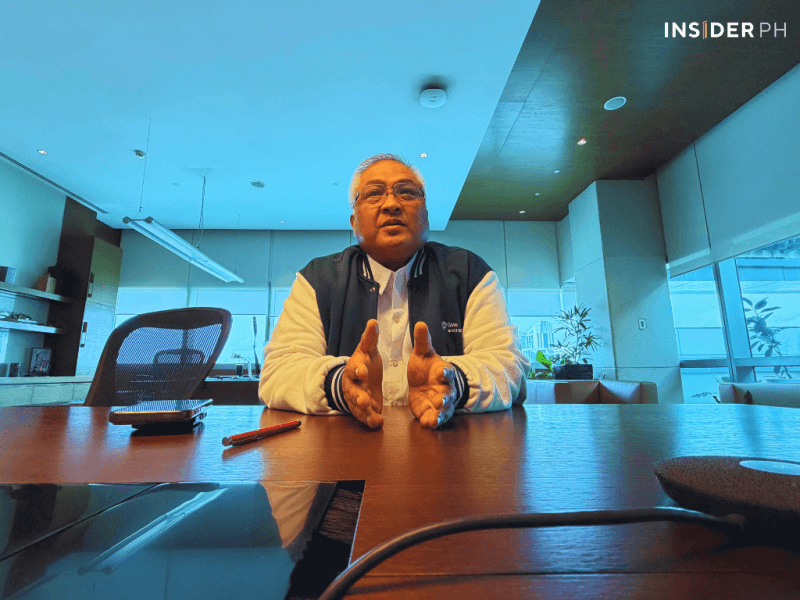
Dee was in his usual immaculate white gusot mayaman Barong Tagalog, seated comfortably as we were served Spanish dishes in thankfully modest portions.
The Taguig City hotel belongs to the Ty family, which also controls Metrobank, one of the country's largest financial institutions, with P3.7 trillion in assets.
We were supposed to talk about Metrobank's latest achievement: being named the Philippines' strongest bank by The Asian Banker for the sixth consecutive year.
But the conversation soon turned to the challenges facing the Philippine economy and how Metrobank is preparing to navigate them. Dee was mindful of the risks ahead and clear about the importance of staying prepared.
In fact, the veteran banker believes that the country's increasingly difficult economic environment has some disturbing similarities to the external or regional conditions preceding the 1997 East Asian financial crisis.
As economic conditions evolve, Metrobank intends not merely to survive the resulting turbulence. It intends to emerge from it considerably bigger.
The warning
Dee's concerns revolve around three developments that, taken together, could make the next few years particularly difficult for Philippine businesses.
First is the growing indebtedness of corporations and individuals. Credit exposures that would once have been considered substantial are now commonplace.
"The leverage is quite high," he told me.
Second is the challenging economic environment, where businesses and households are navigating higher costs, evolving market conditions, and pressures on their financial capacity.
Third is the volatility in foreign portfolio investment flows, reflecting changing global market conditions and investor sentiment.
Dee cited that shifts in global investment flows and investor risk appetite are important developments for financial institutions to monitor.
For him, these developments suggest that economic conditions could remain challenging in the near term, reinforcing the importance of prudent financial management and preparedness.
Coming from the president of one of the country's largest banks, that is not something to dismiss lightly. But neither should his comparison with 1997 be interpreted as a prediction that another financial crisis is inevitable.

The Philippine banking system is better capitalized today. Its regulatory framework has improved. And the country's largest financial institutions have considerably greater resources to absorb losses.
Indeed, Dee himself believes that the three largest banks are sufficiently strong to weather a serious downturn.
The opportunity
Here was the interesting part of our conversation.
Having spent several minutes explaining why the economy could be heading into difficult territory, Dee suddenly described the same environment as a tremendous business opportunity for Metrobank.
"But it's a huge opportunity for us," he said.
The apparent contradiction becomes understandable when one considers his experience during the 1997 crisis and its aftermath.
Dee was a relatively young banker during the years leading up to that financial meltdown, working in lending and treasury operations and experiencing firsthand the extraordinary optimism that characterized the mid-1990s.
Like many market participants, he learned that making money during a boom was considerably easier than preserving it when conditions reversed. By his own account, he was not immune to the overconfidence of those years.
The experience helped shape a philosophy that remains central to how he runs Metrobank today: taking risks is necessary, but understanding how to escape a bad situation is even more important.
When Dee joined Metrobank in 2000, the bank was still dealing with the consequences of the crisis. He inherited distressed corporate borrowers, deteriorated loan portfolios, and businesses whose owners were struggling to keep their operations alive.
The conventional banking response would have been to foreclose on collateral, recognize the losses, and move on.
Dee frequently chose another route. He worked with troubled borrowers, restructured their obligations, and sometimes provided additional financing to help businesses recover.
In one particularly difficult case, he recalled having to return to the bank's decision-makers 26 times to secure support for a borrower he believed could still be saved.
His reasoning was straightforward. Foreclosing on a factory might give the bank legal ownership of an asset. But what use was an idle factory that nobody wanted to buy?

Keeping the business operating could ultimately recover more money for the bank. Some of those troubled borrowers eventually became valuable long-term customers.
The unconventional banker
This philosophy challenges the popular image of Metrobank as a conservative institution that avoids taking risks.
Dee argues that conservatism does not necessarily mean refusing to lend.
“You can take risks. But you have to know how to manage it," he said.
He described a recent situation involving a corporate borrower whose substantial investment in a manufacturing facility had left it financially stretched.
Rather than simply allowing a loan exposure of roughly P1.5 billion for capital expenditure to deteriorate, the bank's executives discussed providing another P500 million for working capital to get the operation running.
The underlying business, he explained, had demand for its products and attractive margins. The problem was cost overrun incurred to complete the project, and zero funds left for working capital. Additional lending could turn a potential bad loan into a performing one.
Of course, this strategy is not without danger. Throwing more money at an unsuccessful enterprise can turn a manageable loss into a disaster. The crucial distinction is knowing whether the business is fundamentally viable or whether its owners are simply postponing the inevitable.
Dee believes the bank's long institutional memory, including its experience with borrowers who failed to honor their obligations during previous crises, helps it make those judgments.
Whether that judgment remains sound during the next serious downturn will be the real test.
The expansion
Meanwhile, Metrobank is preparing to accelerate rather than retreat.
Dee spoke about plans to possibly introduce new products and services, and add branches this year and the next to better address customer needs. He revealed the numbers to me, but swore me to secrecy until they are announced officially.
The bank is also preparing to expand its workforce, strengthen its sales operations, and continue to invest in technology to support faster business growth.
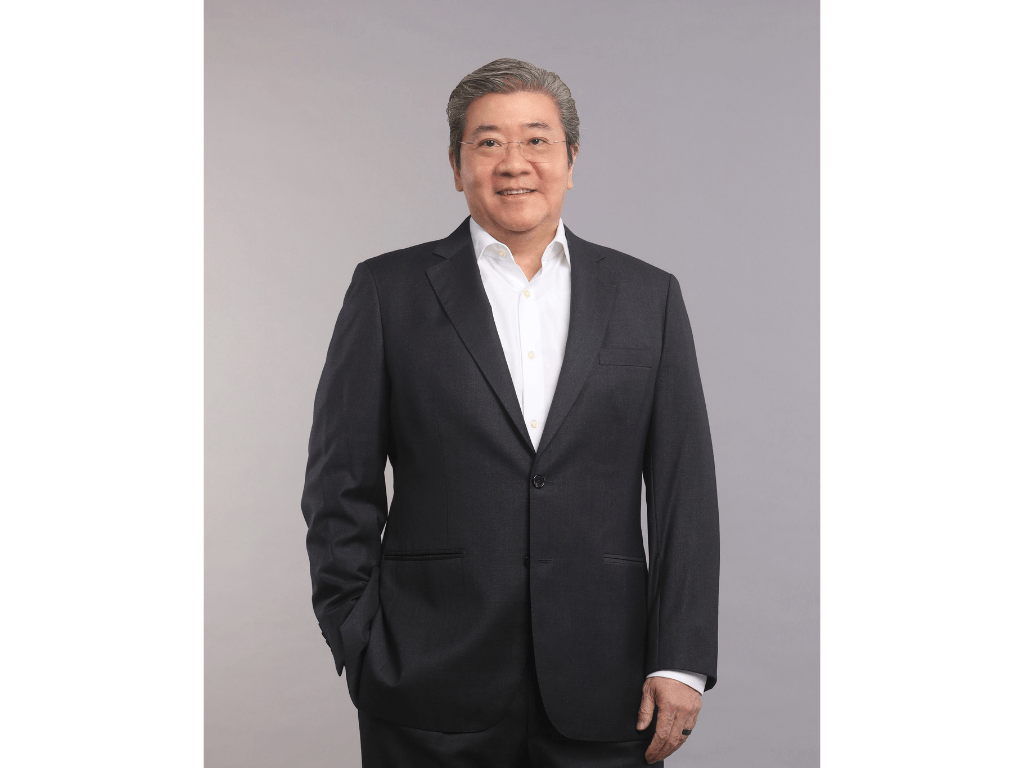
Dimagiba summarized the spending philosophy succinctly: ”When we have to spend, we will spend."
The strategy rests on a simple assumption: when confidence weakens, customers naturally gravitate toward institutions they believe are financially secure.
Good employees may do the same. This would allow Metrobank to attract deposits, acquire customers, recruit talent, and potentially win businesses from less resilient competitors.
The bank could also benefit from consolidation that may happen in the banking industry.
It is a strategy that requires both financial strength and considerable confidence in management's ability to distinguish opportunity from excessive risk.
The bigger ambition
There is another dimension to Dee's plans that goes beyond the balance sheet.
He wants Metrobank to restore the personal relationships that once characterized Philippine banking, when branch employees knew customers by name and understood their needs without having to consult multiple computer screens.
That sounds ambitious for an institution serving about five million customers. But Dee believes artificial intelligence and improved information systems could finally make that level of personalized service possible at scale.
The irony is that technology could allow a much larger Metrobank to behave more like a smaller, relationship-driven bank.
And therein lies the larger point: Metrobank’s sixth consecutive recognition as the Philippines’ strongest bank by The Asian Banker is more than a trophy for Dee. It reflects years of consistent execution, prudent risk management, and disciplined decision-making that have enabled the bank to remain strong through changing economic conditions.
For Metrobank, however, the greater measure of success is not necessarily its position in the industry rankings, but its ability to sustain financial strength while continuing to serve customers and pursue opportunities for long-term growth.
For Dee, the recognition affirms the value of a strategy built around maintaining sound fundamentals, investing in the right capabilities, and staying close to customers. These are principles that have guided Metrobank over the years and continue to shape how it prepares for the future.
It is also a recognition that carries a broader message for the banking industry. Metrobank’s experience demonstrates that financial strength is built over time, through consistency and discipline rather than short-term gains. Dee hopes the bank’s approach can serve as an example of how sound banking practices can create lasting value for customers and the broader economy.
Ultimately, the measure of Metrobank’s success is not its position in the industry rankings, but its ability to sustain that strength while continuing to grow, support its customers, and contribute to the country’s economic development.
Fabian Dee appears determined that if history repeats itself, Metrobank will be among those writing the next chapter rather than merely surviving it.
— Edited by Daxim L. Lucas