Insider Spotlight
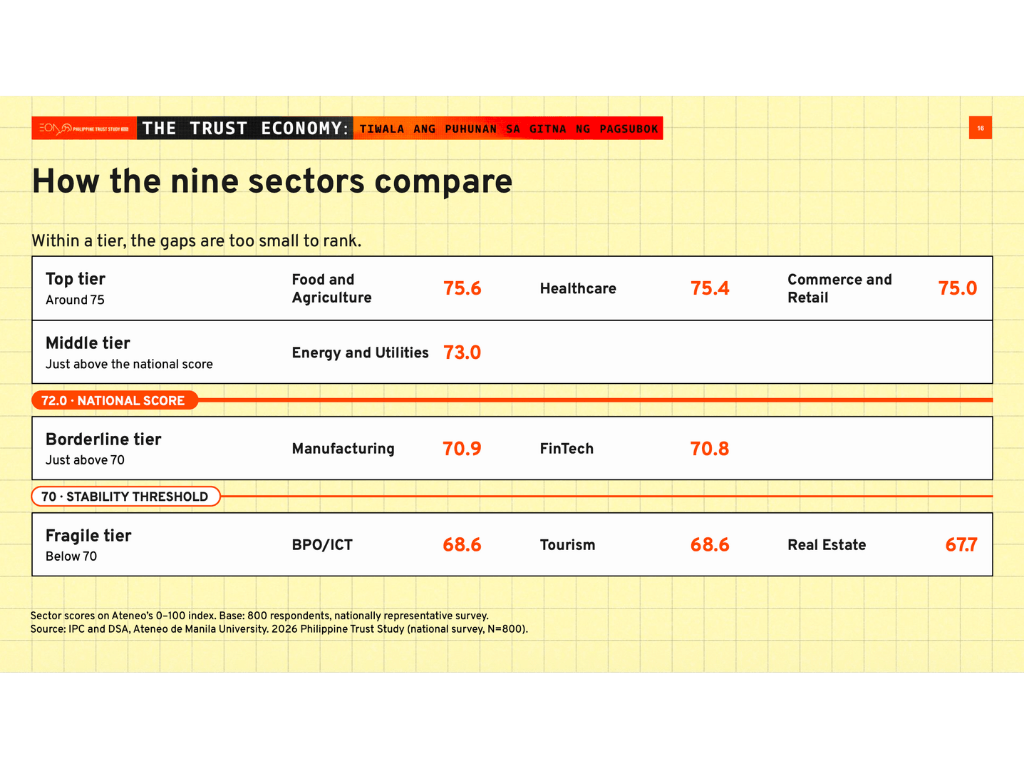
The study, developed with Ateneo de Manila University’s Department of Sociology and Anthropology and Institute of Philippine Culture, introduced the Philippine Business Trust Index, which scored 72 out of 100. None of the nine sectors examined reached the Robust Trust category nationally.
Why it matters
Among respondents identifying their least-trusted sector, 19.7 percent cited prices considered too high or unreasonable, 14.7 percent pointed to unclear prices or fees, and 11.7 percent identified hidden charges.

Value for money, meanwhile, was cited by 18.6 percent as a reason for trusting their most-trusted sector, underscoring the importance of what customers receive for their spending.
“Are customers staying because they trust a business, or because they have no other choice?” EON Group president and COO Malyn Molina said in a briefing in Makati City.
What earns confidence
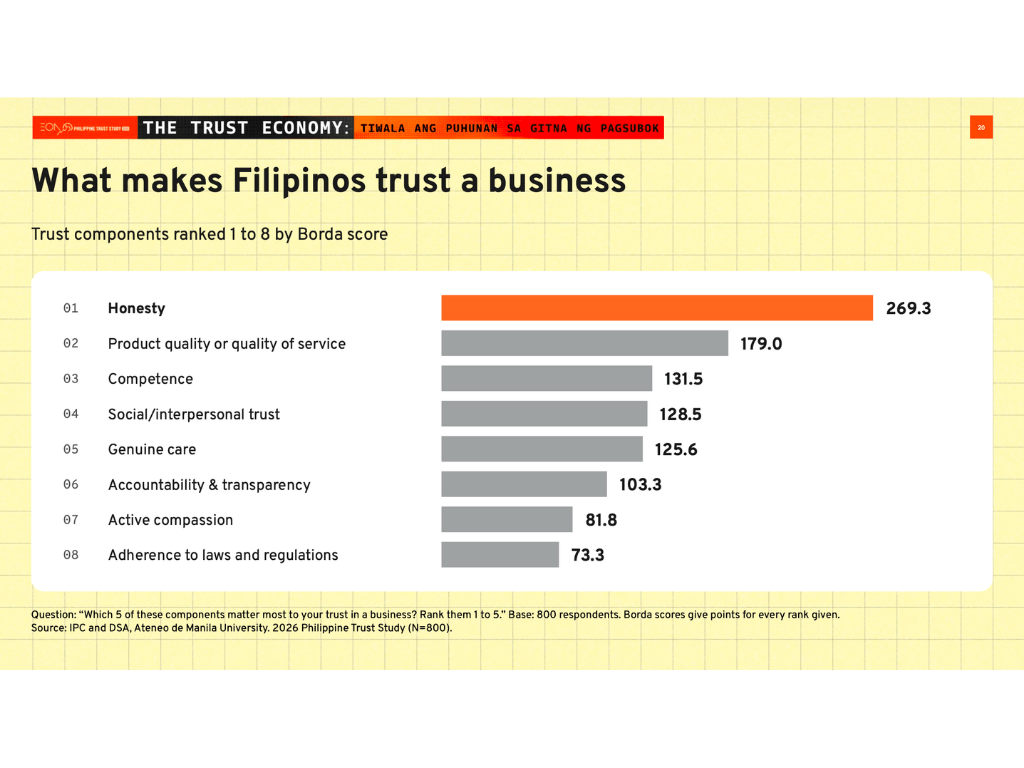
Honesty led the study’s 16 attributes of business trustworthiness, with 34.6 percent ranking it first. Product and service quality followed, alongside competence, interpersonal trust, genuine care, and accountability and transparency.
Reputation ranked last. Only 6.8 percent cited it as a reason for trusting their most-trusted sector, suggesting that business conduct carries more weight than reputation alone.
The sector picture
Food and agriculture, healthcare and pharmaceuticals, and commerce, e-commerce and retail formed the top tier, each scoring around 75. Their differences were too small to establish a meaningful ranking.
BPO and ICT, and tourism and travel each scored 68.6, while real estate and construction scored 67.7. All fell within Fragile Trust. Financial technology scored 70.8.
Size offers little advantage
Large enterprises scored 72.3, compared with 71.7 for micro, small and medium enterprises, indicating comparable confidence, according to the study.
The nationally representative survey covered 800 Filipino adults across 160 barangays in 84 cities and towns. Fieldwork ran from May to August 2026, with a margin of error of plus or minus 3.5 percentage points for percentages.
The findings establish a baseline for tracking business trust and reflect reported perceptions rather than independently verified assessments of company conduct.
— Edited by Daxim L. Lucas