
Insider Spotlight
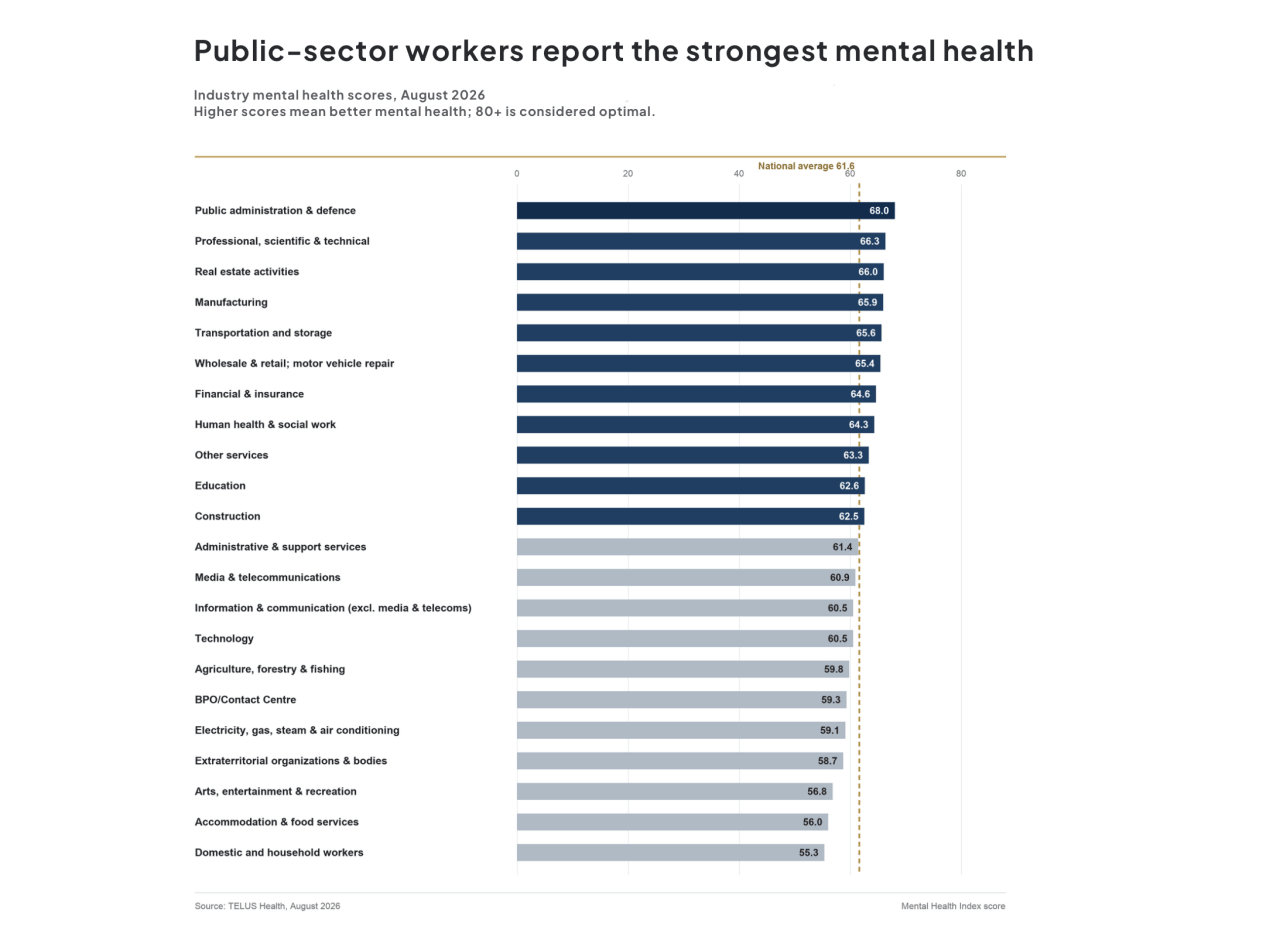
That striking divide emerged in a new TELUS Health survey, which ranked household employment lowest with a mental health score of 55.3, followed by hotels and restaurants at 56 and arts, entertainment and recreation at 56.8.
Public administration, defense and social security workers topped the rankings with 68, although even they fell short of the 80-point threshold for optimal mental health on an index where higher scores indicate better wellbeing.
The results reveal a workforce struggling across the board, with no industry reaching the healthy range and employees in the country's massive BPO and contact center sector also scoring below the national average of 61.6 at just 59.3.
"For many workers in the Philippines, daily financial survival and family obligations leave little room for long-term safety nets," says Paula Allen, Global Leader of Research and Insights, TELUS Health.
“The ongoing anxiety this creates, directly reduces workforce productivity. Employee financial wellbeing, especially savings, is deeply interconnected with workplace mental health across the Philippine labor market,” she added.
The pressure of making ends meet
The picture has grown more troubling since 2022, when the national index stood at 65, with the share of Filipino workers facing high mental health risk climbing to 37 percent from 31 percent.
The survey did not establish why government employees fared better or why service workers struggled more, but its broader findings point to financial insecurity and workplace pressures as major sources of distress.
For many Filipinos, money is a constant worry, with half identifying personal finances as their biggest source of stress and 54 percent reporting they have no emergency savings.
Workers without that financial cushion scored just 55.5 on the mental health index, compared with 69 among those with savings, suggesting that financial security goes hand in hand with better mental wellbeing.
The hidden cost of exhaustion
The strain does not end with personal finances, as heavy workloads and poor work-life balance add to the pressure employees face once they clock in.
The survey found that 82 percent worked while mentally or physically unwell at least once a week, while 48 percent frequently finished their workday exhausted.
For employers, the consequences can be substantial: workers experiencing regular exhaustion lost an estimated 49.5 productive working days annually, compared with 29.7 days among those who did not regularly feel exhausted.
These are not simply days spent away from the office, but the combined impact of absenteeism and reduced effectiveness while working, meaning employees can be present without being fully productive.
The study also identified heavy workloads as the leading source of work-related stress, cited by 21 percent of respondents, followed by poor work-life balance at 20 percent and insufficient resources or support at 13 percent.
When speaking up feels risky
But getting help can carry its own perceived risks, with 77 percent fearing that disclosing a mental health problem could hurt their career prospects and 29 percent avoiding support because they worry about being judged.
"Workplace culture and cultural stigma are barriers to workforce wellbeing in the Philippines," said Jamie MacLennan, TELUS Health's Asia-Pacific regional head.
Younger workers appeared particularly vulnerable, with those under 40 twice as likely as employees over 50 to report constant stress and 70 percent more likely to finish their workday exhausted.
The survey of 2,000 respondents, conducted between July 24 and August 5, 2026, paints a picture of a workforce facing pressures that extend well beyond individual jobs, with even the best-performing industries falling short of healthy mental wellbeing.
—Edited by Miguel R. Camus