At least 200 reported cases of online scams in Cebu have been documented since September 2025, but many incidents remain unreported because victims are too embarrassed to report them to authorities, according to the Hotel, Resort and Restaurant Association of Cebu Inc. (HRRACI), which has more than 120 members.
‘Too-good-to-be-true deals’
“The hotel booking scam is a real concern in the Philippines, especially in popular tourist spots like Bantayan Island and Cebu,” said Mia Singson-Leon, HRRACI president.
“The scams involve fake online pages offering too-good-to-be-true deals, with victims losing significant amounts of money. The scam also hurts association members, resulting in financial losses and damage to their reputation,” she added.
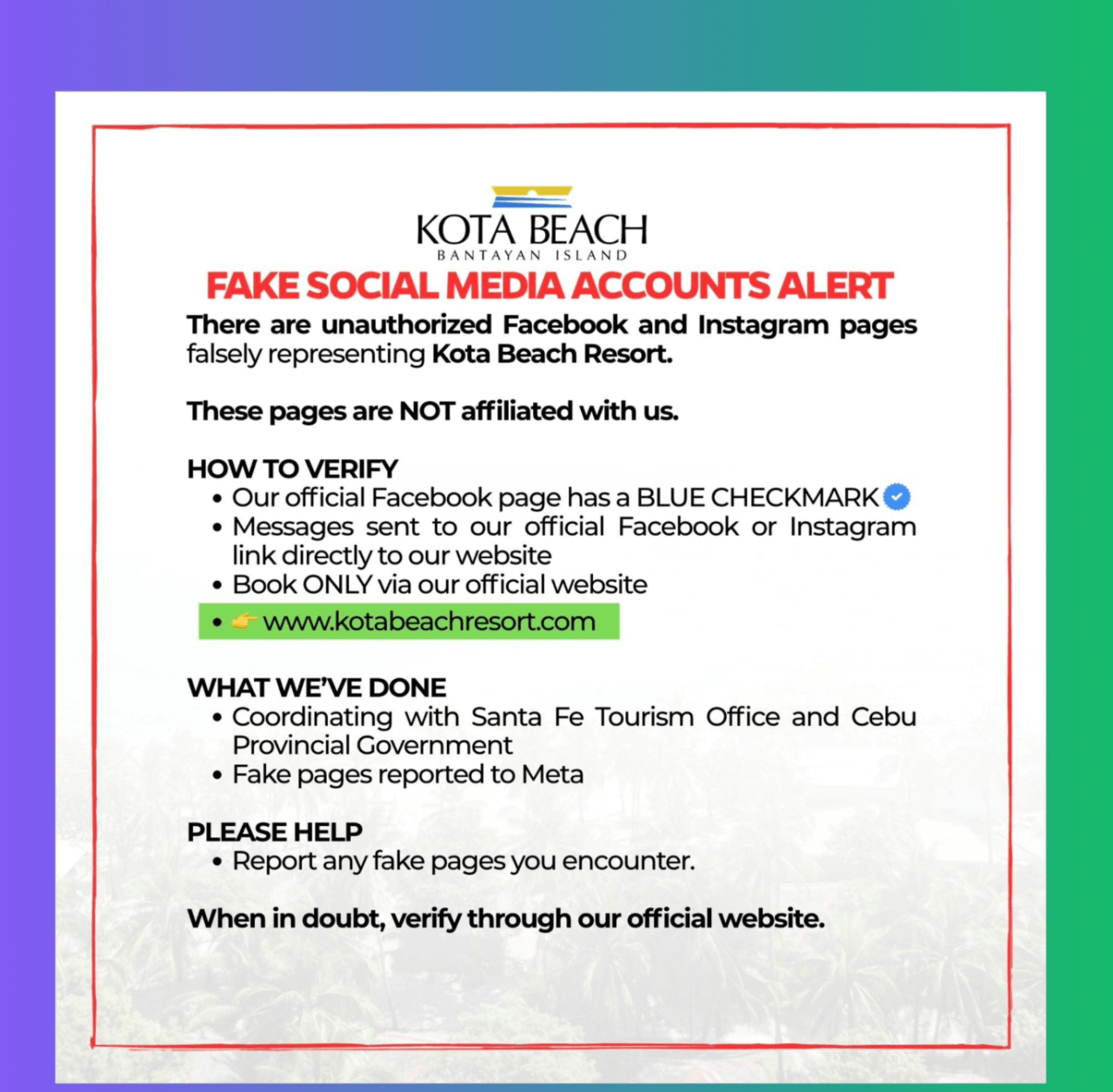
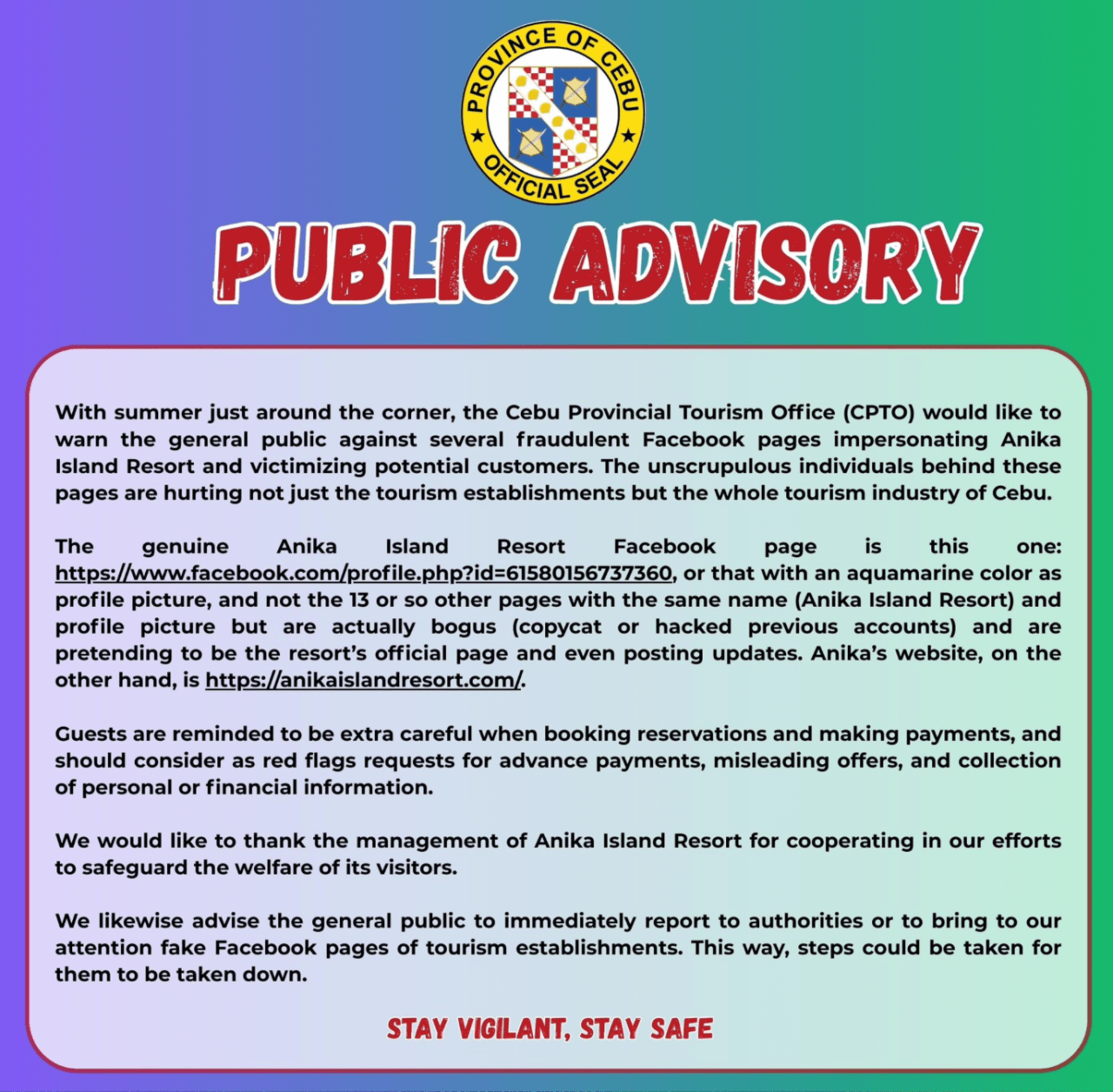
Even the Cebu Provincial Tourism Office (CPTO) has warned the public against fake Facebook pages impersonating two famous resorts on Bantayan Island, Cebu—Anika Island Resort and Kota Beach Resort.
In separate Facebook posts, the CPTO reminded the public to be extra careful when booking reservations and making payments, and to be on a lookout for red flags such as requests for advance payments, misleading offers, and collection of personal or financial information.
“We likewise advise the general public to immediately report to authorities or to bring to our attention fake Facebook pages of tourism establishments. This way, steps could be taken to have them taken down,” the CPTO said.
Modus operandi
According to Leon, both domestic and foreign tourists are targeted by scammers who create fake online pages resembling legitimate hotels and resorts, complete with official photos and logos.
They then offer discounted rates and packages, asking victims to pay online through personal e-wallets or bank accounts. When the guests arrive at the resort, they discover that their booking does not exist.
HRRAC members first noticed the scam in 2023, but the cases increased in 2024. The organization reached out to the Department of Tourism (DOT) and local authorities to stop the modus, resulting in several operations.
Leon said HRRAC has also been working to inform the public about such scams to prevent more people from falling victim.
“We have also been actively campaigning for hotels and resorts to verify social media pages as well and ensure that they have the ability to quickly spot irregularities and take down numerous fake accounts from the different platforms,” she added.
Public advised to verify bookings
As the modus persists, Leon advised the public to always verify a hotel’s official website and contact numbers and to be cautious of deals that seem too good to be true.
She reminded travelers to use only reputable booking platforms, check for verification badges on social media pages, and never pay through personal accounts or e-wallets.
“If looking at social media pages, scrutinize the page as there will be clues —less followers, newly created pages compared to how long the property has been operating, etc.,” she said.
When in doubt, Leon said travelers should not hesitate to call the official phone numbers of the resorts or hotels to confirm safe and secure payment options. —Ed: Corrie S. Narisma

Contributor