The restructuring was intended to ensure that only activities that could be completed before the project's closing date on Sept. 30, 2026, would remain under the loan.
The details were contained in the World Bank's Restructuring Paper on a Proposed Project Restructuring of the Cebu Bus Rapid Transit (BRT) Project, posted on its website.
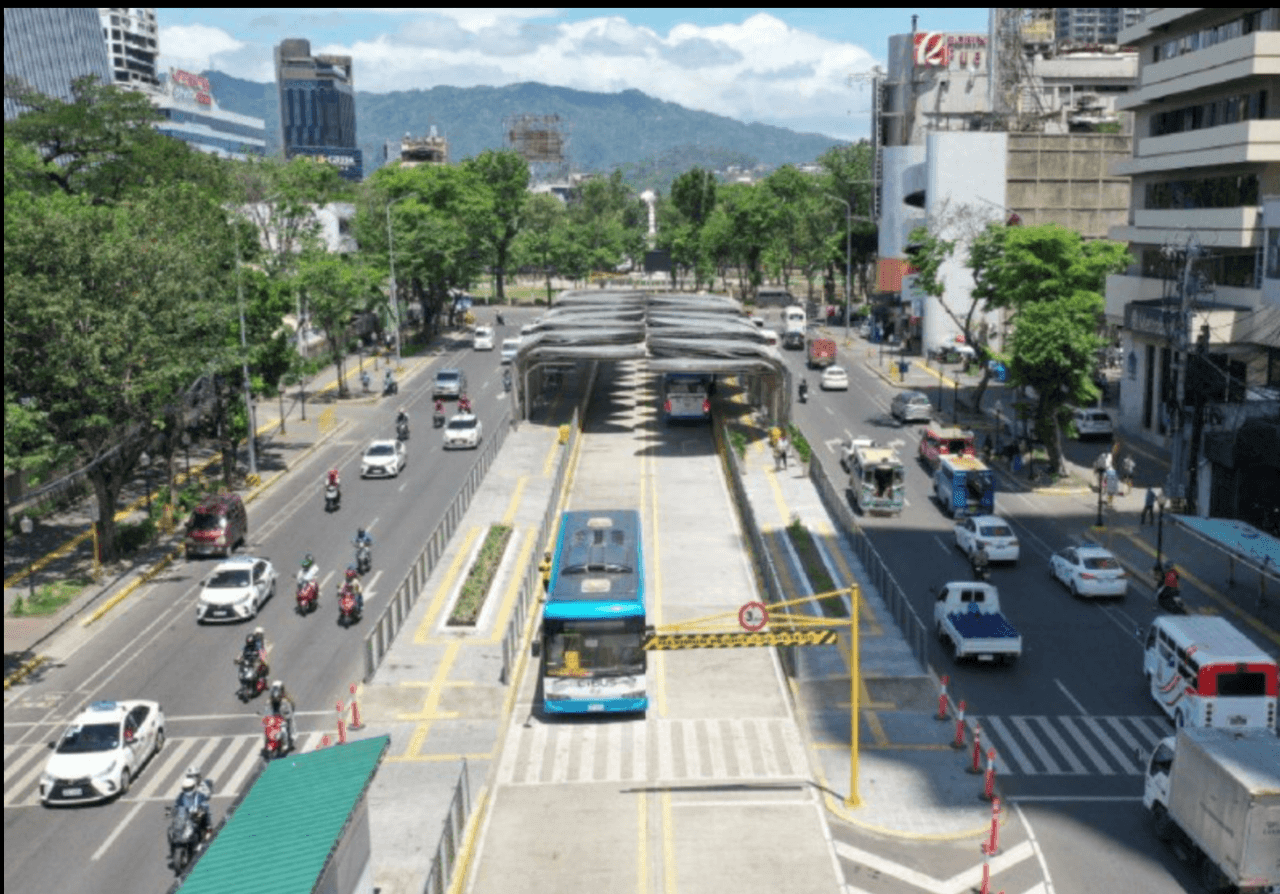
From the original target of 12.16 kilometers of dedicated BRT lanes, the project will retain only the completed 2.38-km segment between the Cebu South Bus Terminal and the Capitol, three BRT stations, and 1.15 km of urban improvements—including bicycle lanes, pedestrian sidewalks, and street lighting—under Civil Works Package 1 (CW1).
The Capitol station was excluded from CW1 because it requires redesign following concerns raised by the Cebu Provincial Government.
Components affected
The biggest reductions involve the infrastructure and civil works under CW2 and CW3 of Component 1, which never commenced because of prolonged right-of-way acquisition and resettlement delays, among other issues. Significant portions of the planned traffic management and urban mobility components were also removed.
Following the restructuring, the project's total cost was reduced to $71.4 million, consisting of a $56.1-million loan from the World Bank's International Bank for Reconstruction and Development (IBRD), $12 million from the Government of the Philippines (GOP), and $3.3 million from Agence Française de Développement (AFD).
The restructuring canceled $84.9 million in loan proceeds—$59.9 million from the IBRD loan and $25 million from the Clean Technology Fund.
The GOP's counterpart funding was likewise reduced from $30 million to $12 million, while AFD's parallel financing was cut from $57.5 million to $3.3 million.
'Unsatisfactory'
Before the restructuring, the project was rated "unsatisfactory" for both implementation progress and achievement of its development objectives, with only about 29 percent of the primary loan disbursed after 11 years.
The World Bank approved the CBRT project on Sept. 26, 2014, with total financing of $228.5 million to improve Cebu City's urban passenger transport system through better service quality, safety, and environmental performance.
According to the World Bank report, the Department of Transportation (DOTr) placed the project on hold following the change in administration in June 2016. Although the government recommitted to the project in 2018, implementation was again delayed by the COVID-19 pandemic and related quarantine restrictions.
The project was further hampered by frequent staff turnover within the DOTr, delays in filling key positions in the Project Implementation Unit (PIU) and National Procurement Management Office (NPMO), procurement bottlenecks, and inadequate government counterpart funding.
Despite receiving four extensions—in June 2021, September 2023, January 2024, and Sept. 26, 2026—the project failed to make sufficient progress. The Philippine government eventually decided not to seek another extension and instead requested a partial loan cancellation to remove components that could no longer be completed before the loan closing date and reallocate the remaining proceeds.
In the meantime, the government launched interim CBRT operations using the existing CIBUS service from IL Corso in the South Road Properties (SRP) to IT Park, traversing the CW1 corridor.
Restructuring
After the request for partial cancellation and restructuring was approved on Jan. 22, the project underwent extensive revisions.
Among the components removed were Civil Works Packages 2 (CW2) and 3 (CW3) under Component 1.
CW2 covered 10.8 km of trunk BRT lanes from the South Road Properties (SRP) to the Cebu South Bus Terminal along N. Bacalso Avenue and from the Capitol to IT Park. It also included a bus depot at the SRP and passenger terminals at the SRP and IT Park.
CW3, meanwhile, covered infrastructure for 18 km of mixed-traffic feeder routes, including bus stops and terminals in Barangay Talamban in Cebu City and Talisay City.
The removal of CW2 and CW3 also significantly reduced the scope of the Resettlement Action Plan (RAP), as land acquisition would no longer be required.
Only individuals whose compensation process had already begun before the restructuring took effect will remain eligible for compensation.
These include 52 project-affected persons (PAPs) who have already received full compensation. Another 27 PAPs, who had received partial compensation before the restructuring, will receive the remaining balance before the project's closing date.
Traffic management
With major BRT routes canceled, the project's traffic management component was also significantly scaled down.
All infrastructure and equipment installations for the Area Traffic Control (ATC) and Intelligent Transport System (ITS) under Component 2 were removed, leaving only consultancy services for their functional design.
The BRT options and financing study was dropped entirely, while the scope of the planned urban mobility studies was reduced from three to one. The Transport System Demand, Supply and Performance studies were likewise removed.
Because the dedicated BRT corridor was shortened from 12.16 km to just 2.38 km, the project's expected outcomes were also substantially revised.
Projected daily passenger ridership was cut from 87,000 to just 3,600, while estimated travel time savings dropped from 40 minutes to seven minutes. Expected greenhouse gas (GHG) emissions reductions likewise fell sharply, from 12,400 tons per year to just 400 tons annually. —Ed: Corrie S. Narisma

Contributor