Scammers typically exploit heightened online activity during peak seasons, using phishing attempts disguised as exclusive Valentine’s deals, delivery notifications, or urgent messages that appear to come from trusted brands—or even loved ones.
Why it matters
These seemingly harmless links often lead to fraudulent websites designed to steal login credentials, card details, or one-time passwords (OTPs).
The surge in online purchases also increases exposure to card-related scams. Fake online stores, compromised payment pages, and “too-good-to-be-true” offers can put customers at risk—especially when transactions are rushed or done without proper verification.
The bigger picture
BPI said in a Feb. 13 press statement that high-activity seasons like Valentine’s Day create opportunities for fraudsters who prey on emotion-driven spending and urgency.
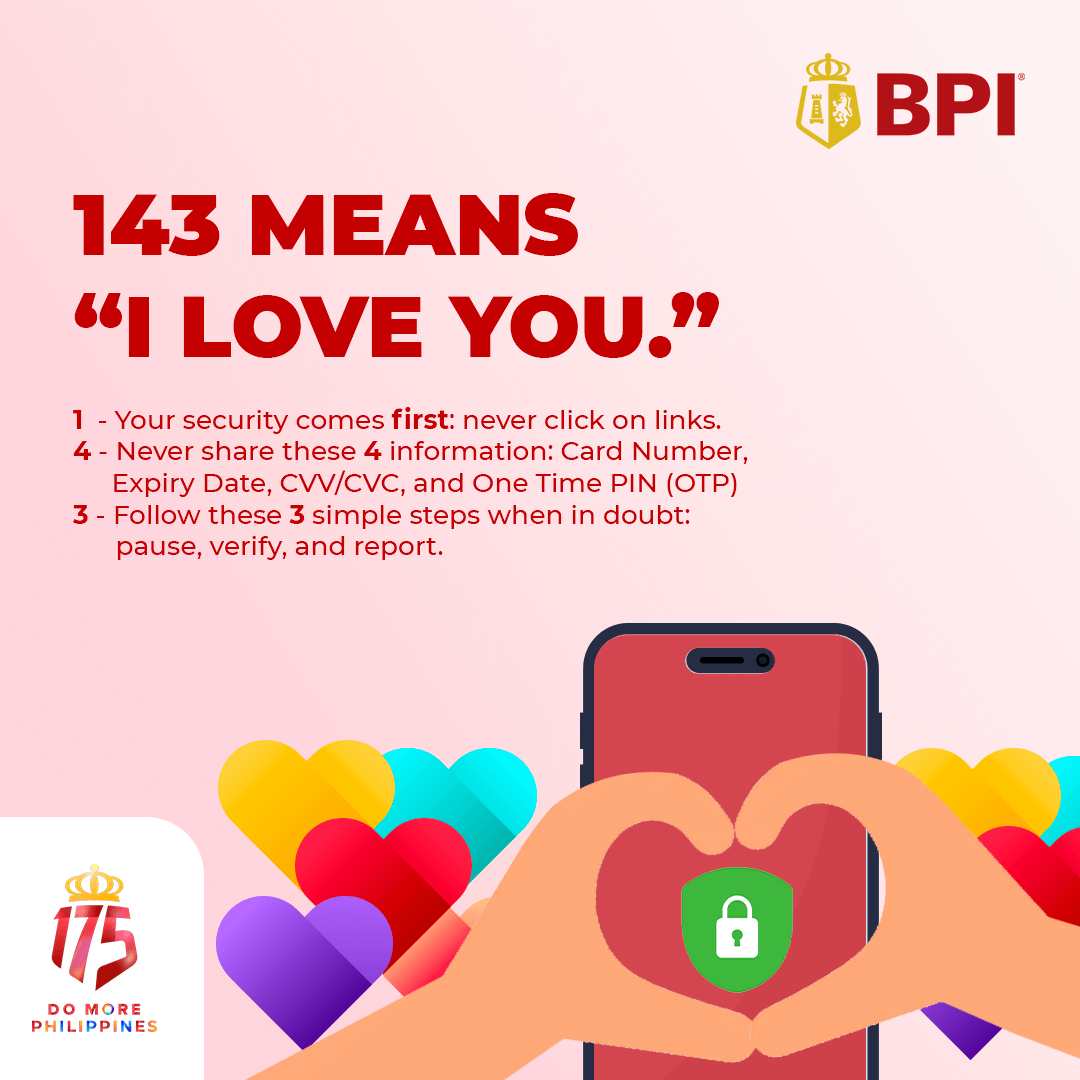
To counter this, the bank continues to strengthen awareness campaigns promoting safe digital habits through advisories and practical reminders.
“Valentine’s Day is about trust, care, and connection—and those same values should guide how we behave online,” said Luigi Manianglung, head of fraud risk operations at BPI.
“As more people shop, send money, and share personal moments digitally, scammers look for opportunities to take advantage. Staying alert and protecting personal and card information is a simple but meaningful way to look after yourself and the people you love,” he added.
What to watch
BPI urged consumers to adopt simple but effective steps to safeguard themselves from fraud:
Bottom line
As digital transactions continue to rise, protecting personal information remains a shared responsibility between financial institutions and customers.
This Valentine’s Day, BPI emphasized that staying cautious online is one of the simplest ways to safeguard both finances and peace of mind. —Ed: Corrie S. Narisma